A warehouse with a huge roof can still be a poor solar candidate. A smaller unit with steady daytime demand can often deliver better returns. That is why commercial solar system design matters so much. It is not just about fitting as many panels as possible. It is about designing a system that suits the building, the business and the way electricity is actually used on site.
For commercial clients, the design stage is where the value of the project is won or lost. Get it right and you can cut grid reliance, improve long-term energy costs and make better use of the space you already have. Get it wrong and you risk underperformance, difficult maintenance, export limitations or a payback period that looks far less attractive than it should.
What commercial solar system design really involves
At first glance, a commercial solar array can look straightforward. Panels go on the roof, inverters convert the power, and the building uses the electricity. In practice, there is a lot more to think about.
Commercial solar system design starts with a proper understanding of the site. That includes roof size, orientation, pitch, structure, access, existing electrical infrastructure and any shading from nearby buildings, plant equipment or trees. It also includes the business itself – when power is used, how much is used, whether demand is stable or seasonal, and whether future expansion is likely.
A good design balances technical performance with practical constraints. Some buildings have excellent roof area but limited spare capacity in the existing distribution board. Others have strong electrical demand but awkward roof obstructions that affect panel layout. Sometimes the best answer is a larger array, and sometimes it is a smaller, better-matched system that improves self-consumption and avoids unnecessary export.
Start with energy use, not panel count
One of the most common mistakes in early conversations about solar is jumping straight to system size. Businesses often ask how many panels they can fit. A better question is how much of that electricity they are likely to use themselves.
For many commercial properties, daytime demand makes solar an excellent fit. Offices, schools, retail units, factories and agricultural sites often consume a meaningful amount of power during daylight hours, which means more of the generation can be used on site. That usually improves the financial case because self-used electricity is worth more than electricity exported to the grid.
Load profile matters here. A business that runs machinery from 8am to 5pm may benefit from a very different design compared with a property that is mostly occupied in the evening. Half-hourly data, if available, helps paint a much clearer picture than annual consumption alone. It shows when electricity is being used, where peaks occur and whether a battery might add value.
Roof suitability can change the whole project
The roof is often treated as a blank canvas, but it rarely is. Commercial roofs come with constraints that affect both system layout and installation method.
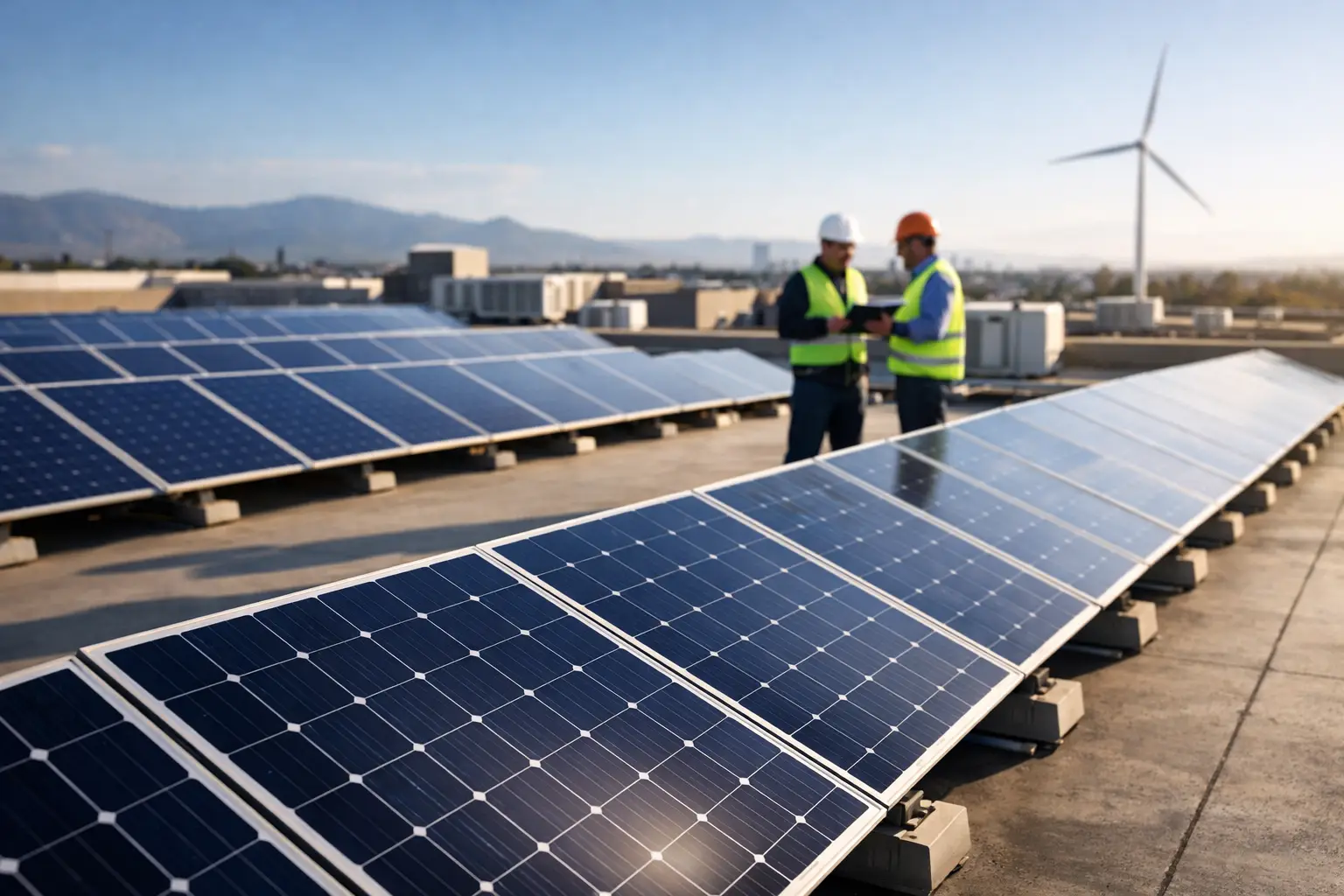
Flat roofs may allow flexible panel orientation, but ballast, wind loading and access routes all need careful thought. Pitched roofs can offer a simpler mounting arrangement, but the direction of the roof slopes will influence generation patterns. South-facing roof space is useful, but east-west layouts can work very well too, especially where the aim is to spread generation more evenly across the working day.
Structural integrity is another key point. The roof has to support the system safely, and older buildings may need additional checks before any design is finalised. A proper survey should also consider waterproofing details, fall arrest requirements and long-term access for maintenance. There is no point installing a high-performing array if basic servicing becomes awkward or unsafe.
The electrical side is just as important as the panels
Solar design is not only a roofing exercise. It is an electrical project, and the quality of the electrical design has a direct impact on safety, compliance and performance.
That means assessing how the solar system will connect to the building’s existing electrical infrastructure. Cable routes, inverter locations, isolation points, protection devices and metering arrangements all need to be planned properly. On some sites, the existing switchgear may be perfectly suitable. On others, upgrades may be needed to accommodate the new generation safely.
Grid connection also plays a major role. In the UK, export capacity is not unlimited, and some commercial sites face restrictions from the distribution network. That does not always stop a project going ahead, but it can shape the final design. Export limitation devices, phased installation or battery storage may all be considered depending on the site and the connection available.
This is one reason commercial clients often benefit from working with a contractor that understands both solar and wider electrical systems. A joined-up approach tends to reduce delays, avoid awkward handovers and make it easier to spot issues early.
Sizing a system properly is a balancing act
Bigger is not automatically better. A larger system may generate more electricity overall, but if a high proportion is exported at a lower value, the financial return may not improve in step with the installation cost.
A well-sized commercial system usually reflects several things at once: available roof area, daytime consumption, budget, export limits and future plans. If the business expects to add EV charging, electric heating, air conditioning or new production equipment, that future demand should be part of the conversation from the start.
There is often a trade-off between maximising generation and maximising return. Some clients want to offset as much carbon as possible and make full use of the building. Others are more focused on simple payback and cash flow. Neither approach is wrong, but the design should match the goal rather than forcing every site into the same model.
Should battery storage be included?
Battery storage can be useful in commercial solar projects, but it is not a default requirement. It depends on how the building uses power and what the business wants the system to achieve.
Where daytime demand already matches solar generation well, a battery may offer only modest gains. Where usage extends into the evening, or where export is constrained, storage can improve self-consumption and help make better use of generated power. Some businesses also value batteries for resilience or load management, particularly where energy costs spike during certain periods.
The key is to assess battery storage as part of the wider design, not as an add-on because it sounds modern. A sensible recommendation is based on usage patterns, tariff structure and expected return, not guesswork.
Compliance and accreditation are not box-ticking
Commercial clients need confidence that the system is designed and installed to the right standards. That means more than neat panel rows and a tidy plant room.
A properly managed project should account for relevant regulations, safe isolation, fire considerations, structural checks and network requirements. It should also be backed by the right certifications and a clear commissioning process. For businesses, developers and facilities teams, this is part of risk management as much as energy saving.
That is where working with an experienced, accredited contractor makes a real difference. Companies such as SWH Electrical Solutions combine solar expertise with broader electrical capability, which matters when the project involves existing installations, compliance requirements or future integration with EV charging and other site upgrades.
Why design quality shows up in long-term performance
The best commercial solar systems are not always the ones with the most impressive headline capacity. They are the ones that perform reliably year after year, are easy to maintain and continue to suit the building as the business changes.
Good design accounts for practical details that are easy to overlook early on. Safe maintenance access, sensible inverter placement, clear monitoring, sensible cable management and realistic generation forecasts all matter. So does honest advice. If a roof section is too shaded to justify using, or if a client’s budget would be better spent on a smaller system with stronger self-use, that should be said plainly.
This is especially important for multi-site businesses and developers. Consistency in design standards, documentation and installation quality makes a real difference when systems need to be managed over time across several properties.
Commercial solar system design for different types of site
Not every commercial building behaves in the same way, so the design approach should reflect that.
Industrial sites often have strong daytime loads, which can make larger arrays attractive, but roof access, plant equipment and operational disruption need careful planning. Offices may have predictable weekday demand, though seasonal occupancy patterns can affect usage. Schools and public buildings often benefit from solar, but holiday periods should be factored into generation and self-consumption estimates. Retail and hospitality sites may see longer operating hours, which can make battery storage more relevant in some cases.
For new build commercial projects, solar design is best considered early rather than retrofitted at the last minute. Early coordination can improve roof layout, plant placement and electrical integration, while avoiding avoidable compromises once the building is already on site.
A well-designed system should feel like part of the building, not an afterthought bolted on when the rest of the decisions have already been made.
If you are looking at solar for a commercial property, the right starting point is not a panel count or a sales estimate. It is a proper assessment of how your building works, how your business uses power and what a good-fit system would actually need to deliver.