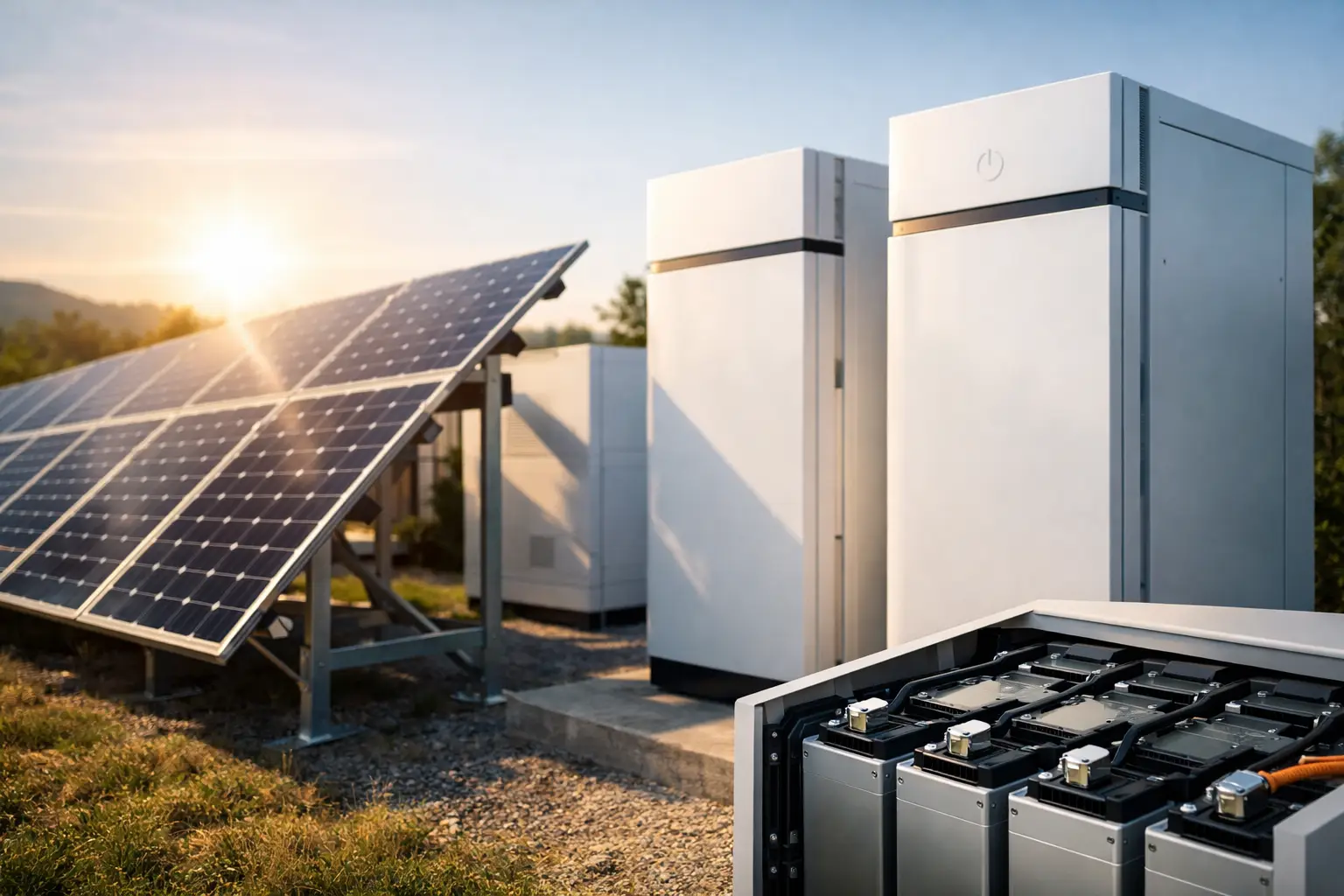
The usual frustration with solar is this: your panels are doing their best work in the middle of the day, just as many homes and businesses are using the least electricity. Then tea time arrives, the sun drops, and you start buying power back from the grid. That is exactly where battery storage for solar panels starts to make real financial sense.
A battery gives you a way to keep hold of surplus electricity generated during the day and use it later when demand in the property is higher. For some people, that means lower bills and more control. For others, it is about backup planning, better use of a solar investment, or future-proofing a new build. The right setup depends on the building, the energy profile, and what you actually want the system to do.
What battery storage for solar panels actually does
At its simplest, a solar battery stores unused electricity instead of exporting all of it to the grid. If your panels generate more power than the property needs at that moment, the excess can charge the battery. Later on, when generation drops and demand rises, that stored energy can be used in the home or workplace.
That changes the economics of solar. Without storage, you often export electricity at one rate and buy it back later at a higher one. With storage, you can use more of what you have generated on site. That is usually called improving self-consumption, and it is one of the main reasons batteries have become so popular.
For homeowners, this often means using solar-generated electricity in the evening for cooking, lighting, television, charging devices, or running appliances. For commercial sites, it can mean reducing imported electricity during operating hours or smoothing demand patterns across the day. For developers, it can add appeal to new homes that are expected to meet modern energy performance standards.
Is a solar battery worth it?
Sometimes yes, sometimes no. Anyone telling you it is always the right answer is oversimplifying it.
A battery is often worth serious consideration if you are out during the day, use more electricity in the evening, or want to rely less on the grid. It can also make sense if electricity prices are a concern and you want more predictability over time. In a business setting, the case can be stronger where energy use continues beyond peak solar generation hours.
On the other hand, if a property already uses most of its solar generation as it is produced, the value of a battery may be lower. The same applies if your electricity use is very small, or if your budget is tight and your main priority is getting the shortest payback possible from the initial solar installation.
That is why a proper assessment matters. Battery size, inverter compatibility, tariff structure, export rates, and day-to-day usage patterns all affect whether storage stacks up financially.
How battery storage for solar panels is sized
The biggest mistake people make is assuming bigger is better. It is not always.
A battery should be sized around how much surplus solar you actually produce and when you need to use it. If the battery is too small, it may fill quickly and leave excess power still being exported. If it is too large, you may pay for capacity that rarely gets used properly.
For a typical home, sizing usually starts with looking at annual electricity use, likely daytime generation, and evening demand. A household that works away from home all day may benefit from a different battery capacity than one where someone is home running appliances throughout the afternoon. An EV on the drive, an electric heating element, or high overnight consumption can all shift the calculation.
Commercial and development projects need an even more site-specific approach. Load profiles, operating hours, and any plans for future expansion matter just as much as the solar array size. If you are already thinking about EV charging, heat pumps, or additional electrical demand, it makes sense to factor that in now rather than retrofit around it later.
What to look for in a battery system
Battery chemistry, usable capacity, warranty, and inverter setup all matter, but not in isolation. The strongest system on paper is not much use if it does not suit the property or cannot be integrated neatly with the rest of the installation.
Most modern domestic systems use lithium-ion technology, which is compact, efficient, and well suited to repeated cycling. The headline capacity is only part of the picture though. Usable capacity is the number worth paying attention to, because that tells you how much stored electricity can actually be drawn on in practice.
You should also look closely at charge and discharge rates. A battery may hold a decent amount of energy, but if it cannot deliver power fast enough to support peak household demand, you may still end up importing from the grid during busy periods. That is particularly relevant in larger homes and commercial settings with several loads running at once.
Then there is warranty cover. A good battery warranty should give confidence over the long term, but it is still worth reading the detail. Some are based on years, some on throughput, and some on retained capacity after a certain period.
Retrofitting a battery vs installing it with new solar
Both are possible, but they are different jobs.
If you are installing solar from scratch, adding battery storage at the same time is usually the cleanest route. The system can be designed as a whole, with the panels, inverter, battery, and monitoring all working together from day one. It can also be more cost-effective than returning later to alter the setup.
Retrofitting battery storage to an existing solar system can still work very well. Plenty of property owners take this route after seeing how much electricity they export. The main question is compatibility. Your current inverter, the age of the system, available space, and the overall condition of the installation all need to be checked properly.
That is where using an experienced installer really matters. There is no benefit in forcing a battery into a setup that was never properly assessed for one.
Can a battery keep the power on in a cut?
This catches a lot of people out. Many assume that if they have solar panels and a battery, the lights will stay on during a power cut. Often, that is not the case by default.
Standard grid-connected systems are designed to shut down during an outage for safety reasons. If backup power is important to you, that needs to be built into the design with the right equipment and controls. Even then, the battery may not run the entire property as normal. More commonly, it will support selected essential circuits.
So if your main goal is resilience during outages, say that from the start. The design for backup capability is different from a design focused only on bill savings.
The value for homes, businesses, and new builds
For homeowners, the appeal is usually straightforward: better use of solar, less imported electricity, and more control over rising energy costs. It also helps make the most of your roof space. If you have already invested in generation, storing some of that power can stop the system feeling like it only benefits you when you are not there.
For businesses, battery storage can support a more efficient energy strategy. Depending on the site, it may help reduce daytime import peaks, improve the return on a solar array, and support broader sustainability targets without adding unnecessary complexity.
For developers, battery-ready or battery-integrated solar can make new homes more attractive to buyers who are thinking beyond the initial purchase price. Energy performance, running costs, and future flexibility now carry far more weight than they did a few years ago.
Why installation quality matters as much as the battery itself
A battery is only one part of the system. The design, electrical integration, commissioning, and aftercare are what turn it into something that performs properly over time.
That means load analysis, product selection, safe installation, and clear advice on what the system can and cannot do. It also means using a contractor who understands the wider electrical picture, not just the battery unit on the wall. In many cases, the best results come from working with a team that can manage solar, battery storage, electrical upgrades, and ongoing maintenance under one roof, rather than passing responsibility between different trades.
For customers in the North East, that local accountability matters. You want technical competence, proper certification, and a straight answer if something needs adjusting. That practical, no-nonsense approach is exactly why many clients choose SWH Electrical Solutions for renewable and electrical projects.
Battery storage is not about chasing a trend. It is about making solar work harder for the way a property actually uses electricity. Get the sizing right, be clear on your priorities, and the system becomes far more than an add-on. It becomes a sensible part of how your home, business, or development manages energy for the long term.