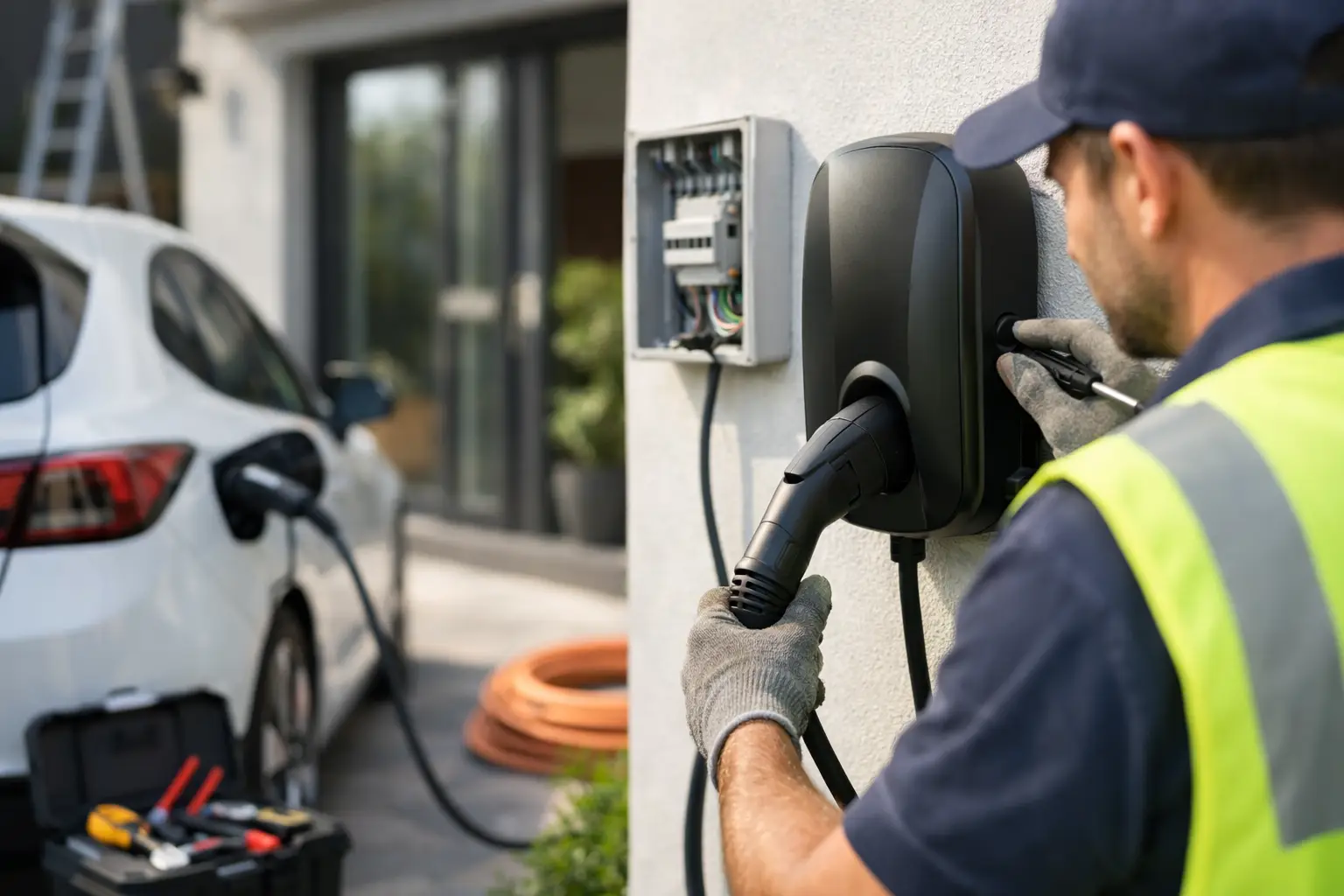
If you have bought an electric vehicle, or you are planning around one, the usual three-pin plug loses its appeal very quickly. Slow charging, trailing cables and uncertain charging times soon become a daily annoyance. A proper ev charge point installation fixes that, but the right setup depends on your property, your power supply and how you actually use the vehicle.
For some customers, the priority is faster overnight charging at home. For others, it is making a workplace car park more practical or ensuring a new development is ready for modern buyers from day one. The common thread is simple enough – you want charging that is safe, reliable and suited to the building, not a one-size-fits-all box on a wall.
What ev charge point installation actually involves
A lot of people assume the charger is the main decision and everything else is straightforward. In reality, the charger is only one part of the job. The bigger question is whether the existing electrical setup can support it properly.
An ev charge point installation usually starts with a survey. That looks at the incoming supply, the consumer unit or distribution board, cable routes, earthing arrangements, installation location and how the charger will be used day to day. A domestic installation on a driveway is different from a charger fitted in a staff car park or built into a multi-plot development.
From there, the work typically includes selecting the right charger rating, planning cable runs, fitting protection devices, carrying out the installation, testing the circuit and commissioning the unit. The final stage matters just as much as the physical install. A charger needs to be set up correctly, checked thoroughly and handed over with clear guidance so the customer knows exactly how it works.
Choosing the right EV charge point installation for the property
The phrase “best charger” can be misleading because best for one site can be wrong for another. A homeowner with one car and off-street parking may only need a straightforward 7kW unit with smart charging features. A business with multiple drivers coming and going may need load balancing, usage tracking and future capacity for extra points later on.
For domestic properties, placement is usually the first practical issue. The charger needs to be convenient for parking without creating awkward cable runs or trip hazards. Sometimes the ideal charging position is not the easiest location electrically, so there is a balance to strike between neatness, cost and convenience.
For commercial sites, there is often a broader conversation. How many bays need charging now? Will visitors use them, staff, fleet vehicles or all three? Is the goal to provide a useful amenity, support a move to electric fleet vehicles or add value to the premises? Those details affect not only the charger choice but the distribution setup behind it.
Property developers have another set of priorities. In new-build work, the smartest approach is usually to think about charging infrastructure early rather than treat it as an add-on near completion. That can mean easier cable routes, cleaner finishes and less risk of expensive changes later.
Power supply, load and why the detail matters
This is where experience counts. EV chargers place a significant electrical load on a property, and that load has to be managed properly. It is not enough to check whether there is space on the board and hope for the best.
The installer needs to assess available capacity and how the new charger will sit alongside the rest of the installation. In some buildings, especially older homes or busy commercial premises, the existing electrical infrastructure may need upgrading. In others, load management can make the system work without major changes.
That is why price comparisons can be misleading if they ignore the condition of the property. One installation may be quick and simple. Another may need a longer cable run, alterations to the board or extra protective equipment. Both are valid jobs, but they are not the same job.
There is also the matter of compliance. EV charging has specific technical requirements, and those standards are there for good reason. Done properly, the installation should protect the user, the vehicle and the wider electrical system. Done badly, it can create faults, nuisance tripping and avoidable safety risks.
Home EV charge point installation – what homeowners should expect
Most homeowners want three things from a charger. They want it to be easy to use, economical to run and tidy once fitted. That is all reasonable, and in many cases it is entirely achievable.
A typical home EV charge point installation can often be completed with minimal disruption, but the detail still matters. The route from the consumer unit to the charger location can affect both appearance and cost. If the cable can be run neatly and directly, the job is usually more straightforward. If it needs to cross awkward spaces or pass through finished areas carefully, more planning is needed.
Smart functionality is often worth considering too. Features such as scheduled charging can help you make better use of off-peak tariffs, and app-based control can be useful if your routine changes from week to week. Not every customer wants lots of tech, though. For some, reliability and simplicity win every time.
If you already have solar or battery storage, the conversation gets more interesting. In the right setup, charging can be coordinated with your wider energy system so the property works harder for you. That is not always essential, but for households focused on long-term energy savings it can make good sense.
EV charge point installation for businesses and workplaces
For commercial clients, charging is rarely just about plugging in a vehicle. It often sits alongside wider operational questions around staff facilities, fleet planning, sustainability targets and site power usage.
A workplace charger can be a practical benefit for employees and visitors, but it still needs to work commercially. That means choosing a setup that matches demand without overspending on capacity that will sit unused. In some workplaces, two or three well-positioned points are enough. In others, expansion capability is the key decision because demand is likely to grow.
Access control can matter as well. Some businesses want open access during office hours, while others prefer staff-only use or payment-enabled systems for public or mixed-access sites. Again, there is no universal answer. The right approach depends on who the users are and how the site operates.
The same applies to ongoing support. Businesses generally need reassurance that installations have been tested properly, documented clearly and designed with future maintenance in mind. That is one reason many clients prefer working with a contractor that understands the broader electrical picture, not just the charger on its own.
What affects cost and timescales
Customers understandably ask for a figure early on, but honest pricing depends on the site. Charger model, cable distance, mounting surface, board capacity, groundworks and access all influence cost.
Timescales vary for the same reason. A simple domestic install may move quickly from survey to completion. A commercial project with multiple charge points, civil works or coordination with other trades can take longer. New-build schemes also need proper planning so the charging infrastructure fits the build programme rather than disrupting it.
The cheapest quote is not always the most economical one. If key checks are missed, or if the installation is under-specified, the problems tend to show up later. That could mean poor charging performance, extra remedial work or limits on future expansion.
Why accreditation and local accountability matter
When you are choosing an installer, technical competence should not be assumed. EV charging is part of the electrical installation, and it needs to be treated with the same care as any other critical electrical work.
That is why customers often look for recognised standards, proper testing and a contractor that can take responsibility for the whole job from survey through to commissioning. For homeowners, that provides peace of mind. For businesses and developers, it helps reduce risk and keeps projects moving.
There is also real value in working with a local team that understands the area and can be reached when needed. In the North East, that still counts for a lot. SWH Electrical Solutions takes that practical view – do the job properly, explain it clearly and leave the customer with a system that works as it should.
The best charging setup is not necessarily the most expensive or the most feature-packed. It is the one that fits your property, your usage and your plans for the next few years. Get that right at the start, and charging your vehicle becomes one less thing to think about.