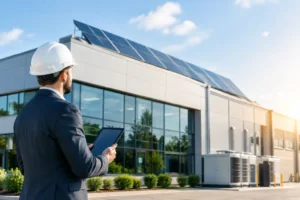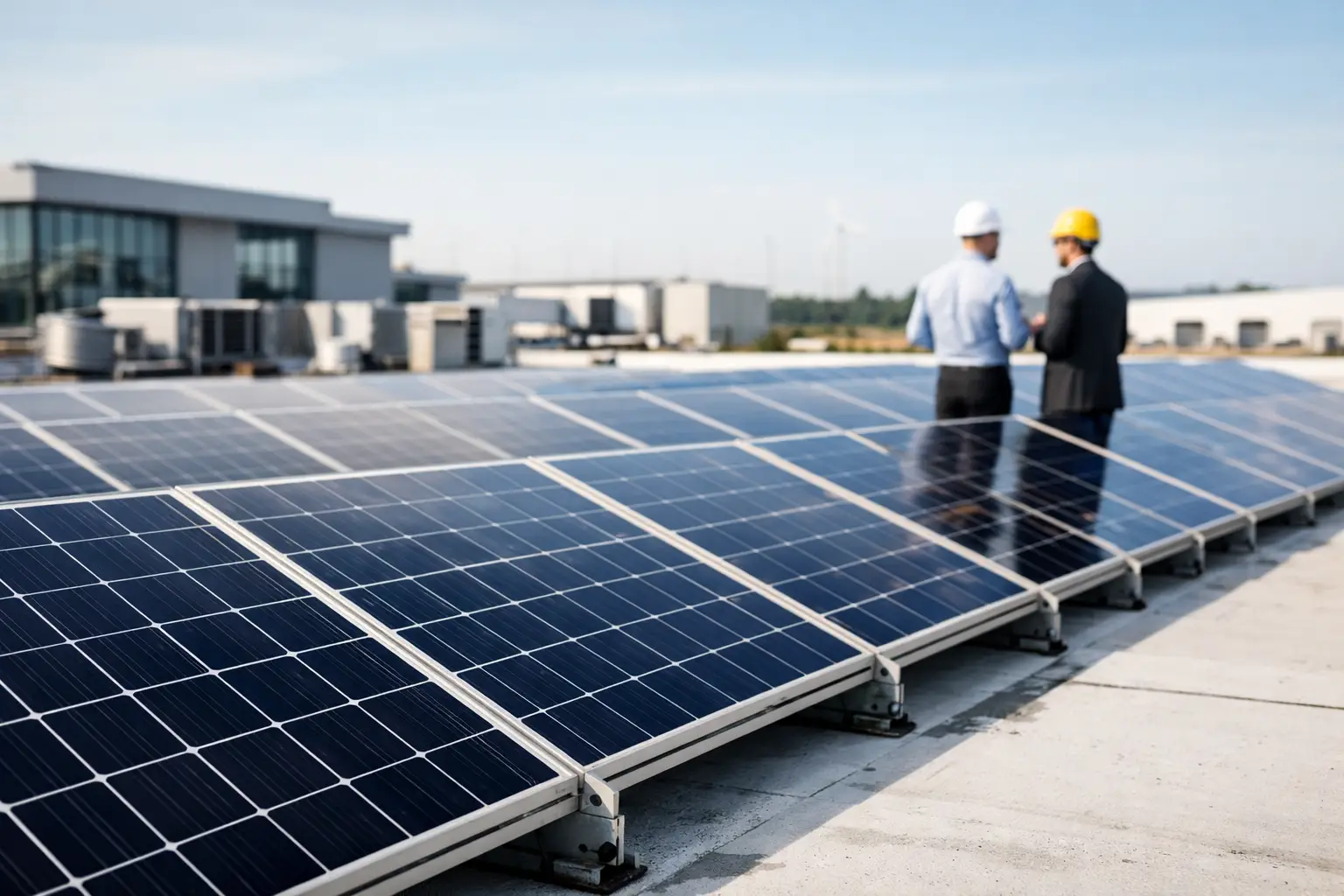
If your business uses most of its electricity during the day, the roof above you may be doing far less work than it should. A solar system for commercial use can turn that unused space into a practical asset – one that helps reduce running costs, improve energy resilience and make future budgeting a bit less painful.
For many businesses across the North East, the question is no longer whether solar is worth looking at. It is whether the numbers, the building and the day-to-day operation line up well enough to make it a sound investment. That is where good design matters. Commercial solar is not a one-size-fits-all job, and the best results come from a system built around how your site actually uses power.
What is a solar system for commercial use?
A solar system for commercial use is a photovoltaic system designed for business premises rather than a standard domestic property. It usually includes solar panels, inverters, mounting equipment, isolators, generation monitoring and, in some cases, battery storage. The aim is straightforward – generate electricity on site so the business buys less from the grid.
The main difference from a domestic system is scale, but that is only part of it. Commercial sites often have more complex load profiles, larger roofs, three-phase supplies, stricter access requirements and tighter rules around health and safety. An office, warehouse, farm unit, retail premises or industrial building may all be suitable for solar, but each needs a proper assessment before anyone starts talking about output figures.
That assessment should look at roof condition, orientation, shading, structural suitability, electrical infrastructure and your real daytime demand. It should also consider whether the site may benefit from battery storage, EV charging or wider electrical upgrades at the same time.
Why businesses are investing now
Electricity prices have made energy strategy a board-level issue for plenty of businesses that would never have called it that a few years ago. When overheads become unpredictable, generating a portion of your own electricity starts to look less like a green gesture and more like sensible planning.
The strongest case for commercial solar usually comes from businesses that operate through the day and use a steady amount of power. Think offices with air conditioning and IT loads, workshops with machinery, hospitality venues with refrigeration, or manufacturers with regular weekday consumption. In those settings, much of the electricity generated can be used on site as it is produced, which improves the financial return.
There is also the reputational side. Customers, tenants, investors and procurement teams are paying more attention to carbon reduction. Solar will not solve every sustainability target on its own, but it is a visible, measurable improvement. For property developers, it can also support modern energy performance expectations and add value to commercial or mixed-use schemes.
How a commercial solar system is sized
The right system size is not always the biggest one you can fit on the roof. It is the one that matches the building, the load and the commercial objective.
Some businesses want to maximise self-consumption, keeping exported energy to a minimum. Others have enough daytime use to justify a larger array. If a building is quiet at weekends but busy Monday to Friday, that affects how the system should be modelled. If the roof has multiple aspects or plant equipment causing shade, that changes panel layout and expected generation.
A proper design also needs to account for the site supply. Older premises may need distribution board upgrades or broader electrical works before installation. That is why working with a contractor who understands both solar and commercial electrical systems tends to make the process smoother. There is no point fitting generation equipment if the wider installation has been ignored.
Where solar works best in commercial settings
Large, unobstructed roofs are the obvious candidates, but they are not the only ones. Flat roofs on warehouses, schools, offices and retail units can be excellent for solar if the structure is suitable. Pitched roofs on smaller business premises can work just as well. Agricultural buildings and workshops often make good candidates because of their roof area and regular daytime demand.
New build commercial projects also offer a clear opportunity. It is usually easier and more cost-effective to design solar, battery storage, EV charging and electrical infrastructure together than to retrofit them later. Developers can plan plant space, cable routes, distribution arrangements and metering from the start, which avoids compromise down the line.
That said, not every building is right for solar. Roof age, asbestos concerns, restricted access, major shading or low daytime occupancy can all affect viability. A good survey should tell you that early, before anyone starts promising savings that do not stand up.
The financial case – and where the trade-offs sit
The appeal of solar is simple enough: lower imported electricity means lower bills. But the exact savings depend on several moving parts, including system size, your tariff, how much of the generated power you use on site and whether electricity prices rise over time.
Businesses often ask about payback first, which is fair enough. The answer tends to be a range rather than a single figure, because usage patterns matter so much. A business that consumes most of its generation during working hours will usually see a better return than a site that exports a large share back to the grid.
Battery storage can improve self-use, particularly where demand runs into the evening, but it is not always the right addition on day one. It depends on load profile, budget and what the site is trying to achieve. The same goes for future expansion. Some businesses start with solar only, then add batteries or EV charging once they have real generation data to work from.
There are maintenance considerations too, although solar systems are generally low-maintenance. Monitoring, periodic inspection and prompt attention to faults help keep performance where it should be. For commercial clients, that matters because a small issue left unchecked can mean avoidable losses over time.
Compliance, safety and getting the job done properly
Commercial solar is not just about panels on a roof. It sits within a wider electrical and compliance picture, which is one reason accreditation and experience matter.
Your installer should be able to assess the existing installation properly, not just the generation side. Isolation, inverter placement, cable routing, fire safety considerations, access planning and commissioning all need to be handled carefully. On trading premises, the work also has to be organised around site operations, staff safety and minimal disruption.
For many businesses, there is real value in using one contractor who can manage design, installation and any associated electrical works in-house. That reduces handover gaps and gives you clearer accountability. At SWH Electrical Solutions, that joined-up approach matters because clients are rarely looking for a panel-only job in isolation. They are looking for a workable solution that fits the building and the business.
Should you add battery storage?
Sometimes yes, sometimes not yet. Battery storage makes the most sense where your site generates surplus electricity during the day and can use that stored power later, or where resilience and peak cost management are part of the brief.
For example, a business that closes mid-afternoon may export a fair amount of power and see limited value from a battery. A site with evening operations, refrigeration loads or a plan to support EV charging may see stronger benefits. Batteries also add cost, so the business case needs to be clear rather than based on enthusiasm alone.
The same practical thinking applies to EV charge points. If your business is electrifying a fleet or wants to provide workplace charging, solar can help offset some of that demand. But it works best when the charging strategy, supply capacity and expected usage are all considered together.
What to ask before you go ahead
Before moving forward, ask how much of the electricity generated your business is likely to use on site, what assumptions sit behind the savings estimate and whether the roof and electrical infrastructure have been properly assessed. Ask who is carrying out the work, what certifications they hold and how monitoring and aftercare will be handled.
It is also worth asking what has been left out. If a quotation does not mention access, structural checks, distribution upgrades or operational disruption, that does not mean those things have vanished. It may simply mean they have not been addressed yet.
A good commercial solar project should feel well planned from the outset. Clear figures, realistic assumptions and competent delivery count for more than glossy promises.
For the right premises, a solar system for commercial use is not just a way to trim energy bills. It is a practical improvement to the building itself – one that can support lower operating costs, better long-term planning and a more future-ready site. The best place to start is with a proper survey and an honest conversation about how your business actually uses power.