A boiler that appears to be working normally can still have an unsafe flue, poor combustion or a developing fault. For landlords, that is why a CP12 certificate for landlords is not just another piece of tenancy paperwork. It is the record that shows the gas safety checks required at a rental property have been completed by a suitably registered engineer.
For landlords across Newcastle and the wider North East, staying ahead of the annual check protects tenants, avoids last-minute administration and helps prevent a small heating issue becoming a costly emergency. Here is what a CP12 involves, when it is needed and how to manage it properly.
What is a CP12 certificate?
A CP12 is the commonly used name for a landlord gas safety record. It is issued after a Gas Safe registered engineer has inspected the relevant gas appliances, pipework and flues at a rented property. The formal record confirms what has been checked, the results of those checks and whether any action is required.
The certificate is not a guarantee that a boiler will run fault-free for the next 12 months, nor is it the same as a full manufacturer-recommended boiler service. It is a safety inspection. That distinction matters because a boiler can pass its annual gas safety checks but still benefit from servicing to maintain efficiency, reliability and warranty cover.
In most rented homes with gas appliances or flues, the landlord must arrange a gas safety check at least every 12 months. The work must be carried out by an engineer who is Gas Safe registered and qualified for the type of appliance being inspected. A general registration alone is not enough – the engineer needs the appropriate categories of work on their Gas Safe credentials.
What does a CP12 certificate for landlords cover?
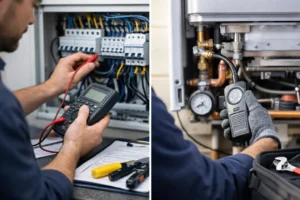
A proper inspection is more than a quick look at the boiler pressure gauge. The engineer will assess the gas installation and relevant appliances for safe operation. Depending on the property, this may include the boiler, gas fire, cooker, hob, water heater and associated flues.
They will check that appliances are burning gas safely, that there is suitable ventilation where required, and that flues are fitted and operating correctly. Controls, safety devices, gas tightness and signs of unsafe combustion may also be assessed. The exact checks depend on the appliance and how it has been installed, which is one reason a property-specific visit is essential.
If an appliance is found to be unsafe, the engineer will explain the issue and the next steps. In serious cases, an appliance may need to be turned off or disconnected to protect occupants. A landlord should treat this as urgent. A missing part, damaged flue or inadequate ventilation is not something to leave until a more convenient time between tenancies.
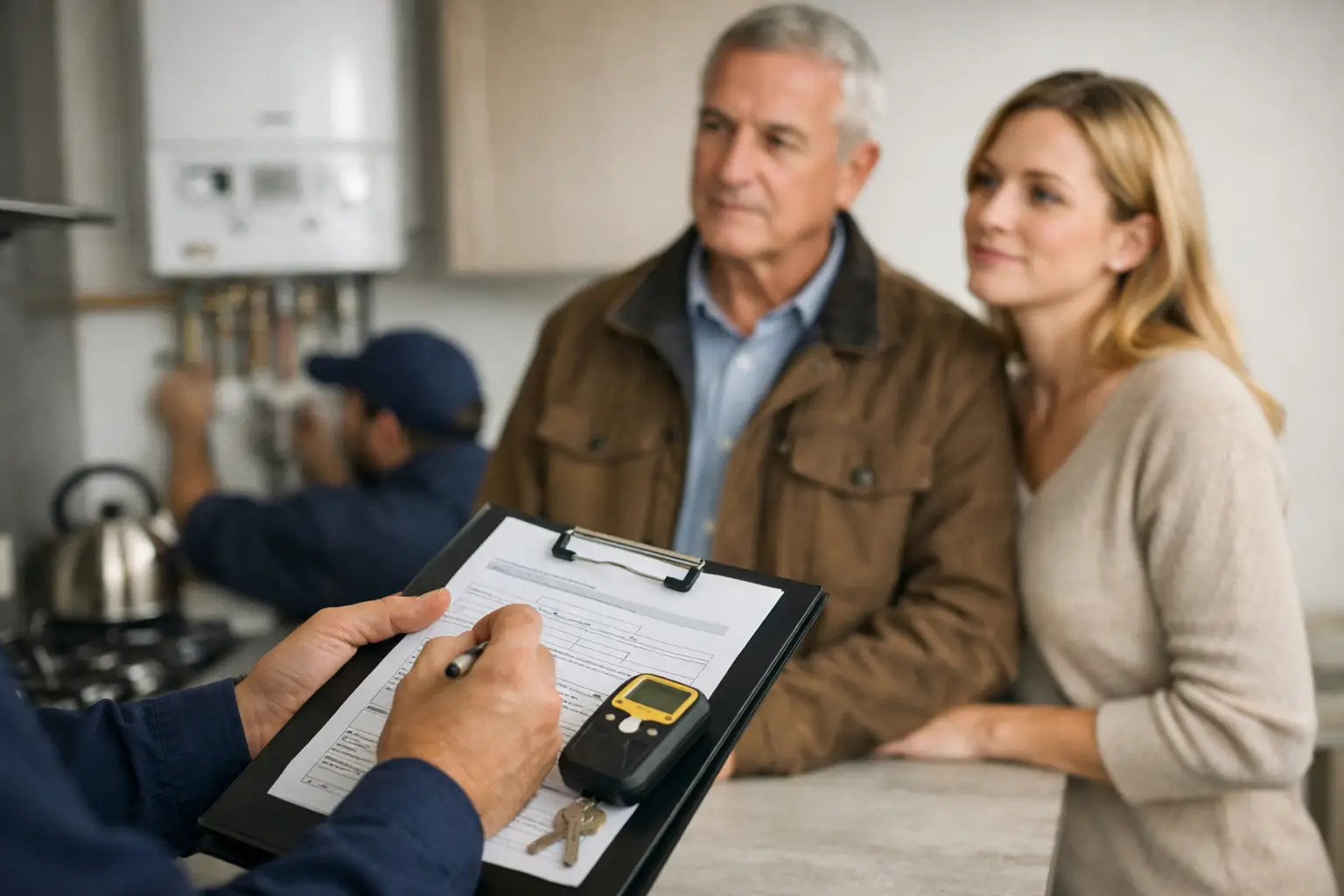
The record should identify the property, landlord or managing agent, engineer and Gas Safe registration details, appliances checked, findings and the date of the next check. Keep it clear, complete and easy to retrieve. It may be needed if a tenant, agent, insurer or enforcement body asks for it.
Your legal duties and the key dates
The annual gas safety requirement applies to landlords of most rented residential properties in Great Britain where gas appliances or flues are provided. There can be different arrangements in unusual circumstances, such as tenant-owned appliances, so it is sensible to seek advice where responsibilities are not straightforward. Even where a tenant owns an appliance, the landlord may still have responsibilities for the gas installation or flue serving it.
For a standard tenancy, landlords need to provide a copy of the current gas safety record to an existing tenant within 28 days of the check. New tenants must receive a copy before they move in. Records must also be kept for at least two years.
Timing is worth managing carefully. Leaving the check until the expiry date is an avoidable gamble, particularly during colder months when engineers are dealing with heating breakdowns. A new check can generally be carried out between 10 and 12 months after the previous one while preserving the original annual renewal date. This gives landlords a practical booking window without gradually moving the due date earlier each year.
For a new tenancy, do not assume a recent check at another property or an old record from the outgoing tenant will do. The current record must relate to that property and cover the relevant period before the new tenant takes occupation.
Gas safety checks and boiler servicing are different jobs
This is one of the most common points of confusion. A CP12 inspection focuses on legal safety requirements. A boiler service focuses on the condition, performance and maintenance of the boiler, often following the manufacturer’s service schedule.
There is overlap. Both visits can involve inspecting the boiler and checking combustion, but they serve different purposes. A well-maintained boiler is less likely to cause disruption for tenants and may use fuel more efficiently. It can also be required to maintain a manufacturer warranty. For that reason, many landlords arrange a boiler service and annual gas safety check together where appropriate, while recognising that one does not automatically replace the other.
The right approach depends on the boiler’s age, make, warranty terms, usage and maintenance history. A newer appliance with a live warranty may have very specific servicing requirements. An older boiler in a busy family rental may warrant closer attention between annual checks.
What happens if a tenant cannot provide access?
Landlords must take reasonable steps to meet their gas safety duties, but tenants do not always respond to the first appointment request. Keep the process professional and documented. Offer reasonable appointment options, explain that the visit is a safety requirement, and confirm arrangements in writing.
There is no magic number of attempted visits that automatically proves compliance. What matters is whether the landlord has made genuine, reasonable efforts to gain access. Keep copies of letters, emails, texts, appointment cards and notes of calls. If access continues to be refused, obtain suitable advice rather than simply allowing the certificate to expire.
Regular communication makes a difference. Tenants are more likely to cooperate when they understand that the engineer is checking for their safety, the visit is usually straightforward, and any heating interruption will be kept to a minimum.
Practical steps for keeping every property on track
A simple compliance diary is often more valuable than a last-minute scramble. Record the expiry date as soon as the certificate is issued, then set reminders well before the 10-month point. If you manage several properties, use one central system rather than relying on paper files or memory.
Before the appointment, ask the tenant to ensure the boiler, meter and appliances can be accessed. If a flue terminal is difficult to reach, such as one located in a locked communal area or behind an extension, deal with access arrangements in advance. Small obstacles can otherwise turn a routine check into a return visit.
Afterwards, review the record rather than filing it unread. If the engineer identifies advisory work, consider when it should be completed and whether it could affect safety, reliability or the next tenancy. Acting early is usually less disruptive than waiting for a breakdown or a failed check.
SWH Electrical Solutions can support landlords with Gas Safe registered heating engineers who carry out CP12 inspections alongside boiler servicing and wider property compliance work. Using a dependable local contractor can make scheduling simpler, especially where a property also needs electrical safety checks, remedial work or heating repairs.
When a CP12 is not enough
A current gas safety record is a vital part of landlord compliance, but it does not cover every safety duty in a rental home. Electrical installations, smoke alarms, carbon monoxide alarms and the general condition of the property have their own requirements. A CP12 also does not replace prompt repairs when a tenant reports a gas smell, a carbon monoxide alarm activation, soot marks, headaches associated with appliance use, or a boiler behaving unusually.
If there is any suspicion of a gas escape, occupants should avoid using electrical switches or naked flames, leave the property if necessary and follow the emergency gas advice for the situation. Landlords should then arrange appropriate professional attention without delay.
A well-timed CP12 appointment is a straightforward way to show tenants that their home is being looked after properly. Book early, keep the record organised and deal with issues when they are found – it is better for compliance, better for the property and, most importantly, better for the people living there.