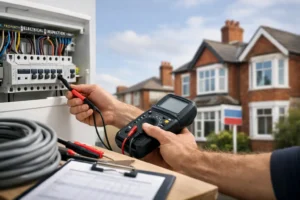
If you are pricing up a rewire, the first thing to know is that electrical rewiring costs UK-wide can vary more than many people expect. A small two-bed terrace with easy access is a very different job from a large period property with solid walls, dated fuse boards and years of alterations hidden behind the plaster. The headline figure matters, but what really decides value is the condition of the property, the specification you want, and how the work is planned.
A full rewire is not usually a cosmetic upgrade. In most cases, it is about safety, capacity and bringing an older installation up to modern standards. For homeowners, that often means enough sockets in the right places, proper earthing, modern consumer unit protection and wiring that can cope with today’s appliances, EV charging or future additions such as solar and battery storage. For landlords and developers, the focus may be compliance, reliability and avoiding costly remedial work further down the line.
Typical electrical rewiring costs UK property owners should budget for
As a broad guide, a full rewire in the UK commonly starts at around £3,500 to £5,500 for a small flat or one-bed property, £4,500 to £7,000 for a typical two to three-bed house, and £7,000 to £12,000 or more for larger homes. Higher-end figures are not unusual for bigger detached properties, listed buildings, or houses where access is difficult and making good is substantial.
Those numbers are useful for ballpark planning, but they are not a substitute for a proper survey. Two homes with the same number of bedrooms can produce very different quotes. One may have clear floor voids, accessible loft space and straightforward routes for new cabling. The other may have concrete floors, finished décor throughout and a long list of extras that push labour and materials up quickly.
If you are comparing quotes, make sure you are comparing like for like. Some prices cover first fix and second fix electrical works only, while others include a new consumer unit, testing, certification, removal of old fittings and basic making good. Plastering and redecoration are often excluded, which can catch people out if they have only looked at the electrician’s figure in isolation.
What pushes rewiring costs up or down?
The biggest cost driver is usually the size and layout of the property. More rooms generally mean more circuits, more sockets, more lighting points and more labour. But age and construction matter just as much. Older homes often hide awkward surprises, from brittle insulation and mixed wiring systems to previous DIY work that has to be corrected before a safe installation can be signed off.
Access is another major factor. If floorboards can be lifted neatly and there is loft access above, cabling routes are often simpler. If the property has solid floors, ornate finishes or limited voids, the electrician may need to chase more walls or use routes that take much longer to complete. That affects both disruption and cost.
Specification also makes a noticeable difference. A standard rewire with white plastic accessories will sit at one end of the scale. Add feature lighting, outdoor power, smoke alarms, data cabling, extractor fans, USB sockets, under-cabinet lighting or smart controls, and the total climbs. None of these are unnecessary extras if they suit the property, but they should be planned from the start rather than added piecemeal halfway through the job.
Then there is occupancy. Empty properties are almost always cheaper and easier to rewire than lived-in homes. Working around furniture, flooring, decorated rooms and family routines slows everything down. In some cases, a staged approach is possible, but it tends to be less efficient than doing the work in one organised programme.
Full rewire or partial rewire?
Not every property needs a full rewire. Sometimes the existing wiring is broadly serviceable, but certain circuits, the consumer unit or earthing arrangements need upgrading. A partial rewire can reduce costs if it is genuinely appropriate, especially where an extension, loft conversion or kitchen refurbishment is being carried out.
That said, partial rewires are not always the cheaper long-term option they appear to be. If old and new systems are being combined, extra testing and fault-finding may be needed, and future limitations can remain. In properties with widespread age-related issues, doing only part of the work can mean paying for disruption twice.
What should be included in a rewire quote?
A good quote should explain the scope clearly. At minimum, you would usually expect it to state how many sockets, switches and light points are included, whether the consumer unit is being replaced, whether smoke and heat alarms are part of the package, and whether testing and certification are included.
It should also say what happens with chasing and making good. Electricians typically cut chases and lift boards as needed for the installation, but plastering, decorating and floor covering repairs may sit outside the quote unless specifically agreed. On larger jobs, that is normal. The key is clarity before work starts.
You should also check whether the quote allows for modern usage. A house that had enough sockets twenty years ago may be short on practical points now. It is usually more cost-effective to install the right number during a rewire than to add them later. The same goes for future-proofing items such as an EV charger supply, solar-ready cabling or upgraded circuits in kitchens, utility rooms and home offices.
Testing, certification and compliance
A proper rewire should end with inspection, testing and certification. That gives you evidence that the installation has been checked and installed to the required standard. If notifiable work is involved, Building Regulations compliance also needs to be handled correctly.
This is one area where choosing a competent, accredited contractor matters. It is not just about ticking a box. Good testing catches issues before they become expensive call-backs, and proper certification is particularly important if you are selling, letting, refinancing or handing over a completed development.
Cost by property type
For flats and smaller terraces, the lower end of the market is possible where layouts are simple and access is decent. A straightforward one-bed flat might come in around £3,500 to £5,000, but that can rise if there are concrete ceilings, restrictive management rules or limited working hours.
For the average two or three-bed semi, many full rewires land somewhere between £4,500 and £7,500. That is often the range homeowners are dealing with, though the exact figure depends on finish level and whether the property is occupied.
Larger detached homes, older stone properties and substantial renovations can move well beyond that. It is not unusual to see figures from £8,000 upward where there are more circuits, outbuildings, bespoke lighting schemes or extensive making good considerations. If the house is being fully renovated anyway, the rewire may be easier to absorb into the wider programme and therefore better value overall.
How to keep costs sensible without cutting corners
The best way to manage a rewire budget is to plan properly. Decide early where furniture will go, where you need sockets, what lighting you actually want and whether any future upgrades should be allowed for now. Last-minute changes are one of the easiest ways to inflate the final bill.
Timing helps too. If you are already renovating, combining electrical work with plastering, kitchen installation or heating upgrades can reduce duplication and disruption. This is particularly useful in older homes where multiple trades need access to the same areas.
It is also worth being realistic about cheap quotes. A lower number on paper can become expensive if the scope is vague, certification is missing or important items have been excluded. Good electrical work should leave you with an installation that is safe, practical and built for years of use, not just a passable finish on handover day.
For homeowners, landlords and developers across the North East, that usually means choosing an electrician who understands both compliance and the way the property will be used in real life. SWH Electrical Solutions approaches rewires that way – practical, properly specified, and with the standards you would expect from a certified local contractor.
If you are weighing up whether now is the right time, think beyond the headline cost. A well-planned rewire can remove risk, reduce future remedial work and make the property far easier to live in, let or develop. That tends to feel like money better spent than patching the same old problems year after year.