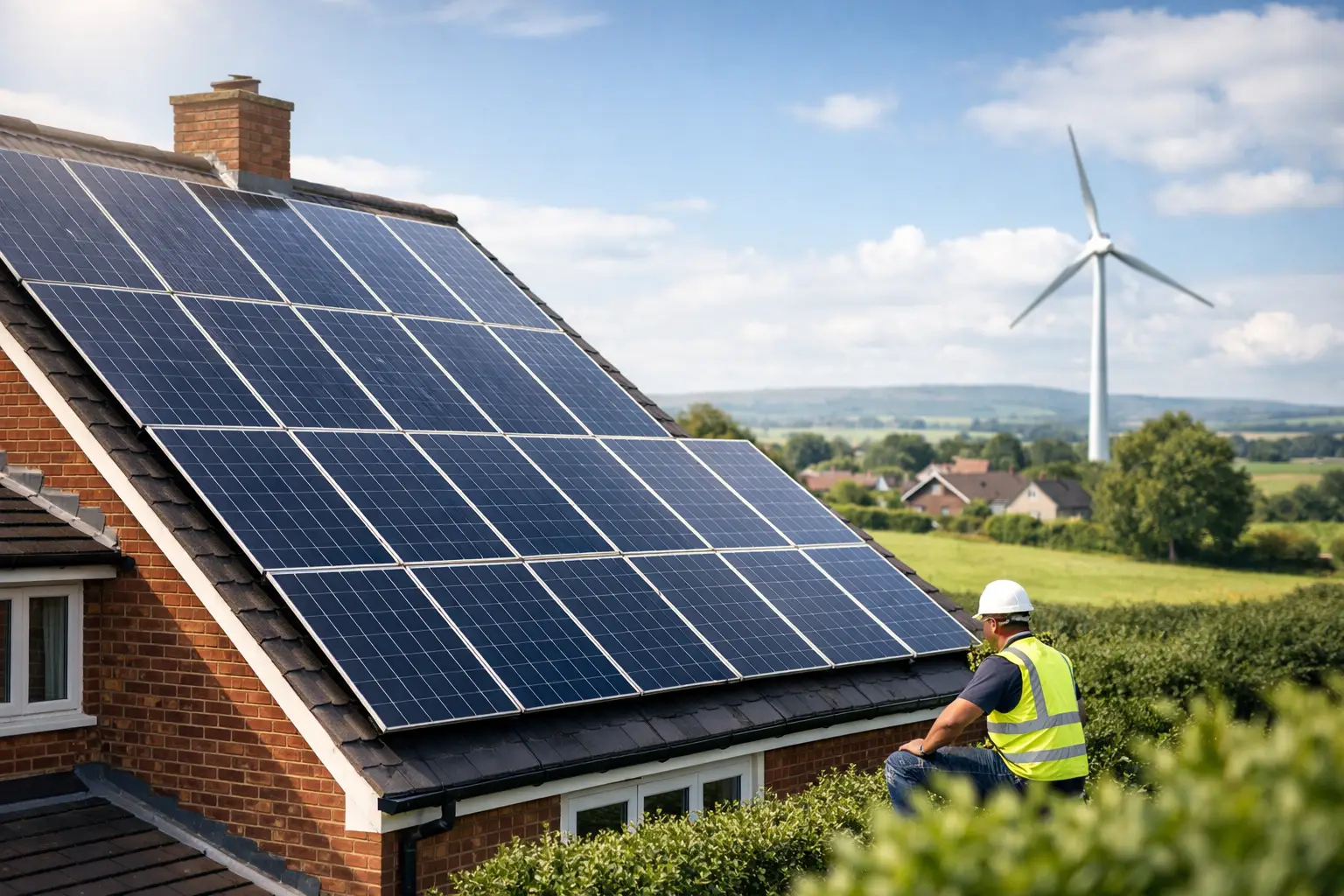
A lot of homeowners start by asking for the best domestic solar panels UK installers can offer, then quickly realise there is no single panel that is “best” for every roof. A panel that performs brilliantly on a large south-facing roof may not be the right fit for a smaller property, a shaded terrace, or a home where battery storage is part of the plan from day one. The right choice comes from matching the panel to the house, the energy use, and the long-term budget.
That is usually where good advice matters more than headline efficiency figures. If you are comparing domestic solar for your home, the smartest approach is to look beyond brand names and ask how the full system will perform in real UK conditions.
What makes the best domestic solar panels in the UK?
In practice, the best domestic solar panels in the UK are the ones that generate strong output across the year, suit your available roof space, come with dependable warranties, and are installed properly. That last part matters more than many people expect. A premium panel fitted on a poorly designed system will not outperform a well-specified panel on a properly surveyed roof.
For most homes, the main factors are efficiency, panel degradation, warranty length, appearance, and value for money. Efficiency tells you how much electricity a panel can produce from the space available. If your roof area is limited, higher-efficiency panels can make a real difference. If you have plenty of roof space, a slightly lower-efficiency panel may still deliver excellent value.
Degradation is worth paying attention to as well. All panels lose a little output over time, but the better products do so more slowly. Over 20 to 30 years, that gap adds up. A panel that costs a bit more upfront may produce noticeably more electricity across its lifespan.
Monocrystalline panels are usually the best fit
For most UK homes, monocrystalline panels are the leading option. They offer strong efficiency, a neat all-black appearance in many models, and solid long-term performance. They are particularly useful where roof space is at a premium, which is common on many domestic properties.
Polycrystalline panels were once a common budget choice, but they are far less attractive now because monocrystalline technology has improved and become more widely available. Thin-film panels do have specialist uses, but for standard domestic rooftops they are rarely the first recommendation.
So if you are wondering where to start, start with monocrystalline. Then compare specific panel models based on performance, warranty, and how they fit the rest of the system.
Efficiency matters, but not in isolation
Homeowners often focus on panel efficiency first, which is understandable. It is an easy number to compare. But the highest efficiency panel is not automatically the best buy.
If one panel is 22 per cent efficient and another is 20.5 per cent efficient, the higher-rated panel may produce more from the same area. That is valuable on a tight roof. But if the price difference is steep and you have room for an extra panel, the lower-cost option may offer better overall returns.
This is where a proper design makes the difference. A good installer will look at your roof orientation, pitch, any chimney or tree shading, and your daytime electricity use. They should also ask whether you are considering battery storage, an EV charger, or future changes such as working from home more often. Solar is not just about the panel – it is about how the whole setup works together.
The best panel for one roof may be wrong for another
A detached property with a broad, unshaded south-facing roof can often use a wider range of panels and still get very good results. A semi-detached home with east-west roof slopes may benefit from a different layout that spreads generation across the day rather than chasing the highest midday peak.
If there is partial shading from neighbouring buildings, dormers, or trees, panel-level optimisation may be worth considering. In those cases, the “best” system is not simply the one with the most efficient panels. It is the one that reduces losses and keeps generation consistent.
That is why straightforward rankings of “top 10 solar panels” can be misleading. They rarely tell you whether those panels are suitable for your roof, your household usage, or your budget.
Warranties tell you a lot about quality
When comparing domestic solar panels, look at both the product warranty and the performance warranty. The product warranty covers defects and build quality. The performance warranty sets out how much output the manufacturer expects the panel to retain after a number of years.
A longer warranty is not a guarantee of perfection, but it is a useful sign of manufacturer confidence. Many reputable panels now come with product warranties of 20 to 25 years, which gives homeowners a good level of reassurance.
That said, the paperwork is only part of the picture. You also want confidence in the installer. A technically sound installation, completed by an accredited contractor, is what turns those panel specifications into real-world performance. That is especially important if you want one contractor to manage the design, installation, testing, and any associated electrical work without passing responsibility around.
Are premium solar panels worth it?
Sometimes yes, sometimes no.
Premium panels can be well worth the extra cost if your roof space is limited, if aesthetics are a priority, or if you want the highest possible long-term output from a smaller system. They can also make sense for new builds and higher-spec properties where the aim is to future-proof energy performance from the outset.
But not every household needs the top end of the market. Many mid-range panels now offer very good efficiency, dependable warranties, and strong output for a lower upfront cost. For homeowners focused mainly on payback and bill reduction, those panels can be the smarter choice.
A grounded installer will tell you where premium makes sense and where it does not. If someone is pushing the most expensive panel on every project, that is usually a sign to ask harder questions.
Battery storage changes the conversation
The best domestic solar panels UK homeowners choose are often discussed as if the panels are the whole system. They are not. Battery storage can shift the value of solar dramatically, especially for households that are out during the day and use more electricity in the evening.
Without a battery, a good share of your solar generation may be exported rather than used at home. With a battery, more of that electricity can be stored for later. That can improve savings and make the system feel more useful day to day.
This does not mean every home needs a battery immediately. Some households prefer to install solar first and add storage later. Others want everything designed together from the start. Both routes can work, but they should be planned properly so the system is ready for future expansion if needed.
Don’t overlook the inverter and the installer
Panels get most of the attention, but the inverter is just as important. It converts the electricity your panels generate into usable power for the home. A weak choice here can affect monitoring, reliability, and system performance.
The installation standard matters just as much. Roof layout, cable routing, electrical protection, commissioning, and certification all need to be done properly. This is not a product you simply buy off a shelf. It is a technical installation tied directly into your property’s electrical system.
That is one reason many homeowners prefer working with a specialist that understands both solar and wider electrical work. Companies such as SWH Electrical Solutions build trust by handling the project in-house and backing it with recognised certifications, which gives customers clearer accountability from start to finish.
How to choose with confidence
If you are trying to decide between quotes, ask what panel is being proposed and why. Ask how much roof space it uses, what output is expected across the year, what the warranties cover, and whether the design leaves room for battery storage or EV charging later.
Also ask about realism. A trustworthy installer should explain trade-offs, not just promise huge savings. North-facing roofs can still work in some cases, but not always brilliantly. Shading can be managed, but not magically erased. Higher-efficiency panels can help, but they do not overcome every roof limitation.
The best conversations are usually the plainspoken ones. What will this system do for your home? How long is the likely payback? What happens if your electricity use changes in five years? Those answers matter more than a flashy brochure.
If you are choosing solar for your home, think less about chasing a perfect panel and more about building the right system. The best result is not the one with the fanciest specification – it is the one that quietly cuts your bills, works reliably for years, and suits the way you actually live.