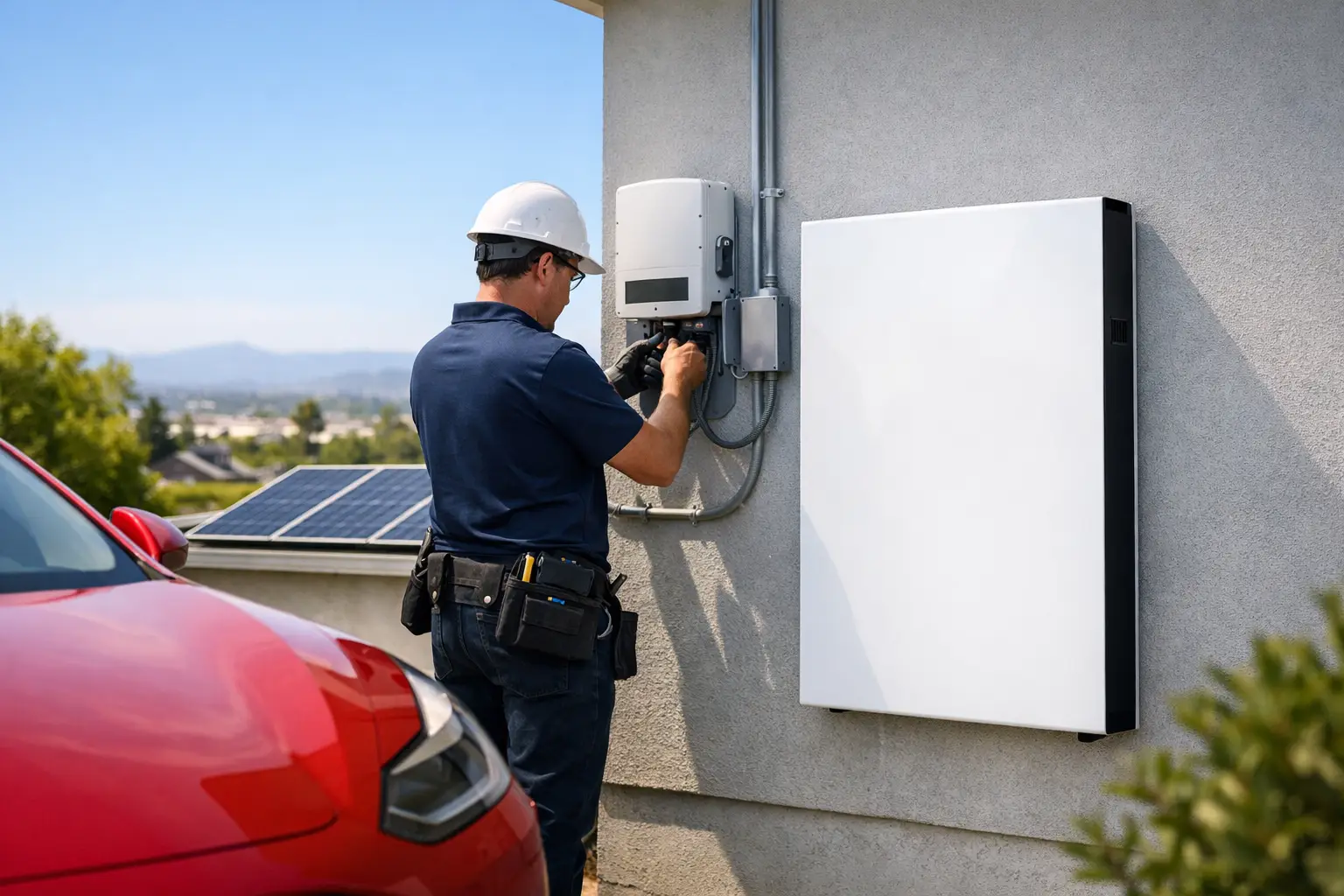
If your solar panels are exporting plenty of electricity by day, only for you to buy it back from the grid in the evening, tesla powerwall installation starts to make a lot of sense. For many households and businesses across the North East, the question is no longer whether battery storage is worthwhile. It is whether the system is designed and installed properly, and whether it will genuinely suit the building, usage pattern, and long-term plans.
A Powerwall is not a one-size-fits-all add-on. It can be a very smart investment, but only when the wider electrical setup is assessed properly first. That means looking at your generation, your consumption, your fuse board, your tariff, and what you actually want the battery to do.
What tesla powerwall installation actually involves
A lot of people imagine a battery simply being fixed to a wall and switched on. In reality, tesla powerwall installation is a full electrical project that needs careful planning and competent commissioning.
The process usually starts with a site survey. This is where the installer checks the property layout, the incoming supply, the consumer unit, cable routes, and whether the battery is best placed internally or externally. Powerwall units are designed to be versatile, but location still matters. Access, ventilation, wall construction, ambient temperature, and practical maintenance considerations all come into it.
From there, the system design is built around your property. If you already have solar, the battery has to integrate properly with the existing setup. If you are adding solar at the same time, the whole system can be designed as one package, which is often the tidier option. Commercial sites and new build developments may also need a more detailed design approach because load profiles, distribution arrangements, and future expansion can be more complex.
Installation day is about much more than mounting the battery. It includes electrical isolation, cabling, protection devices, system configuration, testing, and commissioning. Once installed, the system needs to be set up so it charges and discharges as intended and communicates correctly with the rest of the equipment. That final part matters more than many people realise. A battery that is technically installed but poorly configured will not deliver the savings or backup performance you expected.
Is Tesla Powerwall right for every property?
Not always, and that is where honest advice matters.
If your electricity use is low and most of your solar generation is already used during the day, the financial case may be less compelling than it is for a household that is empty in daylight hours and active in the evening. Equally, if you work from home, charge an EV overnight, or run a heat pump, battery storage can become much more attractive.
For commercial clients, it depends on when power is used, how much of it can be shifted, and whether resilience is a key concern. Some businesses are mainly looking to reduce imported electricity during expensive periods. Others want backup capability for critical circuits. Property developers may be thinking further ahead, using battery storage to improve the appeal and performance of new homes rather than focusing on simple payback alone.
This is why a proper assessment matters. Good advice is not about pushing a battery into every job. It is about matching the system to the building and the objective.
The practical benefits of Tesla Powerwall installation
The main appeal is straightforward. You store surplus electricity and use more of what you generate instead of exporting it unnecessarily. That can reduce grid reliance and improve the return on your solar system.
There is also the matter of energy security. Depending on the system design, a Powerwall can provide backup support during an outage. For some customers, that is a useful bonus. For others, especially where continuity matters, it is a key reason for investing.
Another benefit is visibility. Battery systems give you a clearer picture of how and when electricity is being used. That often changes behaviour in a good way. Once people can see where the energy is going, they tend to make better use of cheap-rate charging, solar generation, and timed demand.
That said, savings vary. A household with high evening usage and a well-sized solar array may see strong value. A property with limited generation or low consumption may not. Anyone promising identical results for every building is oversimplifying it.
What affects the cost?
The cost of tesla powerwall installation is shaped by more than the battery itself. The complexity of the electrical work matters. So does whether the battery is being fitted alongside a new solar system or retrofitted into an existing one.
Cable runs can affect labour and materials. So can the need for additional protection equipment, consumer unit upgrades, or changes to the current system layout. On some properties, the ideal battery position is close to the main electrical infrastructure, which keeps the job relatively straightforward. On others, the layout is less forgiving and the install takes more planning.
Commercial premises and larger domestic properties may need a broader design conversation. If there are multiple boards, three-phase supplies, or plans to expand later, it is better to account for that from the start rather than bolt solutions on afterwards.
A good quotation should reflect the real job, not just the headline product. That gives you a clearer idea of value and avoids awkward surprises once work begins.
Why installer quality matters so much
Battery storage is not a cosmetic upgrade. It is a significant electrical installation that must be carried out safely and in line with current standards.
That means technical competence, proper testing, and a clear handover. It also means understanding how battery storage fits into the rest of the property. If the building already has solar, EV charging, heating controls, or a more complex electrical arrangement, the installer needs to see the full picture.
This is where an in-house, multi-discipline approach has real value. When the same contractor understands solar, battery storage, electrical infrastructure, and broader compliance requirements, the job tends to run more smoothly. You avoid the usual finger-pointing that can happen when several trades are involved and nobody wants to own the detail.
For customers in Newcastle and the wider North East, local accountability matters too. If you need support, adjustments, or future expansion, it helps to be dealing with a team that is nearby and established, not one that has disappeared up the A1.
Planning for solar, EVs and future demand
One of the best reasons to consider Tesla Powerwall installation is not just what your property needs today, but what it may need next.
A lot of homes that start with solar soon add an EV charger. Some then move towards electric heating or a heat pump. Businesses may add more electrically powered equipment or look for ways to manage rising energy costs. Developers are under pressure to deliver more efficient, future-ready buildings from day one.
Battery storage fits neatly into that wider shift, but sizing and specification should be thought through carefully. If a system is undersized, you may quickly outgrow it. If it is oversized for your actual usage, the return may be slower than expected. The right answer sits somewhere in the middle, based on live demand, future plans, and budget.
That practical, measured approach is what customers tend to value most. Not hype. Not overpromising. Just a system that works properly and makes financial and technical sense.
Questions worth asking before you go ahead
Before agreeing to any install, ask how the battery will integrate with your existing electrical system, what backup capability is included, and whether any upgrades are needed to support the work. You should also ask how the system is expected to perform in your specific property, rather than accepting a generic savings estimate.
It is also sensible to ask who will carry out the work, what certifications the company holds, and what support looks like after commissioning. A battery is a long-term asset. You want confidence in the people installing it as much as the product itself.
For many customers, that is the point where the decision becomes clearer. The right installer will explain the trade-offs plainly, design the system around the property, and make sure everything is commissioned properly. That is exactly the sort of grounded, fully managed approach we believe in at SWH Electrical Solutions.
A well-planned battery system should leave you with fewer energy worries, not more. If tesla powerwall installation is being considered for your home, business, or development, the best place to start is with a proper assessment of how your building uses power now and how you want it to work in the years ahead.