If you are looking at a roof and wondering whether it could really make a dent in your electricity bills, the good news is that the answer is usually yes – but only if you understand what the system is actually doing. A lot of homeowners ask how domestic solar panels work, and the truth is simpler than many expect. They do not store sunshine, and they do not somehow power the whole house by magic. They turn daylight into usable electricity, and the rest comes down to system design, usage habits and whether the installation suits the property.
How domestic solar panels work in simple terms
A domestic solar system starts with photovoltaic panels, usually fitted on the roof where they can catch as much daylight as possible. Inside each panel are solar cells, most commonly made from silicon. When daylight hits those cells, it creates an electrical charge. That electricity is generated as direct current, known as DC.
Homes in the UK do not run on DC. Your sockets, lights and appliances use alternating current, or AC. That is why the inverter is such a key part of the system. It takes the DC electricity produced by the panels and converts it into AC electricity that your home can use safely.
Once that conversion happens, the electricity flows into your property’s consumer unit and is used by whatever is switched on at the time. If your washing machine is running, your fridge is on and someone is boiling the kettle, the solar power generated at that moment can help cover that demand. If the panels are producing more than you need, the surplus can be exported to the grid, or stored in a battery if you have one installed.
That is the basic process. No moving parts on the roof, no complicated mechanics, just daylight, electrical generation and conversion.
What each part of a home solar system does
The panels tend to get all the attention, but a domestic solar setup works properly because several components are doing their job together.
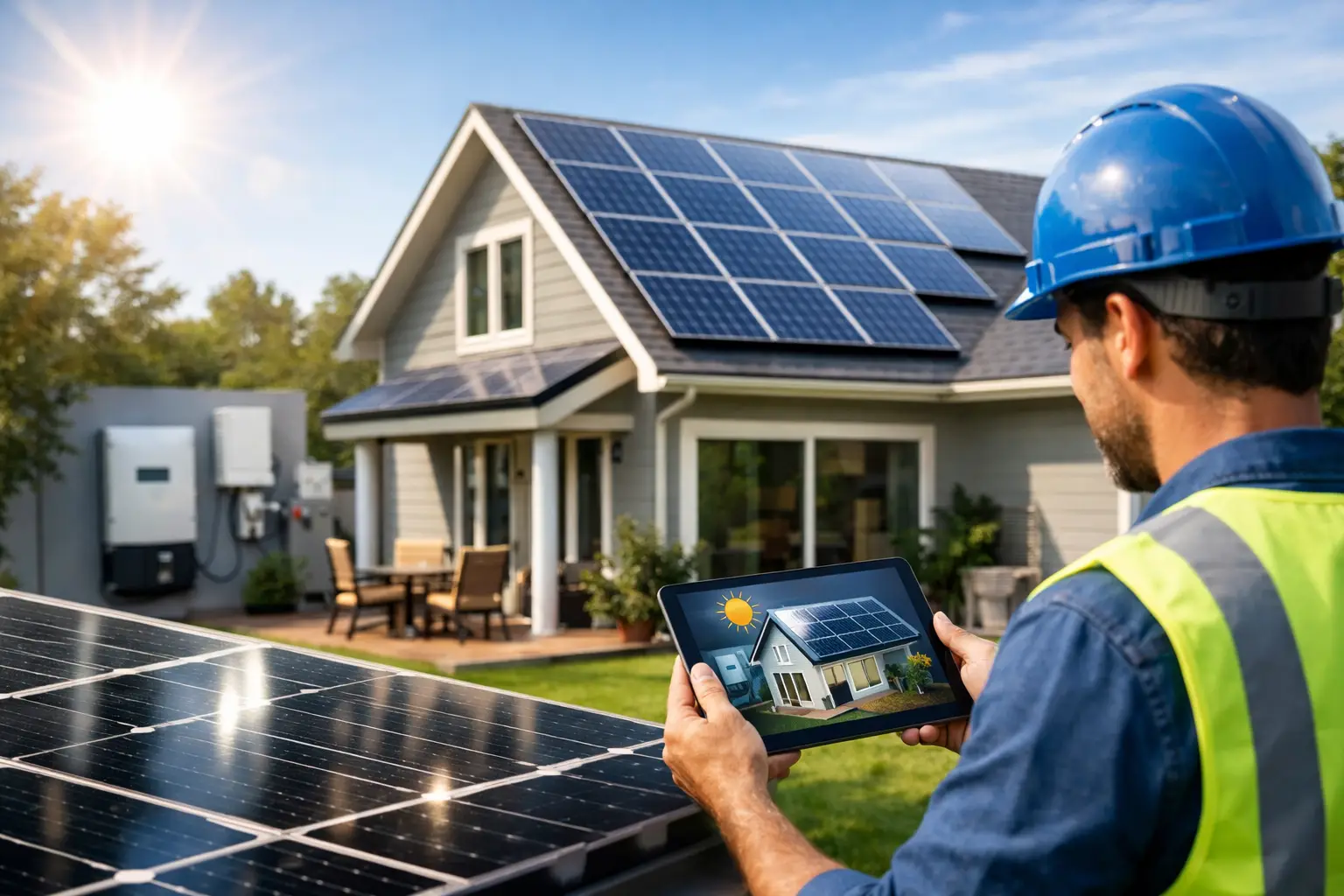
The solar panels generate electricity. The inverter converts it into a form your home can use. The mounting system secures everything to the roof safely and at the correct angle. Cabling connects the system together, and safety devices protect both the property and the installation.
If a battery is included, it stores excess electricity generated during the day so it can be used later, often in the evening when solar production has dropped but household demand is still high. Some systems also include monitoring software, which lets homeowners see how much energy is being generated, used, stored or exported.
This is where good design matters. Two houses might have similar roofs, but if one has heavy evening usage, an electric vehicle and a battery, the ideal setup could look very different from a property where the occupants are out all day and use very little power until late on.
Why solar panels still work on cloudy days
One of the most common misunderstandings is that solar only works in hot, bright weather. In the North East, that idea would put plenty of people off before they had even started.
Solar panels work from daylight, not direct heat. Strong sunshine will usually increase generation, but panels can still produce electricity on overcast days. Output will be lower than on a clear summer afternoon, of course, but not zero. That matters in the UK, where weather conditions change constantly and a well-designed system is built around realistic annual performance rather than perfect conditions.
In fact, solar panels can perform well in cooler temperatures. Very high heat can slightly reduce electrical efficiency, so the best generation days are not always the hottest ones.
When your home uses solar power first
A domestic system does not send all generated electricity straight to the grid and then buy it back. Your home uses what it needs first. That is a big part of where the savings come from.
If the panels are generating 2kW and your home is using 1.5kW at that moment, most or all of that demand can be supplied by solar. You then buy less electricity from your supplier. If the house suddenly needs more than the system is generating – for example, the oven goes on and someone starts the shower pump – the shortfall comes from the grid as normal.
This is why daytime consumption patterns matter. Households that can use more electricity during solar production hours often see better direct savings. Running appliances like the dishwasher, washing machine or immersion heater in the middle of the day can help make better use of what the roof is generating.
How batteries fit into the picture
Without a battery, excess generation usually goes back to the grid. With a battery, some of that spare electricity can be stored for later use.
For many homeowners, this is where solar starts to feel more practical. Instead of generating plenty of power at lunchtime and then buying electricity again in the evening, a battery lets you shift some of that energy into the hours when you actually need it. It can improve self-consumption and reduce reliance on imported electricity.
That said, batteries are not right for every property. They add cost, and whether they make financial sense depends on your usage pattern, tariff, system size and budget. Some customers want the quickest route to lower bills, while others want more energy independence and future flexibility, especially if they are also considering an EV charger or heat pump later on.
What affects how much electricity solar panels produce
If you want to understand how domestic solar panels work in real life, you have to look beyond the basic science and into performance factors.
Roof orientation makes a difference. In the UK, south-facing roofs often offer the strongest generation across the day, but east and west-facing roofs can still work very well. Sometimes they suit household usage better by spreading generation into the morning and late afternoon.
Roof pitch matters too, though it is not usually a deal-breaker. Shade is a bigger issue. Trees, chimneys, neighbouring buildings and dormers can all reduce output if they block daylight at the wrong times. A proper survey should assess that carefully rather than relying on guesswork.
Panel quality, inverter specification and overall system design also play a part. Bigger is not always better. A system needs to suit the available roof space, the property’s electrical setup and the way the occupants use energy. That is why accredited installation and proper technical assessment matter so much.
What happens at night
Solar panels do not generate electricity in the dark. At night, your home draws power from the grid unless you have stored energy available in a battery.
This catches some people out when they first start researching solar. They assume that because panels are installed, the property will somehow be powered around the clock. In reality, solar is a daytime generator. A battery helps bridge the gap, but even then, whether it covers the whole evening depends on how much was stored and how much the household uses.
Does solar mean going off-grid?
For most UK homes, no. Domestic solar is usually grid-connected. That means your home can use solar when it is available and import electricity when it is not.
Going fully off-grid is possible in some settings, but it requires a very different design approach, with much larger storage capacity and careful energy management. For the average home, the aim is not to cut the grid connection entirely. It is to reduce imported electricity, improve efficiency and give the property a stronger long-term energy setup.
Is it worth it for older homes?
Very often, yes. An older property can still be an excellent fit for solar, as long as the roof is structurally suitable and the electrical system is in good enough condition to accommodate the installation safely.
This is another reason a joined-up contractor can make life easier. If the property also needs electrical upgrades, consumer unit work or related improvements, it is far better to spot that early than to force a solar system onto an unsuitable setup. At SWH Electrical Solutions, that practical view matters because customers are rarely dealing with one issue in isolation.
The real value is in the design, not just the panels
People often compare panel wattages or ask which brand is best, but the bigger question is whether the whole system has been designed around the building and the people living in it. A good installer looks at roof layout, shading, current usage, future demand and the condition of the wider electrical system.
That is what turns solar from a nice idea into something that performs properly year after year. It is also what helps avoid disappointment. A poorly designed system can still generate electricity, but that does not mean it will deliver the savings or usability the homeowner expected.
Domestic solar is not a gimmick, and it is not only for brand-new eco homes. It is a practical way to generate your own electricity, reduce dependence on rising energy prices and make better use of your property. The clever part is not that sunlight becomes power. It is making sure the system is built to suit the way you actually live.