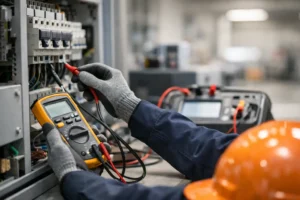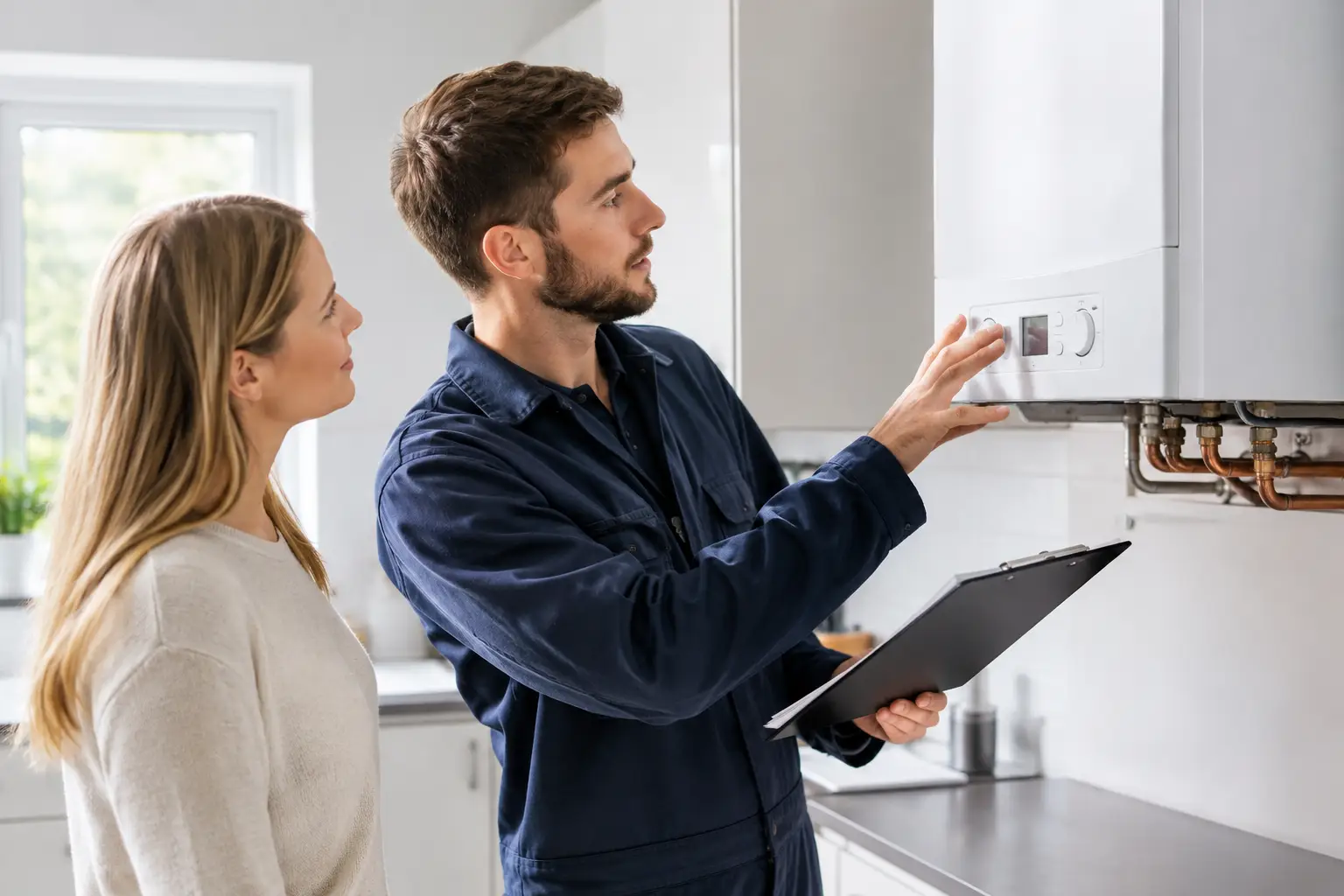
A boiler can appear to be working perfectly until it does not. For landlords, that is why a guide to landlord gas certificates needs to be about more than ticking off an annual appointment. The certificate is a legal record, but the real purpose is to protect tenants from gas leaks, fires and carbon monoxide poisoning.
For landlords across Newcastle and the North East, staying on top of gas safety is one of the clearest ways to look after a property, avoid unnecessary disruption and meet your responsibilities with confidence.
What is a landlord gas safety certificate?
A landlord gas safety certificate is commonly known as a CP12. It records the outcome of an annual gas safety check carried out at a rented property by a suitably qualified Gas Safe registered engineer.
The formal record confirms whether the gas appliances, pipework, flues and safety devices that fall under the landlord’s responsibility have been checked for safe operation. This may include a gas boiler, gas fire, cooker or hob supplied with the property, along with the associated flues and ventilation.
A CP12 is not the same as a boiler service. A safety inspection checks that an appliance is operating safely at that point in time. A service is more detailed maintenance work, often following the manufacturer’s instructions, intended to keep the appliance efficient and reliable. In practice, arranging both at the same visit can be sensible, particularly for a boiler, but one does not automatically replace the other.
Who needs a landlord gas certificate?
In England, landlords must arrange an annual gas safety check for rented homes where gas appliances, fittings or flues are provided for tenants’ use. This includes private landlords and can apply to houses, flats and many houses in multiple occupation.
The responsibility normally sits with the person or organisation that owns or manages the rented accommodation and supplies the gas installation. It does not disappear because a letting agent handles the tenancy. An agent can arrange the inspection on a landlord’s behalf, but the landlord should still make sure it has been completed and recorded correctly.
If a tenant owns their own gas appliance, such as a cooker they brought into the property, it is generally not covered by the landlord’s annual check. However, the landlord remains responsible for the gas pipework, any connection supplied by the property and flues or chimneys serving landlord-provided appliances. Where there is any uncertainty, it is better to ask a Gas Safe registered engineer before assuming an item is outside the inspection.
What does the annual gas safety check cover?
The engineer will inspect the relevant gas installation and appliances to establish that they are safe to use. The exact work depends on the appliances at the property, but a proper check typically considers whether:
- gas appliances are burning fuel correctly and safely
- flues and chimneys are clear and removing combustion products effectively
- ventilation is suitable and unobstructed
- safety devices are working as intended
- gas pipework and connections are sound
- an appliance has been installed and positioned safely
The engineer must be Gas Safe registered and qualified for the type of work being carried out. Gas Safe registration alone is not a catch-all licence for every appliance, so it is worth checking that the engineer is competent for the boiler, cooker, fire or other equipment at your property.
If the inspection identifies a fault, the engineer will explain the classification and what must happen next. An unsafe appliance may need to be turned off or disconnected until it has been repaired. That can feel inconvenient when a tenant needs heating or hot water, but leaving a dangerous appliance in operation is not an option. Prompt repairs and clear communication are the fairest route for everyone.
When must the check be completed?
A gas safety check is required every 12 months. Landlords can have the next check carried out during the 10 to 12 months after the previous inspection while keeping the original renewal date. This gives useful flexibility for arranging access without gradually bringing the deadline forward each year.
For a new tenancy, a current gas safety record must be provided before the tenant moves in. For existing tenants, give them a copy of the new record within 28 days of the check. Landlords must also keep gas safety records for at least two years.
These deadlines are straightforward on paper, but they are easy to miss across a portfolio of properties. A simple diary system, property management software or a trusted contractor who sends renewal reminders can prevent a last-minute scramble. Booking before the busy autumn period is often a sensible move, especially where boiler servicing is also due.
What information should a CP12 include?
The certificate should clearly identify the property, the landlord or managing agent, the appliances checked and the date of the inspection. It should also show the findings of the safety checks, details of any defects or action taken, the date the next check is due and the engineer’s Gas Safe registration details.
Keep the record somewhere secure and easy to retrieve. A digital copy is useful for quick sharing with tenants or agents, but it should be legible and complete. Tenants can receive the record electronically if they agree and can access it, although offering a paper copy is often the simplest approach where preferences are unclear.
A good certificate is more than an administrative document. It creates a useful maintenance history. Repeated advisories, ageing parts or signs of poor boiler performance can help you plan replacement work before a breakdown becomes an emergency call-out.
What if a tenant will not allow access?
Tenants have a right to quiet enjoyment of their home, but landlords also have a duty to keep gas installations safe. The answer is not to turn up unannounced or force entry for a routine inspection. Instead, make reasonable, well-documented attempts to arrange access.
Start early, offer appointment options and explain plainly why the visit is needed. Follow up in writing if calls or messages go unanswered, retaining copies of letters, emails and texts. If access is repeatedly refused, seek appropriate advice from your managing agent, local authority or legal adviser. Evidence of genuine attempts matters, but it is not a free pass to let the annual check lapse.
For vacant properties, the same principle applies. Before reletting, ensure the gas safety record is current and deal with any concerns found during the inspection. It is a far better time to resolve a boiler issue than the first cold week after a new tenant has moved in.
Carbon monoxide alarms and wider safety duties
Gas safety certificates are one part of a landlord’s wider safety responsibilities. In England, landlords must ensure a carbon monoxide alarm is fitted in every room used as living accommodation that contains a fixed combustion appliance, excluding gas cookers. They must also make sure alarms are repaired or replaced once informed that they are faulty.
For day-to-day safety, encourage tenants to test alarms regularly and report warning lights, unusual boiler noises, soot marks, pilot light problems or headaches and dizziness that seem worse at home. Tenants should never cover vents or try to repair gas appliances themselves.
It also makes sense to keep electrical safety, smoke alarms and heating maintenance on the same compliance calendar. They are separate obligations, but managing them together gives landlords a clearer picture of a property’s condition and reduces avoidable appointments for tenants.
Choosing the right engineer
Price matters, particularly where several properties are due at once, but the cheapest appointment is not always the best value. Look for a Gas Safe registered engineer who is qualified for the appliances in question, provides clear records and explains any remedial work without jargon.
For landlords with older housing stock, a combination of annual checks and planned maintenance can be especially worthwhile. An ageing boiler may still pass its safety inspection while becoming less dependable or more expensive to repair. There is no single replacement point that suits every property, but knowing the condition of the system helps you budget on your terms rather than during an urgent failure.
SWH Electrical Solutions has Gas Safe registered heating engineers who can carry out CP12 landlord gas safety checks alongside boiler servicing and wider property compliance work. Having one dependable local team can make coordination simpler, especially when tenants, agents and maintenance schedules all need to line up.
A well-managed gas safety check gives tenants reassurance without fuss and gives landlords a clear record that the right steps have been taken. Put the next renewal date in the diary early, keep communication courteous and treat any warning signs seriously – it is practical property care that protects people first.