A boiler pressure gauge dropping towards zero is easy to spot, but the reason behind it is not always obvious. Understanding why boilers lose pressure can help you make a few sensible checks, avoid unnecessary disruption and know when it is time to call a Gas Safe registered engineer.
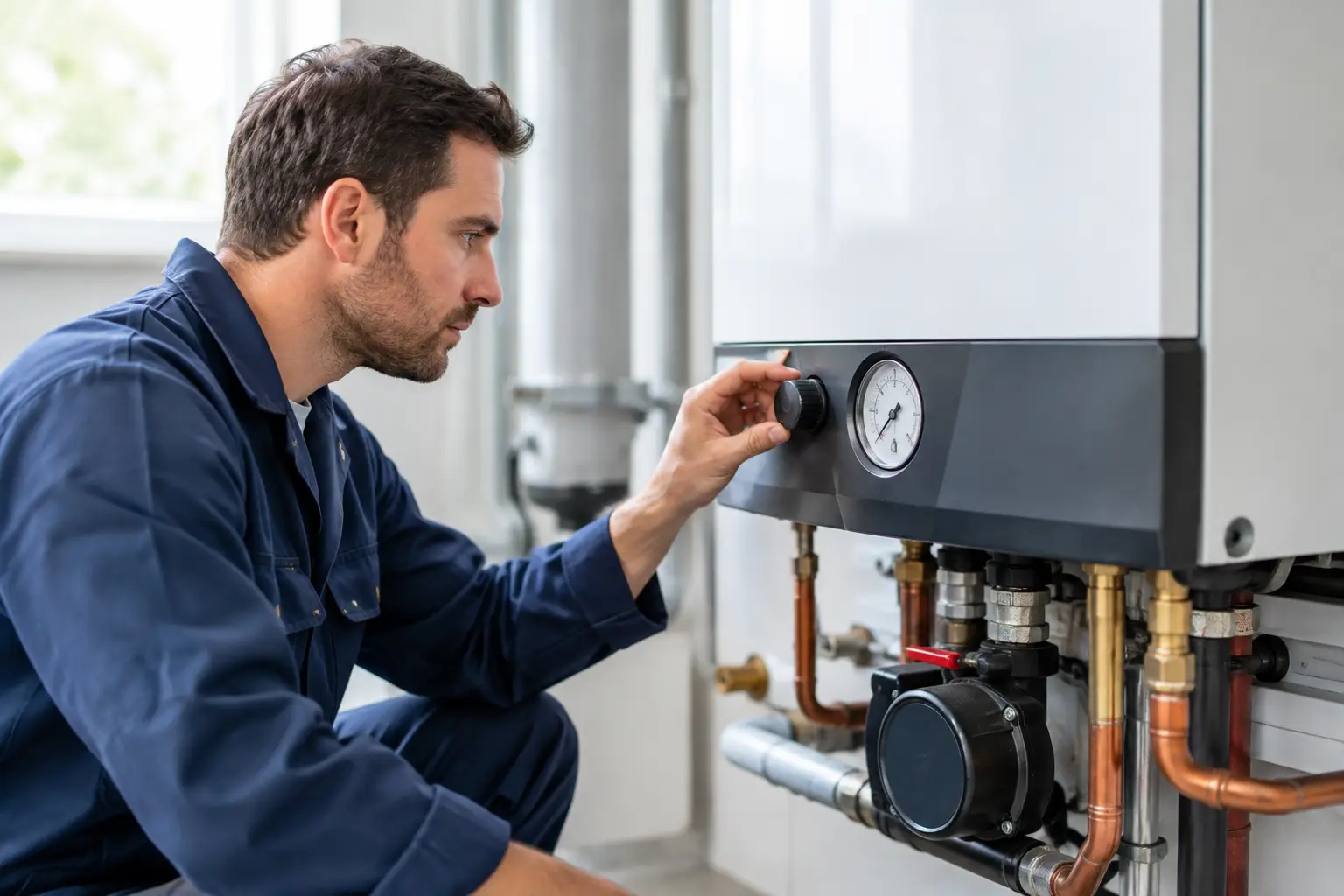
Most modern sealed heating systems work within a set pressure range, usually around 1 to 1.5 bar when the system is cold. As the heating warms up, that reading may rise slightly. If it regularly falls below 1 bar, your boiler may stop working or display a fault code to protect itself. Topping the pressure up can get the heating running again, but repeated pressure loss needs investigating rather than simply refilling.
Why do boilers lose pressure?
In a sealed central-heating system, pressure drops when water escapes from the system or when there is a fault affecting how pressure is managed. The cause may be something straightforward, such as a radiator valve weeping slightly, or something less visible, such as a problem inside the boiler.
A one-off drop after radiators have been bled is often normal. Bleeding releases trapped air, but it can also reduce the amount of water in the system. In that case, carefully repressurising the boiler according to the manufacturer’s instructions may be all that is needed.
If the pressure falls again over days or weeks, however, treat it as a sign that water is being lost somewhere. Left unresolved, the issue can affect heating performance, increase the risk of boiler breakdown and lead to water damage if a leak worsens.
Common causes of boiler pressure loss
A leak from a radiator, pipe or valve
Small leaks are one of the most common reasons for ongoing pressure loss. Look around radiator valves, pipe joints and visible sections of pipework for damp patches, rust marks, staining or greenish deposits around copper fittings. Check beneath radiators too, particularly in rooms that are rarely used.
Not every leak is easy to find. Pipes may run under floors, behind kitchen units or within walls, and a tiny leak can evaporate before it creates an obvious puddle. If the gauge keeps dropping and nothing is visible, an engineer can assess the boiler and heating circuit properly rather than relying on guesswork.
A faulty pressure relief valve
The pressure relief valve is a safety component. It releases water if boiler pressure rises too high, preventing excessive pressure from damaging the system. It normally discharges through a copper pipe that exits outside the property.
If this valve is passing water when it should be closed, the system will gradually lose pressure. A useful external check is to look at the end of the discharge pipe for drips or signs that the ground below is regularly wet. Do not interfere with the valve itself. An engineer will need to identify why it has opened and whether it needs replacing.
An issue with the expansion vessel
The expansion vessel absorbs the increase in water volume as your heating system warms up. When it loses its internal charge or develops a fault, boiler pressure can rise sharply while the heating is on. The pressure relief valve may then release water outside, leaving the pressure too low once the system cools down.
This pattern is a helpful clue: the gauge starts at a normal level when cold, climbs close to 3 bar during use, then drops substantially afterwards. Repressurising may offer a short-term fix, but it will not correct the underlying expansion vessel issue.
A leak within the boiler
Boilers contain seals, pumps, heat exchangers and connections that can wear over time. Internal leaks may not be visible without removing the boiler casing, which must only be done by a suitably qualified Gas Safe registered engineer.
You might notice staining beneath the boiler, an occasional drip, corrosion on visible pipework or a repeated need to top up pressure. Some internal leaks are minor at first, but prompt attention can prevent a more expensive repair later.
Recently bled radiators or carried out work
Pressure can fall after bleeding radiators, replacing a radiator, fitting a new towel rail or carrying out other plumbing work. Air must be removed from the system for radiators to heat evenly, but the system then needs refilling to its correct cold pressure.
Check the boiler manual for the recommended range and use the filling loop only if you understand the process. Overfilling is just as unhelpful as running the boiler at low pressure. If in doubt, a heating engineer can show you what normal readings look like for your particular system.
What you can safely check at home
Start by checking the pressure gauge or digital display while the system is cold. Make a note of the reading, then check it again after the heating has been running for an hour or two. A modest rise is expected. A large swing, repeated loss of pressure or a reading approaching 3 bar points to a fault worth booking in.
Walk around the property and inspect accessible radiators, valves and pipework. Feel for moisture only where it is safe to do so, and look for staining beneath the boiler and around radiator connections. Outside, check whether the pressure relief discharge pipe is dripping.
It is also worth checking whether any radiators were recently bled. If they were, a single careful top-up may be appropriate. Follow your boiler manufacturer’s instructions, close the filling loop fully afterwards and never leave it connected or open unnecessarily.
Avoid taking the boiler casing off, adjusting safety valves or repeatedly repressurising the system every few days. Those actions can mask a developing problem, and work on gas appliances should always be carried out by a Gas Safe registered professional.
When to call a heating engineer
Arrange an inspection if you need to top up more than once, cannot find the source of pressure loss or notice the pressure rising dramatically when the heating is on. You should also call an engineer if there is water around the boiler, a persistent fault code, unusual noises, poor heating performance or signs of corrosion.
For landlords, boiler reliability is more than a comfort issue. It can affect tenants, planned maintenance and wider gas safety responsibilities. Recording recurring faults and dealing with them early is usually far less disruptive than waiting for the boiler to stop on a cold North East morning.
SWH Electrical Solutions has a dedicated team of Gas Safe registered heating engineers for boiler servicing, repairs and heating work across Newcastle and the surrounding area. A proper visit should focus on the cause of the pressure loss, not just restoring the gauge to a normal reading before leaving.
Can you keep using a boiler that loses pressure?
It depends on how quickly the pressure is falling and what is causing it. If pressure dropped once after radiator bleeding and remains stable after a correct top-up, the boiler may continue to operate normally. If it is falling repeatedly, do not treat regular topping up as routine maintenance.
A slow external leak can become a larger leak. A faulty expansion vessel can put strain on other components. And if low pressure causes the boiler to lock out, you could be left without heating or hot water when you need it most. Addressing the cause early is the sensible route.
Keep an eye on the gauge, note any changes in how the boiler behaves and book a professional assessment if the pattern continues. A small pressure issue is often manageable when dealt with promptly – and a clear diagnosis gives you confidence that your heating system is ready for the colder months.