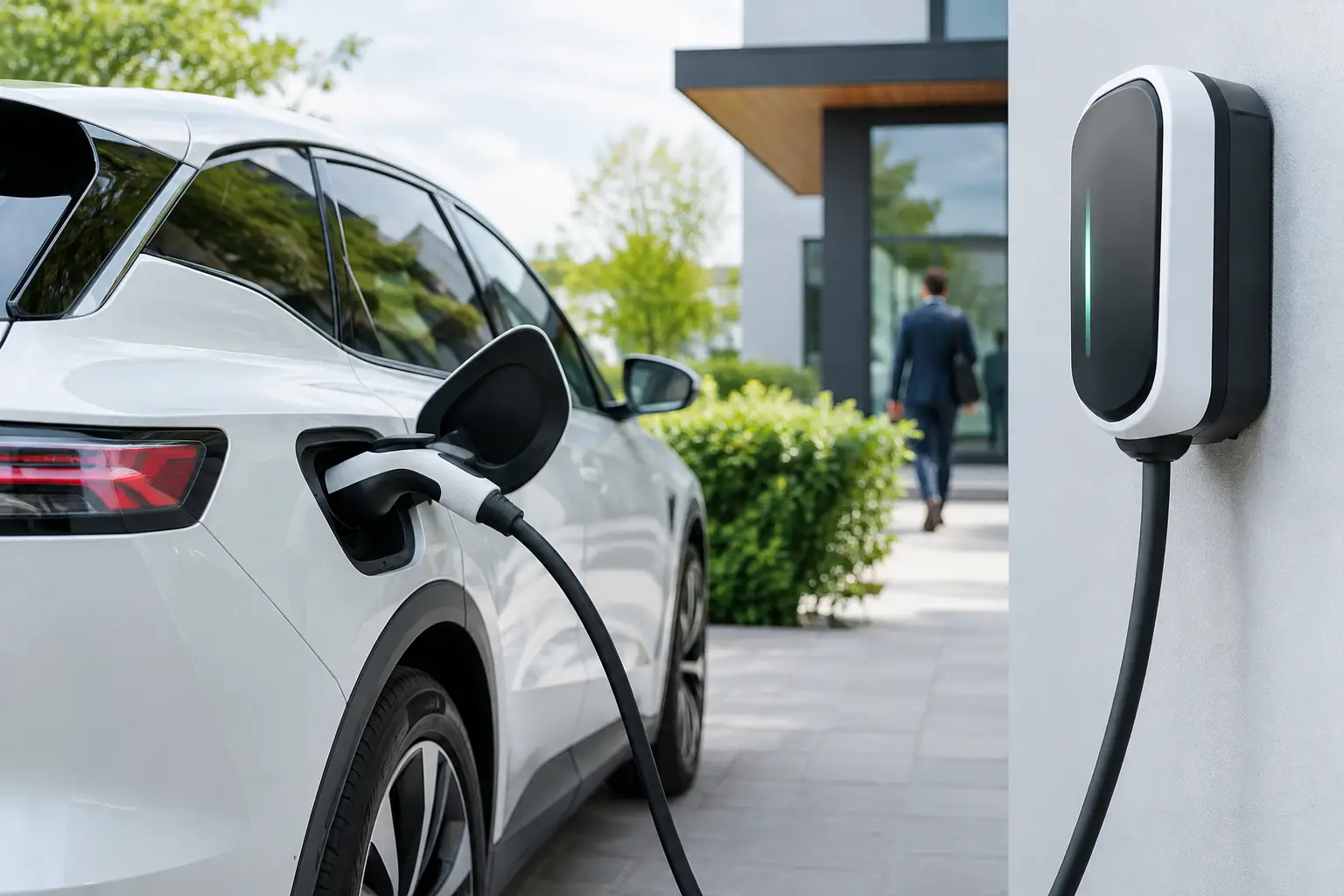
An EV charger is no longer just a socket on the wall. The best EV charger features can reduce charging costs, make better use of solar generation, protect a property’s electrical supply and give owners far more control over when and how vehicles charge. For a homeowner in the North East, or a business managing several vehicles, choosing the right features at the start can avoid an expensive rethink later.
The right specification depends on the vehicle, the building’s electrical capacity, parking arrangements and how the electricity is bought. A charger that looks like a bargain can become poor value if it cannot schedule off-peak charging, accommodate solar panels or manage demand safely. Here is what is genuinely worth considering before installation.
Best EV charger features for everyday charging
Smart scheduling and tariff integration
For most drivers, smart scheduling is one of the most useful features to have. It lets the charger run when electricity is cheaper, rather than immediately when the cable is connected. With a time-of-use tariff, this can make a meaningful difference to the cost of running an electric vehicle over a year.
A good charger should allow schedules to be set through an app, while still being simple enough to override when a quicker charge is needed. Look for clear controls, reliable connectivity and the ability to set a target departure time. The charger can then use the available low-cost hours before you need the car, rather than relying on you to remember to change settings every evening.
It is worth checking which energy tariffs and vehicle brands are supported. Features advertised as intelligent charging vary between manufacturers. Some chargers work directly with selected tariffs or cars; others simply follow a schedule set by the user. Both can work well, but the difference should be clear before buying.
Solar charging that uses surplus generation
For homes and businesses with solar PV, solar compatibility should be high on the list. A solar-aware charger can respond to the electricity being generated on site and direct surplus power into the vehicle rather than exporting it to the grid.
There are a few ways this can operate. Some systems charge only from surplus solar, which is useful when there is no rush to fill the battery. Others blend solar power with grid electricity to maintain a chosen charging speed. The best option depends on driving patterns. A household that uses the car every day may prefer a minimum charge rate, while a second car that sits on the drive during working hours can make excellent use of solar-only charging.
Solar charging requires the correct monitoring equipment and installation design. It is not simply a matter of fitting any charge point next to a solar inverter. An electrician should assess how the charger, solar system, battery storage and main supply will communicate and operate together.
Load balancing to protect the electrical supply
A charge point can be one of the largest electrical loads in a building. At home, a 7 kW charger is normally the practical choice for single-phase supplies, but it still needs to coexist with cooking appliances, showers, heating controls and the rest of daily life. In commercial settings, several vehicles charging at once can put substantial pressure on the supply.
Dynamic load balancing monitors overall demand and reduces charging output when the building is close to its limit. When other demand falls, the charger can increase output again. This helps prevent overloads and can reduce the need for a costly supply upgrade.
For workplaces, blocks of flats and new developments, this feature is particularly valuable. It allows charging infrastructure to be installed with a sensible expansion plan rather than assuming every bay will always need maximum power at the same time. Capacity planning should be based on real vehicle use, not just the number of parking spaces.
Suitable power rating and future capacity
A faster charger is not automatically a better charger. The vehicle, property supply and available time between journeys all matter. Many UK homes can use a 7 kW unit, which is sufficient for overnight charging for most drivers. Three-phase properties may be able to support higher-powered AC charging, although the car must also be capable of accepting it.
For commercial projects, selecting the right power rating means looking beyond the first year. Will staff, tenants or fleet drivers need more chargers in future? Is the electrical intake sized for that growth? Can the installation include containment, spare ways in the distribution board or provision for additional load management?
A well-designed installation leaves room to grow without paying twice for groundwork, cabling and disruption. This is especially relevant for property developers, where EV provision is now part of delivering homes that feel ready for modern living.
Features that make a charger easier to live with
App control, connectivity and useful data
Most smart chargers offer app control, but not every app is equally helpful. The useful basics are live charging status, start and stop controls, scheduled charging, energy use and cost reporting. For businesses, reporting by user, vehicle or charging session can support expense claims and operating-cost decisions.
Consider what happens if Wi-Fi is weak where the charger will be installed. A unit positioned at the end of a driveway, in a detached garage or across a large car park may need a stronger signal, Ethernet connection or mobile data option. The charger should still be safe and usable if the internet drops out, even if certain smart functions are temporarily unavailable.
Data has a practical role too. If charging suddenly becomes more expensive, or a vehicle is not charging as expected, usage information can help identify the cause quickly. The aim is not another app for the sake of it, but clear information that helps owners make better decisions.
Tethered or untethered design
A tethered charger has a cable permanently attached. It is convenient: pull up, plug in and charge. It suits households where the same connector type is used every day and can be particularly welcome in poor weather.
An untethered unit has a socket, with the charging cable stored in the vehicle. It often looks neater and can be more flexible where different vehicles use the space. There is no universal answer. Consider cable length, where the car’s charging port sits, whether the cable will cross a walkway and who will be using the point.
In a workplace, a socketed unit can also reduce the risk of a permanently fixed cable being left on the ground or damaged. At home, convenience may carry more weight. A survey should make these practical details clear before a charger is chosen.
Access control for shared parking
A private driveway may only need simple plug-and-charge access. A business car park, communal development or rental property is different. RFID cards, app authorisation or key-switch access can prevent unauthorised use and create a record of who has charged.
Where electricity is being reclaimed from staff, visitors or tenants, choose a system that supports the required reporting and payment arrangement. Some sites need straightforward user identification; others need more detailed back-office management. Paying for enterprise-level features at a small private site makes little sense, but under-specifying a shared facility can create avoidable disputes.
Safety, installation and standards come first
The charger itself is only part of the job. Safe EV charging depends on correct cable sizing, earthing arrangements, protective devices and testing. The existing consumer unit, supply capacity and route for the cable all need to be assessed, rather than guessed from a photograph of the driveway.
Outdoor equipment should be suitable for the location and mounted where it will not be repeatedly knocked by vehicles, bins or gates. The cable route should avoid trip hazards and unnecessary strain. For commercial premises, signage, protection from vehicle impact and access arrangements may also need attention.
UK smart charge point requirements have raised the standard for domestic and workplace equipment, including smart functionality and security expectations. However, compliance should not be treated as a box-ticking exercise. A properly specified system needs to work safely when demand is high, when connectivity is lost and when the site changes over time.
Using an experienced, accredited electrical contractor matters here. At SWH Electrical Solutions, EV charge point work can be considered alongside solar, battery storage and wider electrical upgrades, so the recommendation is based on the whole property rather than one product alone.
Questions worth asking before you choose
Before approving a quotation, ask whether the charger can schedule around your electricity tariff, work with existing or planned solar PV, and manage demand alongside other large loads. Ask what connectivity it needs, what happens if that connection fails, and whether the app or reporting functions have ongoing subscription costs.
For a business or development, also ask how more chargers could be added later. The answer may influence the first installation’s cable routes, distribution equipment and control system. A modest amount of planning now can make future expansion much simpler.
The best charger is the one that fits the way the property is actually used. A clear survey, honest advice on available capacity and a charger chosen for the next few years – not just the first few weeks – will give you charging that remains convenient, cost-conscious and dependable.