A failed inspection can throw plans off quickly – whether you are a landlord trying to stay compliant, a business owner keeping staff safe, or a homeowner wondering what actually needs testing. When people ask about EICR vs PAT testing, they are usually trying to answer a practical question: what am I legally required to do, and what is simply good sense?
The short answer is that they are not the same thing. An EICR checks the fixed electrical installation in a property. PAT testing looks at portable electrical appliances. One covers the wiring and systems built into the building, while the other focuses on the equipment you plug in and move around. In plenty of properties, both matter.
EICR vs PAT testing at a glance
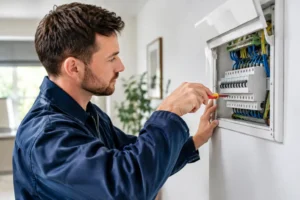
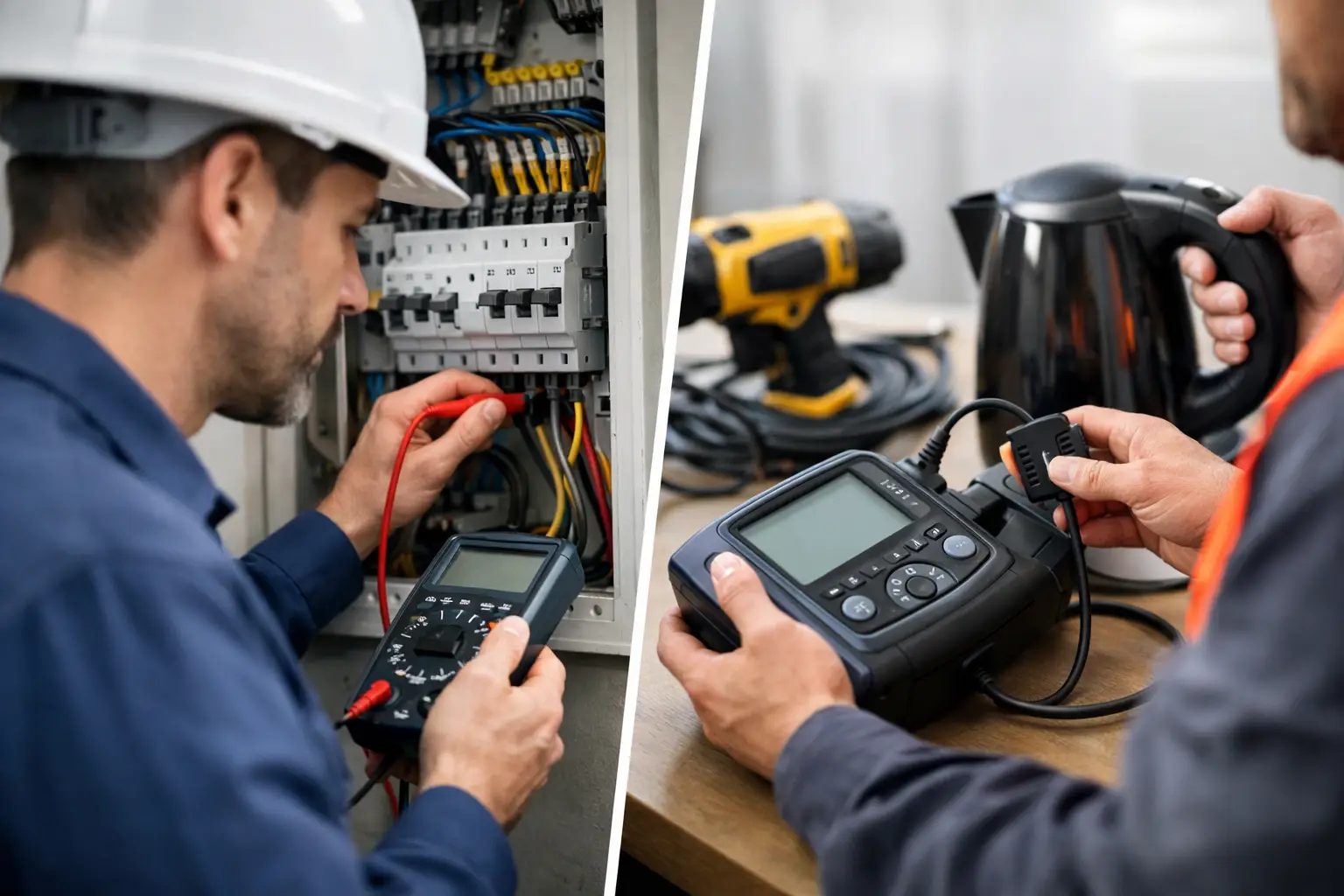
An EICR, or Electrical Installation Condition Report, is a formal inspection of the permanent electrical installation. That includes things like consumer units, wiring, sockets, light fittings, earthing and bonding. The aim is to assess whether the installation is safe for continued use and to identify deterioration, damage, defects or anything that does not meet current safety standards.
PAT testing stands for Portable Appliance Testing. It applies to electrical appliances that can be moved or disconnected from a socket or spur. Kettles, monitors, extension leads, vacuum cleaners, printers and desk fans are common examples. The test process usually includes a visual inspection and, where needed, electrical testing using specialist equipment.
If you picture a building as a whole system, the EICR checks the skeleton of the electrics. PAT testing checks the day-to-day kit people actually use. That distinction matters because a property can pass one and still have issues with the other.
What an EICR actually covers
An EICR is about the condition of the fixed installation, not just whether the lights switch on. A proper inspection looks at how safely the entire electrical system has been designed, installed and maintained over time.
That means checking for overloaded circuits, signs of wear, unsuitable DIY alterations, poor earthing, damaged accessories and older components that may no longer offer the level of protection expected today. The report will also flag observations with coding, so you can see what needs urgent action and what should be improved.
For landlords, the stakes are fairly obvious. In rented property, electrical safety obligations are not optional. For commercial premises, an EICR helps demonstrate that the installation is being properly maintained. For homeowners, it is often most useful when buying, selling, renovating or dealing with an older property that has not been inspected for years.
An EICR is not a pass-fail sticker in the same way people sometimes expect. It is a condition report. If issues are found, the result may be unsatisfactory until remedial works are completed.
What PAT testing actually covers
PAT testing is narrower, but it is still valuable. It focuses on appliances that can become unsafe through heavy use, damage, poor repairs or simple wear and tear.
A visual inspection is a big part of it. Cracked plugs, damaged cables, loose connections and signs of overheating are often found before a tester is even plugged in. After that, electrical tests can be used to check things such as insulation resistance, polarity and earth continuity, depending on the appliance type.
This matters in workplaces because portable appliances are handled, unplugged, moved and sometimes abused far more than fixed wiring. A kettle in a staff kitchen, a power tool on site or a laptop charger in a busy office can all become risks if nobody is checking them.
PAT testing is also relevant in rented property, particularly where landlords provide appliances. If you supply white goods or other electrical equipment, you have a responsibility to make sure they are safe.
EICR vs PAT testing: which one is a legal requirement?
This is where confusion creeps in. People often ask which test the law says they must have, but the answer depends on the type of property and how it is used.
For private rented homes in England, an EICR is a clear legal requirement at least every five years, or sooner if the report says so. In commercial settings, the legal duty is broader. Employers and duty holders must maintain electrical systems in a safe condition, and an EICR is one of the main ways to show that duty is being taken seriously.
PAT testing is a little different. There is no blanket law saying every portable appliance must be PAT tested at fixed intervals. The legal obligation is to ensure electrical equipment is maintained so it remains safe. PAT testing is often the most practical way to do that, especially in workplaces, rental properties and public-facing buildings.
So if you are looking for a simple rule, it is this: an EICR is tied more directly to formal inspection requirements for the installation, while PAT testing is part of a wider duty to keep appliances safe.
When you need an EICR, when you need PAT testing, and when you need both
A homeowner living in their own property may not need PAT testing in any formal sense, but an EICR can still be a sensible move, especially in an older house or before major works such as a rewire, extension or solar installation.
A landlord will often need both, depending on what is provided. The fixed wiring must be inspected through an EICR, and any appliances supplied to tenants should also be checked for safety.
A business usually benefits from both as standard. The installation serving the building needs periodic inspection, and the portable kit used by staff should be assessed on a risk basis. Offices, workshops, hospitality venues and retail units all tend to have enough plug-in equipment to make PAT testing worthwhile.
Property developers are in a slightly different position. During a new build or refurbishment, the focus is often on certifying new electrical installation work correctly at completion. But once a site office, show home or managed block is in use, portable appliance safety and periodic inspection become part of the longer-term picture.
How often should each test be done?
There is no one-size-fits-all timetable, which can be frustrating if you just want a simple date in the diary. The right frequency depends on risk, property type, equipment use and the findings of previous inspections.
An EICR is often carried out every five years for rented residential property, though owner-occupied homes may go longer depending on age and condition. Commercial premises may need more frequent inspection if the environment is harsher, the installation is older or the usage is heavier.
PAT testing intervals vary even more. A construction site with hard-used tools may need regular testing and frequent visual checks. An office with low-risk IT equipment may not need the same schedule. In many cases, inspection frequency should be based on how likely damage is, not on a blanket annual habit.
That is why a sensible contractor will not just throw out a generic answer. They should ask how the building is used, what equipment is on site, and whether there is a history of faults or damage.
Why mixing them up can cost you time and money
One of the most common problems is assuming PAT testing covers the whole property. It does not. A box of appliance labels will not tell you whether the fixed wiring behind the walls is safe.
The opposite mistake happens too. Some people arrange an EICR and assume that means every electrical risk has been dealt with. But if staff are using damaged extension leads or tenants are relying on appliances supplied by the landlord, the installation report will not cover that.
This matters because missed issues can lead to disruption, failed compliance checks, avoidable remedial work and, more importantly, safety risks. Getting the right test at the right time is usually far cheaper than sorting out the fallout later.
For businesses and landlords in particular, it also helps to work with one contractor who can manage electrical compliance in a joined-up way. That keeps reporting clearer and makes it easier to plan inspections around real operational needs rather than paperwork for the sake of paperwork.
Choosing the right approach for your property
If you are unsure where to start, think about two separate questions. First, is the building’s fixed electrical installation due for inspection? Second, are there portable appliances on site that people rely on and could damage through use?
If the answer to either is yes, you may need one of these services. If the answer to both is yes, you probably need both. That applies whether you are managing a rental home, running a business premises, fitting out a development, or simply trying to keep an older property safe and up to standard.
At SWH Electrical Solutions, that is usually how we frame it for customers across Newcastle and the wider North East – plain advice, no overcomplication, and the right inspection for the job rather than a one-size-fits-all answer.
Electrical safety is rarely about ticking one box and moving on. It is about understanding what is fixed, what is portable, what is being used every day, and where the real risks sit in your property.