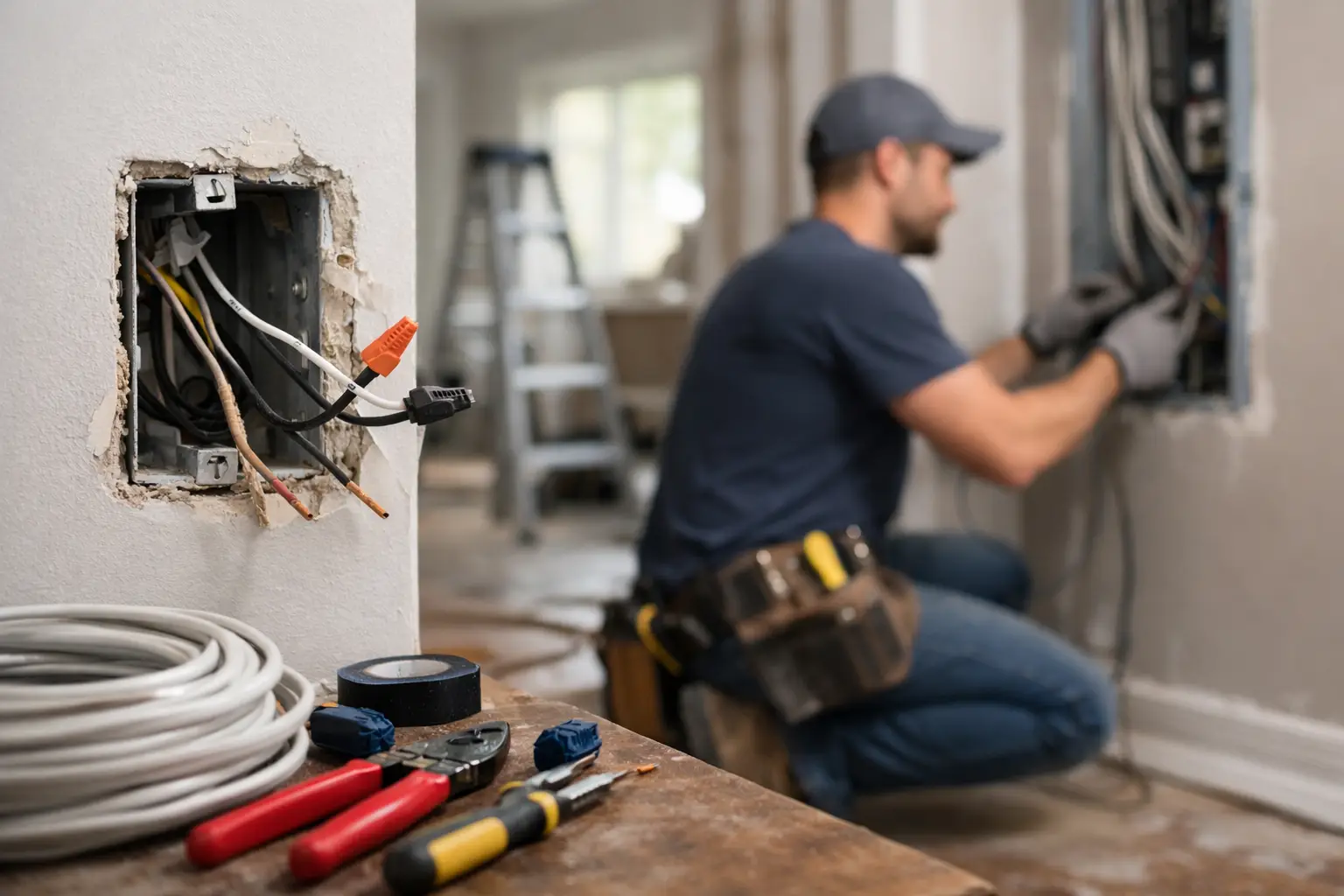
You usually know something is off before you see any cables. Lights flicker when the kettle goes on. Sockets are in odd places for modern living. The consumer unit looks older than the house cat. If you are considering electrical rewiring house work, it is rarely about one faulty switch. It is usually about safety, capacity, and whether your property is fit for how people actually live now.
A full rewire is one of the bigger electrical jobs a homeowner can take on, so it helps to know what is involved before walls are opened up and floorboards are lifted. Done properly, it gives you a safer installation, a layout that suits your day-to-day life, and a solid base for upgrades such as EV charging, electric heating controls, battery storage or solar.
When electrical rewiring house work becomes necessary
Not every property needs a full rewire. In some homes, targeted improvements are enough. In others, patching things up only delays the bigger job and can cost more over time.
Age is one of the clearest clues. If a property has not been rewired for 25 to 30 years, it is worth having it assessed properly. Older wiring may not meet current standards, and even if it is still working, that does not always mean it is suitable for today’s demand. Families now run far more appliances, devices and chargers than homes were designed for decades ago.
There are also more obvious warning signs. Frequent tripping, buzzing sockets, discoloured faceplates, outdated fuse boards, or a shortage of usable outlets can all point to a system that needs more than a quick fix. Renovation work often reveals problems too. Once kitchens, bathrooms or extensions are being updated, it often makes sense to look at the electrical installation as a whole rather than build new work onto old circuits.
For landlords, buyers and developers, inspection reports can be the trigger. An EICR may highlight issues that make partial repairs impractical. In that situation, rewiring is less about preference and more about bringing the property up to a safe, compliant standard.
Full rewire or partial rewire?
This is where a lot depends on the condition of the existing installation. A full rewire means replacing the fixed wiring in the property, usually along with new sockets, switches and a modern consumer unit. A partial rewire keeps some existing circuits where they are still serviceable and updates the rest.
A partial rewire can be the sensible option if one area of the house is being refurbished and the remaining installation is in good order. It can reduce cost and disruption. The trade-off is that older and newer parts of the system still need to work together safely, and that is not always straightforward. If the existing wiring is poor, undersized, damaged or simply too old, partial work can become a compromise that stores up future problems.
A full rewire is more disruptive, but it gives you a clean start. That matters if you want confidence in the whole system rather than a mix of old and new. It also makes future planning easier. If you are thinking about electric heating upgrades, solar, home office loads, extra kitchen circuits or an EV charge point, it is often better to allow for that at rewire stage than revisit the property again later.
What happens during electrical rewiring house projects
Most homeowners picture chaos, and to be fair, there is some disruption involved. But a well-managed job should feel organised rather than messy for the sake of it.
It normally starts with a survey. This is where the electrician looks at the existing installation, the size and layout of the property, access routes, and what you actually need from the finished system. This part matters. Rewiring is not just replacing old cable with new cable. It is the point where you decide where sockets should go, whether lighting needs to change, and whether extra capacity should be built in.
First fix comes next. That means removing old wiring where required, running new cables, fitting back boxes, and preparing the structure before plastering or making good. In an occupied house, this is the most disruptive stage because it involves lifting floors, chasing walls and creating access.
Second fix happens after surfaces are ready. Sockets, switches, light fittings and the consumer unit are connected and fitted. Then the system is tested, inspected and certified. At the end of the job, you should have proper documentation showing the work has been completed to current standards.
A good contractor will also talk clearly about making good. Some electrical firms handle only the electrical side, while plastering and decoration are left to others. There is nothing wrong with that as long as it is clear from the outset. Surprises are fine on a birthday, less so when your hallway wall is open.
How disruptive is a house rewire really?
The honest answer is that it depends on the property and whether you are living in it during the work. A vacant house is always easier. Access is simpler, rooms can be worked through quickly, and furniture is not in the way. If the rewire is part of a renovation before moving in, that is usually the ideal time to do it.
If you are staying in the property, careful phasing helps. An experienced team can often keep parts of the home usable while work is carried out in stages. That said, there will still be dust, lifted floor coverings, and periods without power to certain circuits. Older houses can also be less predictable. Thick walls, previous DIY changes and awkward floor voids all have a way of making a neat plan slightly less neat.
This is why clear communication matters as much as technical skill. Homeowners do not expect magic. They do expect to know what is happening, how long it should take, and what the house will look like at the end of each day.
Cost factors homeowners should understand
There is no single figure that fits every house, and anyone giving a serious price without seeing the property is guessing. The size of the house, number of rooms, ease of access, condition of the existing wiring and the specification of the new installation all affect cost.
A straightforward rewire in an empty modern property is very different from rewiring a lived-in period home with solid walls and a long list of layout changes. The number of sockets, lighting circuits, extractor fans, smoke alarms, outdoor supplies and special additions such as data cabling or EV readiness can shift the price quite a bit.
It is also worth thinking beyond the initial cost. A cheaper job that cuts corners on planning, protection or finish quality can end up costing more later. Good rewiring work should last for years, support modern electrical use, and reduce the risk of faults and nuisance problems. In that sense, value matters more than the lowest quote on the page.
Choosing the right contractor for a rewire
This is not the kind of work to hand over purely on price. Rewiring affects the safety of the whole property, so competence and accountability come first.
Look for an electrical contractor with the right accreditations, proper testing and certification procedures, and experience with occupied homes as well as straightforward refurbishments. NICEIC registration and TrustMark backing are strong signs that standards and process are being taken seriously. Just as important is whether they ask sensible questions at survey stage. If the conversation is only about how quickly they can start, rather than what you need from the finished installation, that is a red flag.
For some clients, it also helps to use a contractor who understands the bigger picture of the property. If a rewire sits alongside heating upgrades, battery storage, solar or compliance work, having one team coordinate the job can make life a lot easier. That is one reason many customers across Newcastle and the wider North East look for a firm such as SWH Electrical Solutions that can manage more than one part of the project without passing responsibility around.
Planning for the house you will have in five years
One of the most common mistakes in a rewire is planning only for what you use today. It is worth thinking ahead. Will you want an induction hob later on? Are you likely to add an EV charger? Do you work from home now and need more usable socket positions? Could solar and battery storage be on the cards in future?
None of this means turning your house into mission control. It simply means using the rewire to make sensible provisions while the floors are already up and the walls are already being worked on. Small decisions at this stage can save major disruption later.
That is really the point of rewiring a house properly. It is not just about replacing ageing electrics. It is about making your home safer, more practical and better prepared for how you live now – and how you are likely to live next.