If you have invested in solar, the question usually comes up after the scaffolding is gone and the first savings start showing on the bill – do solar panels need maintenance, or can you just leave them to get on with it?
The short answer is yes, but not in the way many people expect. Solar panels are low maintenance, not no maintenance. A well-installed system should run quietly in the background for years, but it still benefits from occasional checks, sensible cleaning in the right circumstances, and prompt attention if performance drops. That applies whether you are a homeowner, a business owner, or a developer handing over a new build that needs to perform properly from day one.
Do solar panels need maintenance in the UK?
In UK conditions, solar panels generally need very little hands-on upkeep. There are no moving parts in the panels themselves, which is one reason solar is such a reliable long-term investment. Rain will often wash away light dust and general grime, and most systems do not need regular manual cleaning just to keep generating.
That said, “low maintenance” should not be confused with “ignore it completely”. The North East climate brings its own mix of rain, pollen, salt in some coastal areas, bird mess, leaf build-up and occasional stormy weather. Over time, those factors can affect output or create faults around the wider system, even if the panels themselves remain sound.
The main point is this: the panels are only one part of the installation. Inverters, isolators, mounting systems, battery storage if fitted, and the general electrical setup all play a part in keeping the system safe and productive.
What maintenance do solar panels actually need?
For most properties, maintenance falls into three areas: visual checks, performance monitoring and occasional professional inspection.
A visual check is simple. From ground level, look for obvious issues such as cracked glass, heavy dirt, bird fouling, slipped panels, loose cabling, or anything that seems out of place after strong winds. You do not need to climb onto the roof to do this, and in most cases you should not.
Performance monitoring matters just as much. If your generation suddenly drops compared with previous months and the weather has been broadly similar, that can be a sign something is wrong. A failing inverter, a string fault, shading from new tree growth, or dirt concentrated on one section of the array can all reduce output.
Then there is professional maintenance. A qualified engineer can inspect the system properly, test electrical components, review inverter performance, and pick up faults before they become expensive problems. This is especially useful for older systems, commercial arrays, and any installation tied into battery storage or more complex controls.
Cleaning solar panels
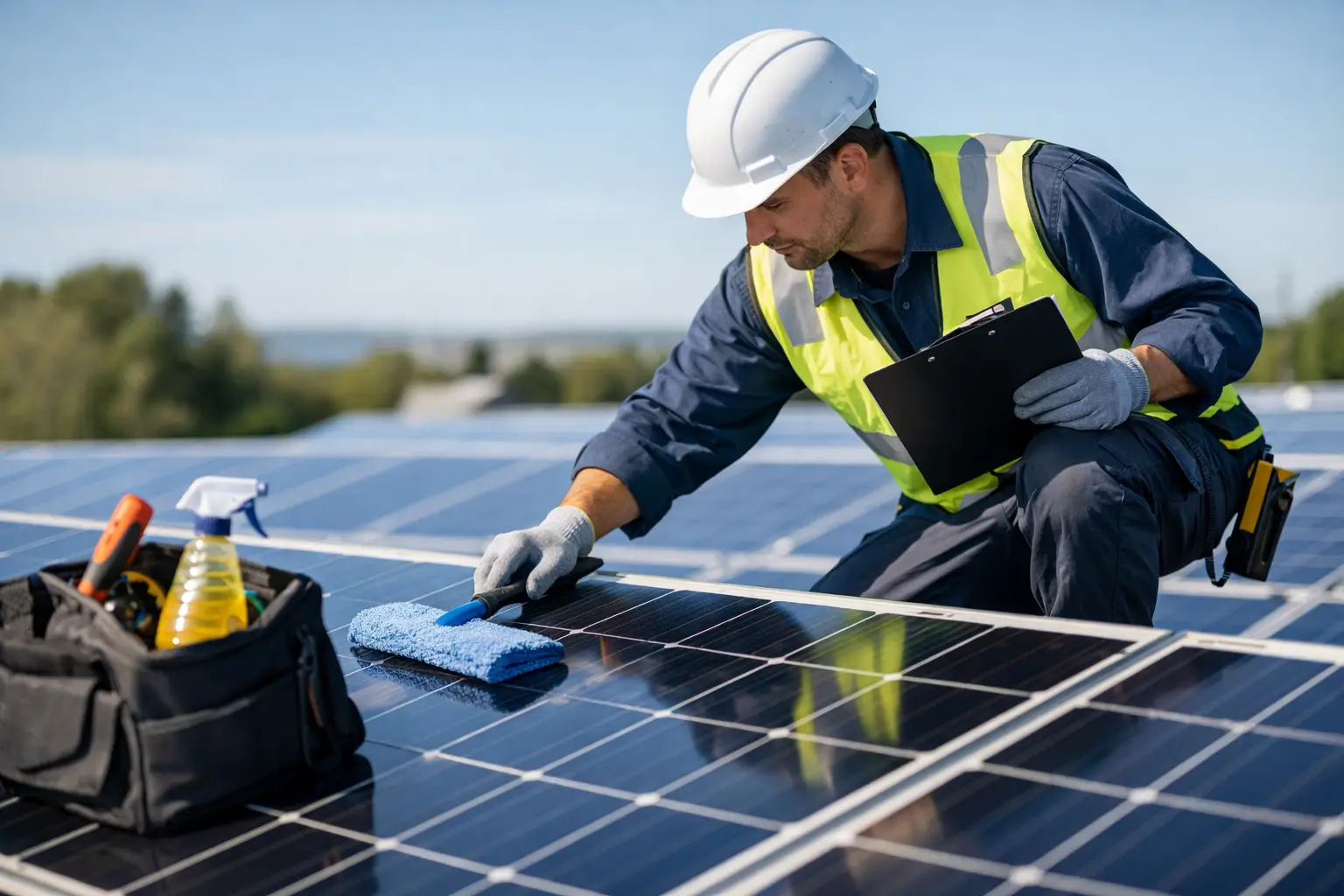
Cleaning is the area that gets the most attention, and often more than it deserves. Not every system needs routine cleaning. In many cases, rainfall does a decent job, especially on roofs with a suitable pitch.
Where cleaning can help is when there is heavy bird mess, build-up from nearby trees, traffic grime, agricultural dust, or debris that lingers for weeks rather than washing away. These are more likely to have a noticeable impact than a thin layer of everyday dirt.
There is a trade-off here. Cleaning too aggressively, too often, or with the wrong equipment can do more harm than good. Abrasive tools, harsh chemicals and pressure washers can damage the panel surface or seals. If the roof is awkward or steep, there is also an obvious safety risk. If cleaning is needed, it should be done carefully and with the right access approach.
Inverter checks matter more than many people realise
If panels are the visible part of the system, the inverter is often the part most likely to need attention first. It converts the electricity into a usable form for your property, and it works hard every day.
Many solar issues that look like a panel problem turn out to be an inverter fault, a connection issue, or a system error. Warning lights, error messages, unusual noises, or a sudden drop in generation are all signs not to ignore. Inverters also have a shorter lifespan than panels, so they are usually the first major component to be repaired or replaced over the life of the system.
How often should solar panels be checked?
There is no one-size-fits-all timetable, because it depends on the size of the system, the location, how easy it is to monitor, and what else is connected to it.
For a typical domestic setup, a light visual check every few months and after severe weather is sensible. Keep an eye on the inverter display or monitoring app if you have one. If output looks steady and there are no warnings, that is a good sign.
A more thorough professional inspection every few years is often worthwhile, particularly once the system is no longer brand new. If you have battery storage, EV charging integration, or a larger array, more regular servicing may make sense.
For commercial systems, maintenance should be more structured. Businesses rely on predictable generation, and downtime has a clearer financial impact. Planned inspections help protect performance and support compliance records where required.
For developers, maintenance planning should be part of handover thinking. A new build solar system should not just be installed properly – it should be easy for the end user to understand, monitor and maintain.
Signs your solar system needs attention
Sometimes the need for maintenance is obvious. Sometimes it shows up quietly in reduced performance.
If your electricity savings have dipped for no clear reason, if your inverter is showing faults, or if one part of the array appears shaded or dirty while the rest is clear, it is worth investigating. Physical signs such as loose brackets, damaged bird protection, exposed cables, or water ingress around electrical components should always be treated seriously.
Another common issue is unnoticed shading. Trees grow, neighbouring buildings change, and roof space that was clear a few years ago may not be clear now. Even partial shading can affect generation more than people expect, depending on the system design.
Can you maintain solar panels yourself?
You can handle the basic owner-level checks. Monitoring output, looking for visible issues from a safe position, and keeping nearby gutters or overhanging branches under control are all reasonable.
What you should not do is attempt electrical work yourself or take risks on the roof. Solar installations involve live components, and even when the mains side is isolated, the panels themselves can still generate electricity in daylight. That is not a DIY job.
For many customers, the practical answer is simple: keep an eye on the system, know what normal looks like, and call a qualified professional if something changes.
Why proper installation reduces future maintenance
A lot of long-term maintenance problems start with poor installation rather than bad luck. Loose fixings, poorly managed cabling, badly positioned inverters, weak commissioning and unclear handover information can all create avoidable issues later.
That is why accredited workmanship matters. A properly designed and installed system should be easier to monitor, easier to service and less likely to develop faults early. It should also be set up with the rest of the property in mind, whether that means battery storage, EV charging, or wider electrical works.
For customers in the North East, using a contractor who understands local conditions and can support the system after installation makes a real difference. SWH Electrical Solutions works across solar, electrical and maintenance services, which means customers are not left juggling separate trades when something needs checking.
Is solar panel maintenance worth paying for?
Usually, yes – but the value depends on the system and the issue.
Paying for regular cleaning when the panels are already performing well may not give you much return. Paying for a professional inspection that catches a failing inverter, damaged connector or mounting issue early can save far more than it costs. The same goes for commercial systems, where even a modest loss in generation adds up across a larger array.
Think of maintenance as protection for the investment rather than a constant ongoing chore. The goal is not to fuss over the system. It is to keep it safe, efficient and dependable over the long term.
Solar should make life easier, not create another property headache. If your system is installed well, checked sensibly and looked after when needed, it should reward you with years of steady performance – and that is usually all most people wanted in the first place.