A boiler rarely chooses a convenient moment to stop working. It is usually a frosty morning, a busy week, or just as you notice the hot water has gone lukewarm. Knowing how often boilers need servicing helps you avoid that gamble, protect your household, and spot small faults before they become costly repairs.
For most UK homes, the straightforward answer is once every 12 months. An annual boiler service gives a Gas Safe registered engineer the chance to check that the appliance is operating safely and efficiently. But the right timing can also depend on your boiler’s age, its warranty conditions, the type of property you own, and whether you are responsible for a rental or commercial premises.
How Often Do Boilers Need Servicing?
A domestic gas boiler should normally be serviced annually. This applies whether you have a combi boiler, system boiler or conventional boiler with a cylinder. The service is preventative maintenance rather than a repair visit: the aim is to make sure the boiler is safe, clean, correctly adjusted and less likely to let you down when you need heating most.
Many homeowners choose to book their service in late summer or early autumn, before the heating goes back into regular use. That can be sensible, particularly in the North East where a cold snap soon tests a boiler that has been ticking over lightly through summer. However, there is no need to wait for a particular season. The best date is simply around 12 months after the last proper service.
If your boiler is still under a manufacturer warranty, annual servicing is commonly a condition of that cover. Missing a service can leave you facing an awkward conversation if a component fails and you need to make a warranty claim. Keep the service record, invoice and any benchmark logbook in a safe place.
A service is not the same as a repair
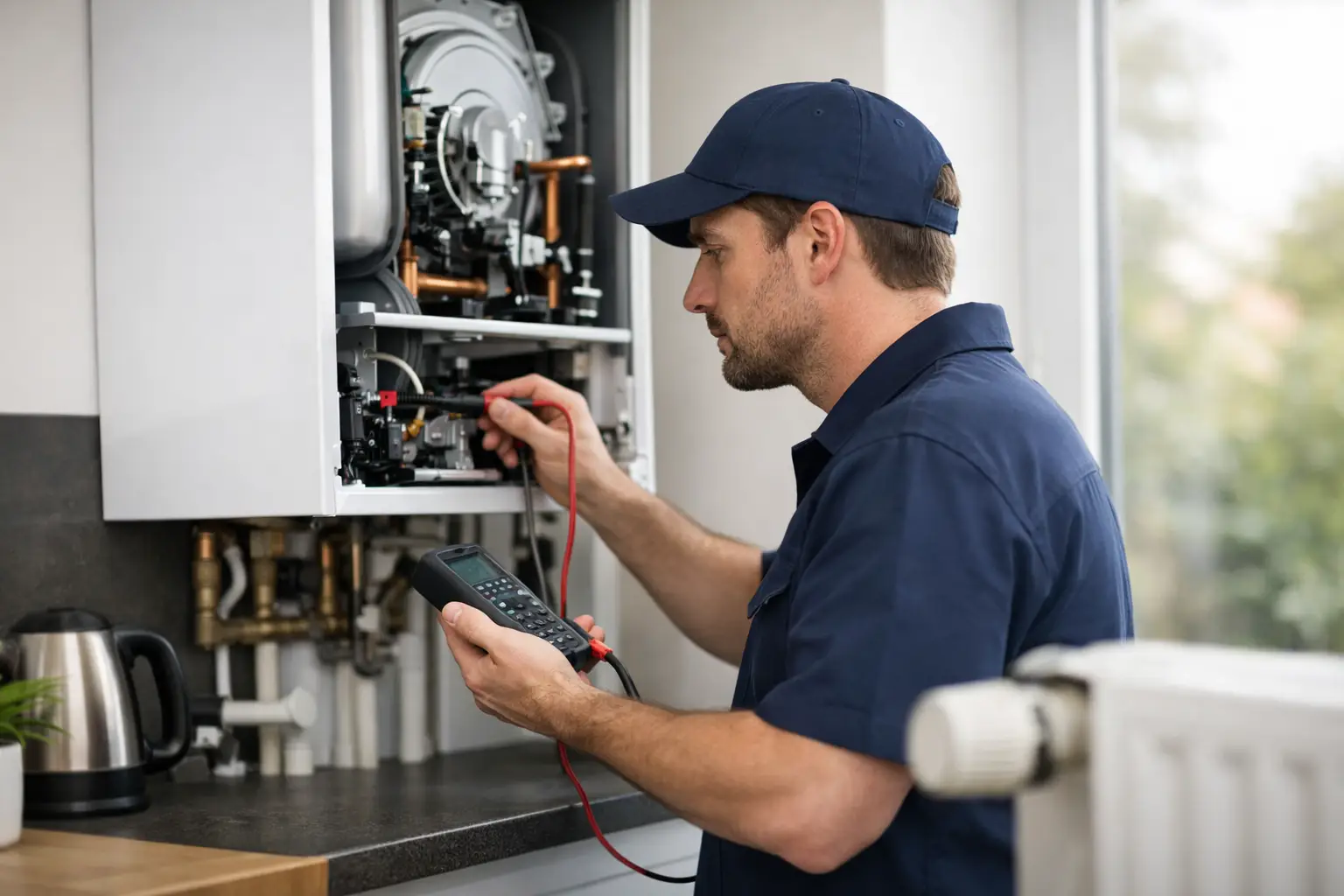
A boiler can appear to be working normally and still need a service. During a scheduled appointment, a Gas Safe engineer checks the appliance’s operation, combustion, ventilation and flue, as well as looking for leaks, worn parts and signs of corrosion. Depending on the boiler and findings, they may clean relevant components and check that controls are working properly.
A repair visit, on the other hand, is needed when something has already gone wrong. No heating, unreliable hot water, fault codes, pressure loss and unusual noises all call for investigation. A repair does not automatically count as a full annual service unless the engineer has completed and documented the required service checks.
Why Annual Boiler Servicing Is Worth It
The biggest reason is safety. Gas appliances must burn fuel correctly and release combustion gases safely through the flue. Problems with a boiler, flue or ventilation can create a carbon monoxide risk. Carbon monoxide has no smell, colour or taste, so it is not something households can assess for themselves.
A service also helps keep the boiler running efficiently. A well-maintained appliance is more likely to operate as intended, although servicing will not turn an ageing, poorly insulated property into a low-energy home overnight. Your thermostat settings, heating controls, radiators, insulation and how you use hot water all influence bills too.
There is a financial benefit to catching deterioration early. A loose connection, blocked condensate route or declining component may be manageable when found during routine maintenance. Left until the boiler fails, it can mean a more involved repair, disruption to daily life and the inconvenience of waiting for parts during the busiest time of year.
For a newer boiler, servicing supports the warranty. For an older boiler, it provides a realistic view of its condition. An engineer may advise that a repair is sensible, or explain when repeated repairs are beginning to make less financial sense than replacement. Honest advice matters here: not every older boiler needs replacing, but neither should homeowners keep spending on an appliance that is becoming unreliable.
Landlords Have Different Legal Responsibilities
If you let a property, the annual check is not optional. Landlords must arrange a gas safety check every 12 months for gas appliances and flues provided in the property, carried out by a Gas Safe registered engineer. They must provide tenants with a copy of the current Gas Safety Record and keep their records as required.
This is often referred to as a CP12 or landlord gas safety certificate. While a boiler service and a landlord gas safety check can be arranged at the same time, they are not identical jobs. The safety check focuses on legal gas safety requirements. A full boiler service includes maintenance work and manufacturer-specific checks. Combining both where appropriate is usually the practical choice, but landlords should confirm exactly what is being provided.
For managing agents and portfolio landlords, a planned annual schedule is far easier than reacting to expiry dates property by property. It also gives tenants a clear appointment window and helps reduce the risk of missed compliance deadlines.
Signs You Should Book an Engineer Sooner
Do not wait for the annual service date if your boiler is showing a fault or behaving differently. Some issues are minor, but they need professional assessment rather than guesswork. Book a Gas Safe engineer promptly if you notice:
- a yellow or orange flame rather than a crisp blue flame on a visible gas flame
- black marks, soot or staining around the boiler or nearby appliance
- repeated pressure drops, water leaks or a need to top up the system frequently
- banging, whistling, gurgling or unusually loud operation
- inconsistent hot water, cold radiators or frequent error codes
- a pilot light that will not stay lit, where your boiler has one
If a carbon monoxide alarm sounds, turn off the appliance if it is safe to do so, open windows and doors, leave the property, and seek urgent professional guidance. Do not re-enter simply because the alarm stops. Every home with a gas boiler should have a working carbon monoxide alarm in the appropriate location, tested in line with its instructions.
What Homeowners Can Do Between Services
There are a few sensible checks that do not involve opening the boiler casing or attempting repairs. Keep the area around the boiler clear, make sure external flues are not obstructed, and look occasionally for signs of leaks or staining. If you have a condensate pipe outside, be aware that it can freeze in very cold weather, particularly on older installations.
Check the boiler pressure gauge from time to time if your manufacturer’s instructions recommend it. Many sealed systems operate around 1 to 1.5 bar when cold, but the correct range varies, so follow the guidance for your particular boiler. If pressure repeatedly falls, do not treat topping it up as the solution. It could point to a leak, an issue with the expansion vessel or another fault.
Bleeding radiators can improve heat distribution where the top of a radiator feels cold, but recurring cold spots or dirty system water may indicate a wider heating-system issue. A heating engineer can advise whether cleaning, balancing or other work is appropriate. Good controls also help: use your programmer and thermostat properly rather than continually turning the boiler on and off by hand.
Choosing the Right Engineer for Your Boiler Service
For any gas boiler work, use a Gas Safe registered engineer who is qualified for the appliance involved. Ask for confirmation of the work to be completed, especially if you need a service to meet warranty terms or a landlord gas safety check for a rental property. You should receive clear paperwork showing what has been checked and any recommendations made.
For homeowners, it is worth establishing a regular maintenance routine with a local team you can call when something changes. For businesses and developers, planned servicing can sit alongside wider electrical and compliance work, making it easier to manage a property without chasing several contractors.
SWH Electrical Solutions has Gas Safe registered heating engineers supporting homeowners, landlords and commercial clients across Newcastle and the surrounding North East. The focus is simple: clear advice, properly completed work and no unnecessary fuss – with just enough good ol’ Geordie humour to make an inconvenient boiler appointment feel less painful.
Book your boiler service before the diary fills up for winter, keep the paperwork with your property records, and act early if the heating starts telling you something is not quite right.