A damaged socket, an ageing consumer unit or a new EV charger can all raise the same question: is the electrical installation still safe? For owners and managers of properties needing EICR testing, the answer should come from a proper inspection and report, not guesswork. An Electrical Installation Condition Report, usually shortened to EICR, gives a clear view of the fixed wiring in a property and identifies work needed to keep it safe.
It is not a test of every appliance plugged into a wall socket. Nor is it a certificate to put in a drawer and forget about. An EICR is a practical record of the condition of circuits, protective devices, earthing and fixed electrical equipment at the point of inspection. For landlords, employers and facilities teams, it is often a legal or operational necessity. For homeowners, it is a sensible safeguard when a property is older, being altered or showing signs of electrical trouble.
Which properties need EICR testing?
The requirement depends on how the property is used, who is responsible for it and where in the UK it is located. A competent electrician will inspect the installation against the current requirements of BS 7671, while taking account of the installation’s age and design. A report does not demand that every older installation is brought up to the latest standard automatically. It assesses whether it is safe for continued use.
Privately rented homes
In England, private landlords must arrange an electrical safety inspection at least every five years. The requirement applies to rented houses, flats and HMOs, and a copy of the satisfactory report must be supplied to tenants within the required timescales. Where the report identifies remedial work, the landlord must arrange it within 28 days, or sooner if the report states a shorter period.
The position is also firmly regulated in Scotland, where landlords must have the electrical installation inspected at least every five years as part of their repairing standard duties. In Wales, landlords must ensure the property is electrically safe under fitness for human habitation requirements. Although the legal wording and documentation requirements can differ, a five-yearly EICR is the usual, sensible benchmark for a privately let home across Great Britain.
A change of tenant is a good time to review the report, but it does not normally replace the need for an inspection simply because someone has moved out. If the existing report is still valid and the installation has not been altered or damaged, another full EICR may not be necessary. If there has been a flood, fire, significant DIY work or signs of deterioration, an earlier inspection is the prudent route.
HMOs and communal areas
Houses in multiple occupation can have heavier use than a typical family home. More residents often means more chargers, extension leads, kitchen appliances and general wear on sockets and accessories. The landlord’s five-yearly duty applies to the dwelling, while shared electrical areas under the landlord’s control should also be considered.
Communal corridors, stairwells, bin stores, plant rooms and external lighting need a clear maintenance plan. Responsibility may sit with a freeholder, managing agent or management company rather than an individual leaseholder. The key point is simple: the person controlling the installation needs evidence that it is safe and properly maintained.
Commercial premises and workplaces
Offices, shops, workshops, warehouses, hospitality venues and other workplaces need their electrical systems maintained so they do not create danger. The Electricity at Work Regulations 1989 place duties on employers, duty holders and those in control of electrical systems. They do not set one universal EICR interval for every commercial building.
That is because risk varies. A quiet office with modern wiring may need a different inspection frequency from a busy kitchen, garage, school, construction site or industrial unit. The condition of the installation, the environment, equipment connected and level of use all matter. A competent electrician can recommend an appropriate next-inspection date, often within one to five years, based on the site rather than a one-size-fits-all rule.
For commercial property owners, an EICR is also useful at lease changes, before a refurbishment or when taking on a building with little maintenance history. It gives a tenant, landlord or facilities manager a factual starting point before they commit to wider electrical work.
New builds, conversions and major refurbishments
A newly installed electrical system should be tested, verified and certified when the work is completed. That is an Electrical Installation Certificate, not normally an EICR. New homes and commercial units do not require an immediate condition report simply because they are new.
However, a conversion, extension or refurbishment can create a mixed installation: new circuits may sit alongside old wiring, an existing consumer unit may have limited capacity, or earlier alterations may be poorly documented. Before changing a property’s use or adding substantial electrical loads, an EICR can help establish whether the existing installation is suitable.
This matters particularly for property developers adding solar PV, battery storage, electric heating or EV charge points. These upgrades are valuable, but they place new demands on the electrical system. A survey should assess the supply, earthing arrangement, consumer unit and circuit capacity before work begins. The right answer is not always a full rewire, but it should be based on testing rather than assumption.
Owner-occupied homes
Homeowners are not generally under the same legal obligation as private landlords to obtain an EICR every five years. Even so, regular inspection is strongly recommended, particularly for homes with older wiring or a history that is unclear.
As a practical guide, owner-occupiers should consider an EICR every ten years, or when buying a property where the electrics have not been recently assessed. It is also worth booking sooner if sockets feel warm, fuses or breakers trip repeatedly, lights flicker, there is a burning smell, or the consumer unit looks dated or damaged. These symptoms do not prove a fault, but they should not be ignored.
What an EICR checks
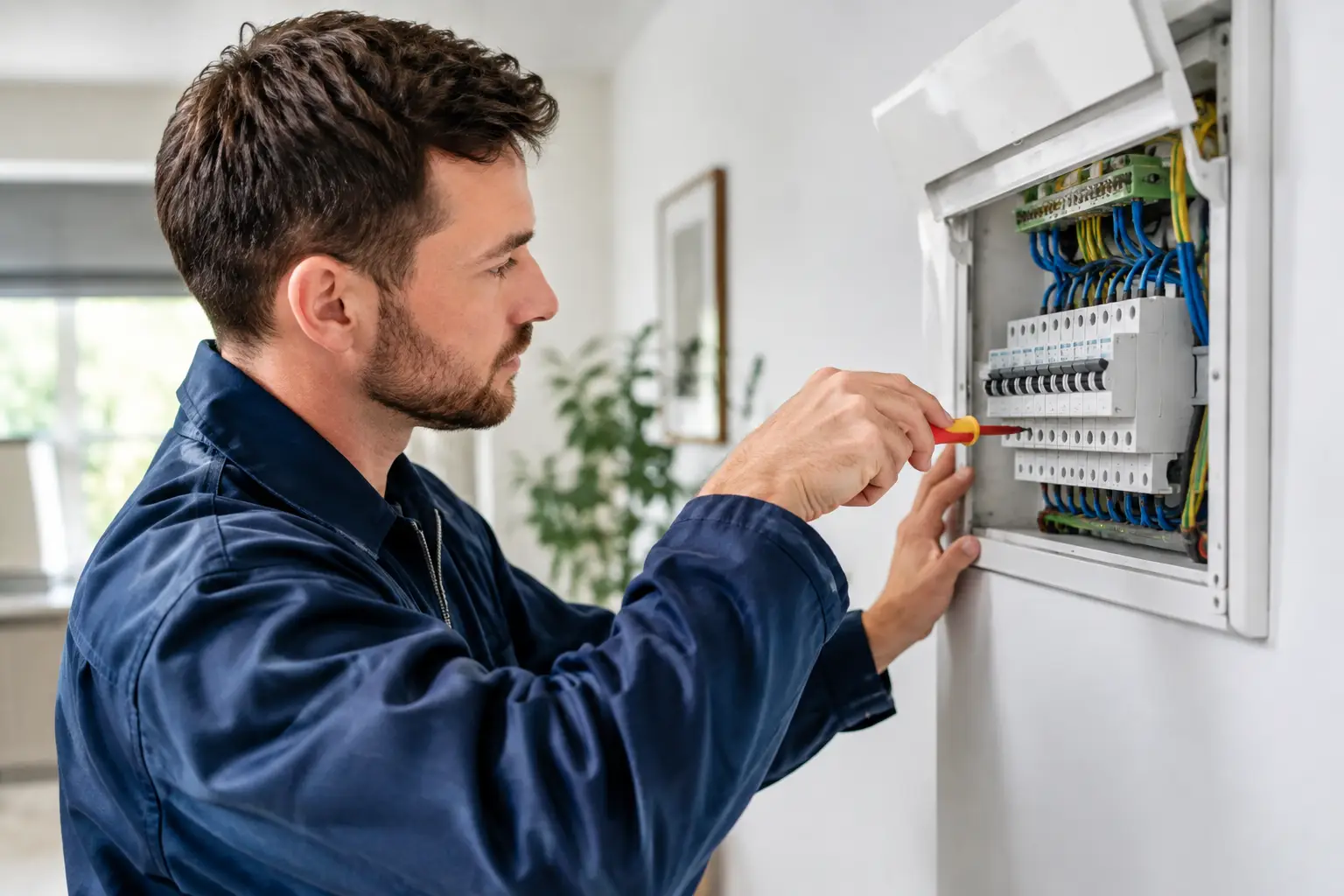
An EICR focuses on the fixed installation rather than portable appliances. The electrician will inspect and test items such as the consumer unit, circuit breakers, wiring, sockets, switches, lighting circuits, earthing and bonding. They will also look for signs of overheating, damage, unsuitable alterations and inadequate protection against electric shock.
The inspection may involve a planned power outage, because some tests cannot be completed safely with circuits live. In a home, this is usually straightforward. In a workplace, it may need to be arranged outside trading hours or around critical equipment. A good contractor will explain the likely disruption in advance and agree a sensible testing plan.
Portable Appliance Testing is separate. PAT testing can be relevant to landlord-supplied appliances and workplace equipment, but a pass on a kettle or computer does not demonstrate that the building’s wiring is safe. Equally, an EICR does not replace a landlord gas safety certificate where gas appliances are present.
Understanding the results
EICR observations are coded to help the responsible person decide what must happen next. C1 means danger is present and urgent action is required. C2 identifies a potentially dangerous condition that needs remedial work. FI means further investigation is needed without delay. Any C1, C2 or FI observation results in an unsatisfactory report.
A C3 observation is an improvement recommendation. It does not, by itself, make the report unsatisfactory. This distinction matters, especially in older properties. Not every recommendation means the installation is unsafe or that a complete rewire is needed.
Ask for the findings to be explained in plain English, with the affected circuits clearly identified. If remedial work is recommended, obtain a clear scope and quotation. Once faults have been corrected, keep the relevant certification with the EICR so there is a proper record for tenants, insurers, future buyers or managing agents.
Choosing the right time to arrange an inspection
Waiting for a compliance deadline is rarely the easiest option. Landlords may find it more convenient to arrange testing between tenancies, while businesses can plan around quieter periods. Homeowners often gain the most value before a purchase, refurbishment or major electrical upgrade, when there is time to make decisions without pressure.
SWH Electrical Solutions can carry out EICRs for homes, landlords, commercial premises and development projects across the North East, with findings set out clearly and remedial work managed where required. A condition report should leave you with a practical next step, whether that is confirmation that the installation is satisfactory or a prioritised plan to put it right.