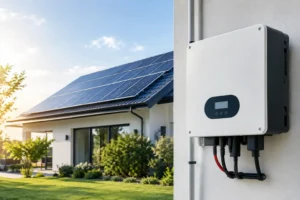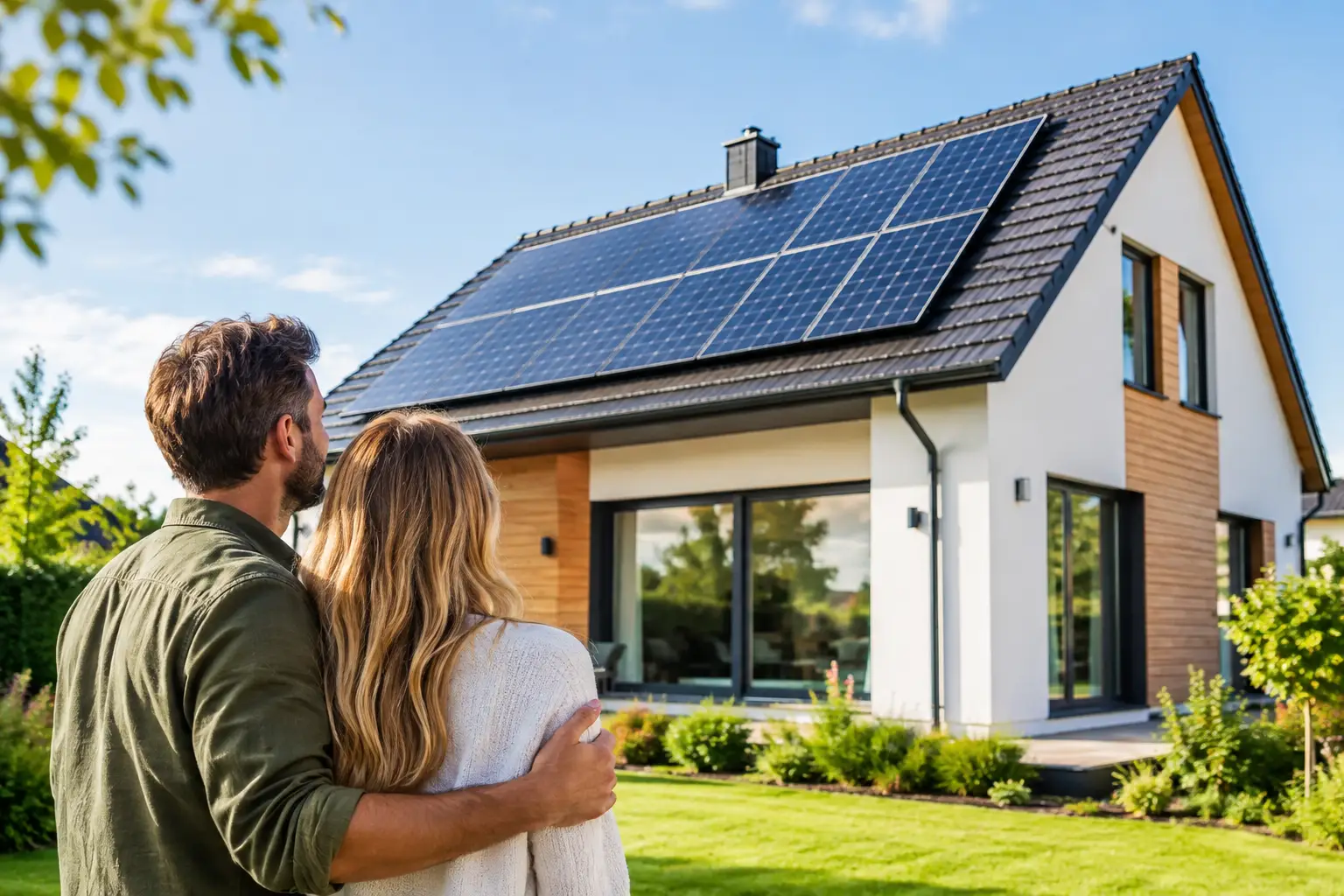
A solar system is easiest to get right before the roof is finished, the walls are closed and a buyer is asking where the inverter will go. This new build solar guide explains the decisions that have the biggest effect on performance, cost and handover, whether you are building one family home or a larger residential development in the North East.
Solar is no longer an optional extra added at the end of a project. For many new homes, it is a practical part of meeting modern energy-performance targets while giving occupants a genuine way to reduce reliance on imported electricity. The key is to treat it as part of the electrical and building design from the start.
Why solar belongs in the early design stage
Retrofitting solar can work very well, but new construction gives you a clear advantage: fewer compromises. The roof layout, cable routes, consumer unit, inverter location and future battery provision can all be planned before finishes make changes expensive and disruptive.
Early coordination also avoids a familiar site problem. A roof may look ideal on drawings, only for vents, flues, rooflights, dormers or plant to reduce the usable panel area. By reviewing the roof alongside the architect, builder and electrical design team, panels can be positioned around those features rather than squeezed into whatever space remains.
Solar should also be considered alongside the home’s likely electricity demand. Heat pumps, induction hobs, electric vehicle charging and home working all increase the value of generating and storing electricity on site. A modest system may meet a compliance requirement, but a better-matched system can offer more meaningful long-term savings for the homeowner.
New build solar guide: start with the roof
Panel orientation matters, but it is not the whole story. South-facing roofs usually provide strong annual generation, while east and west-facing arrays can still be an excellent choice. An east-west layout spreads generation across the morning and afternoon, which can suit households that use power before and after work rather than mainly at midday.
Shading deserves proper attention. Nearby trees, chimneys, neighbouring properties and future extensions can all affect output. Even partial shading can reduce performance if the system is not designed to manage it appropriately. Depending on the site, optimisers or a carefully designed string layout may be worthwhile, but they are not automatically necessary on every roof.
The roof structure and covering should be confirmed before installation. Solar mounting systems need to be fixed securely into the roof structure, with suitable weatherproofing around each fixing point. It is far simpler to agree this while roof details are still being finalised than to revisit the issue after completion.
Allow enough clear roof area for safe access and sensible maintenance. Packing every available section of roof with panels is not always the best answer if it creates awkward installation conditions or prevents access around roof features. A well-designed array balances generation, safety, appearance and the roof’s long-term integrity.
Size the system for the property, not a brochure
The right system size depends on the home, its occupants and the available roof space. A three-bedroom home occupied by a couple will have a different demand profile from a five-bedroom property with a heat pump, EV charger and a growing family.
Start with expected annual consumption, then look at when electricity will be used. Solar generation is naturally strongest during daylight hours and in summer. If occupants are out all day and there is no battery, a larger array may export more electricity than it uses directly. That does not necessarily make it a poor investment, as export payments can contribute, but it should be understood at the design stage.
For developers, consistency matters too. Standardising a sensible solar specification across similar plots can simplify procurement, installation and homeowner information. However, identical systems are not always appropriate where roof orientations, shading or household energy loads differ. A repeatable approach still needs enough flexibility for the individual plot.
Avoid designing solely for a headline panel number. Panel efficiency, roof dimensions, inverter capacity, likely consumption and future additions all matter more than a one-size-fits-all package.
Plan for battery storage, even if it comes later
Battery storage allows more of the electricity generated during the day to be used in the evening. It can be particularly useful for homes with regular evening demand, electric heating technologies or an EV. It may also provide backup capability in certain designs, although backup is not a standard feature and needs to be specified clearly.
Not every buyer needs a battery on day one. Budgets, lifestyles and energy tariffs vary. Still, making the property battery-ready is a sensible move. This can mean allowing suitable wall space, ventilation where required, cable routes and electrical capacity for a future installation.
The same thinking applies to EV charging. Coordinating the solar, battery, consumer unit and charge point from the start gives the homeowner a cleaner, more capable system. It also reduces the risk of duplicated work when an EV charger is added after moving in.
Get the electrical design and paperwork right
Solar is an electrical installation, not just equipment fixed to a roof. The inverter needs a suitable location that is accessible for servicing and protected from unnecessary heat or moisture. Cable routes should be planned to minimise visible trunking and avoid difficult alterations later. The main electrical supply, earthing arrangement and consumer unit must be assessed so the completed system is safe and compliant.
For developments, the timing of the grid connection process is particularly important. Distribution Network Operator approval may be required, depending on the proposed export capacity and connection arrangement. Leaving this until the end can delay commissioning or restrict the system that can be installed.
An MCS-certified installation can be important for homeowners who want access to Smart Export Guarantee tariffs, subject to the requirements of their chosen energy supplier. The installer should provide a clear handover pack with commissioning information, electrical certification, warranties, generation estimates and instructions for monitoring the system.
For a developer, that handover is part of the product. A buyer who understands how to read the app, use surplus power and contact the right person for support is more likely to see the value in the solar system from day one.
Coordinate solar with Part L and the wider build
Solar PV often forms part of the strategy for meeting Building Regulations energy-efficiency requirements, but it should not be treated as a shortcut around good fabric performance. Insulation, airtightness, ventilation, glazing, heating design and renewable generation all work together.
The Standard Assessment Procedure calculation should reflect the actual specification being built. Late substitutions to panel numbers, inverter models or roof layouts can affect predicted energy performance, so communication between the solar installer, SAP assessor and site team is essential.
There is also a practical sequencing point. Solar installation needs to fit around roofing works, scaffolding, internal electrical first fix and final connection. Bringing the installer in early allows those stages to be programmed properly, rather than turning solar into a last-minute task before completion.
Choose an installer who can manage the interfaces
New build projects have moving parts. The best solar design on paper can still create delays if nobody has agreed roof access, cable containment, meter arrangements or responsibility for making good after installation.
Look for an installer with recognised accreditations, experience of working alongside other trades and a clear process from survey to commissioning. MCS and NICEIC credentials provide useful reassurance, but so does a willingness to discuss the site programme in plain English and flag issues before they become costly variations.
For developers and self-builders, using one contractor for solar and associated electrical work can make coordination simpler. SWH Electrical Solutions supports new build solar alongside electrical installation, battery storage and EV charging, helping keep the design joined up rather than split between several suppliers.
Build for the homeowner’s next five years
A new home should not be designed only for the day the keys are handed over. Electricity use is changing quickly, and a property with sensible solar provision, room for storage and capacity for EV charging will remain more adaptable as household needs change.
The most successful projects are rarely the ones with the most panels. They are the ones where the roof, electrical design, energy strategy and homeowner handover have been considered together. Get those details agreed early, and solar becomes a useful, dependable part of the home rather than another item on the completion list.