A solar PV system should quietly earn its keep. When generation drops, however, the cause is not always obvious from the roof. A good solar maintenance checklist for homeowners helps you notice changes early, keep safe around electrical equipment and call in a qualified engineer before a small fault affects months of generation.
Most modern solar systems need relatively little hands-on maintenance. Panels have no moving parts, rain removes much everyday dust, and a properly installed system is built for the British weather. That does not mean it should be forgotten about. Seasonal checks and a clear view of your generation data are usually enough to protect performance without turning you into a rooftop technician.
Your Solar Maintenance Checklist for Homeowners
The safest approach is to inspect what you can see and monitor from ground level. Leave roof access, electrical testing and any work inside the inverter or consumer unit to a competent solar engineer.
Check your generation figures each month
Your inverter display, monitoring app or smart meter should show how much electricity the system is producing. There is no single “right” daily figure because output changes with the season, cloud cover, panel direction and shading. A bright June day in Newcastle will naturally produce far more than a short December day.
What matters is the pattern. Compare this month with the same month last year where possible, rather than comparing one sunny week with a dull one. A sudden and sustained drop may point to shading, soiling, an inverter fault or a panel string issue. Keep a simple note of monthly generation, particularly if your monitoring app does not retain historic data clearly.
If you have a battery, also look at whether it is charging and discharging at the times you expect. A change in battery behaviour may be down to settings, tariff schedules or household energy use rather than a fault, but it is worth investigating.
Look at the inverter status lights and messages
The inverter is the part of the system that turns the panels’ DC electricity into usable AC electricity for your home. Check it occasionally for warning lights, error codes, unusual noises or a display that is blank when it should be operating.
Do not remove covers or attempt a reset unless your installer has given you clear instructions. Inverters can contain live components even when the mains supply is switched off. Take a photograph of any code and make a note of the time and weather conditions before contacting your installer or maintenance provider. This gives the engineer a useful starting point.
Inspect panels from the ground
Walk around the property and look at the array from a safe position. You are looking for obvious new shading from overgrown trees, a build-up of leaves, bird droppings, moss or anything that could block sunlight. Also watch for visibly cracked glass, loose-looking fixings, storm damage or nesting activity beneath the panels.
Do not climb onto the roof, lean ladders against panels or walk across them. Apart from the risk of falling, putting weight on a panel can damage cells or the mounting system. If something looks wrong, a professional inspection is the sensible next step.
Keep nearby trees and gutters under control
Trees can be excellent for privacy and shelter, but new growth can have a real impact on solar output. Even partial shade can reduce generation more than many homeowners expect, especially where panels are connected in the same string. Arrange pruning responsibly and check for planning restrictions or protected trees before work is carried out.
While you are arranging routine gutter cleaning, ask the contractor to report any visible debris accumulating around the array. They should not clean or handle the panels unless they are equipped and competent to do so. Good access planning matters as much as the cleaning itself.
Check the area around your equipment
Your inverter, isolators and generation meter should remain accessible, dry and well ventilated. Avoid storing boxes, coats or household items tightly around the inverter, particularly in cupboards, lofts or utility rooms. Excess heat can shorten the working life of electronic equipment.
Look for water staining, signs of condensation, damaged cable trunking or chewed cables where wiring is visible. You should also make sure that system labels and shut-off information have not been painted over or removed. These labels are there to help an electrician, emergency service or maintenance engineer identify the solar supply safely.
Do Solar Panels Need Cleaning?
Not routinely in every case. In much of the North East, normal rainfall will wash away loose dust and grime. Cleaning can make a difference where panels have persistent bird droppings, pollen, nearby agricultural dust, coastal salt residue or heavy deposits from traffic and construction work. The benefit depends on the level and location of soiling, so it is best judged against your generation figures and a visual inspection.
Avoid household glass cleaner, abrasive pads, pressure washers and hard tap water. These can scratch the surface, leave mineral deposits or damage seals. Never clean panels in strong sun or spray cold water onto hot glass, as sudden temperature change is not helpful for the equipment.
If cleaning is needed, use a specialist solar panel cleaning service that can work safely at height and understands PV systems. A cheap clean is poor value if it risks roof tiles, cabling or the panels themselves.
Seasonal Checks That Make Sense
Spring is a useful time to check for winter storm damage, new shading and leaves lodged around the roofline. As daylight increases, it is also easier to see whether generation is returning to expected levels.
During summer, monitor output and arrange pruning if trees are beginning to cast shade over the array. This is also the period when higher generation makes an inverter issue more noticeable.
Autumn calls for attention to falling leaves, gutters and overhanging branches. If your system includes a battery, review its settings before winter so that charging priorities still suit your electricity tariff and household routine.
In winter, do not attempt to clear snow or ice from panels. It is unsafe to access a slippery roof and the energy gained is rarely worth the risk. Snow normally slides or melts away. Instead, keep an eye on the inverter and compare generation with similar winter days from previous years.
When to Arrange Professional Solar Maintenance
A planned maintenance visit is worthwhile if your system is older, your monitoring shows unexplained underperformance, or you want assurance after severe weather or roofing work. It is particularly sensible when buying a property with existing solar, as paperwork, warranties and system condition may not be clear.
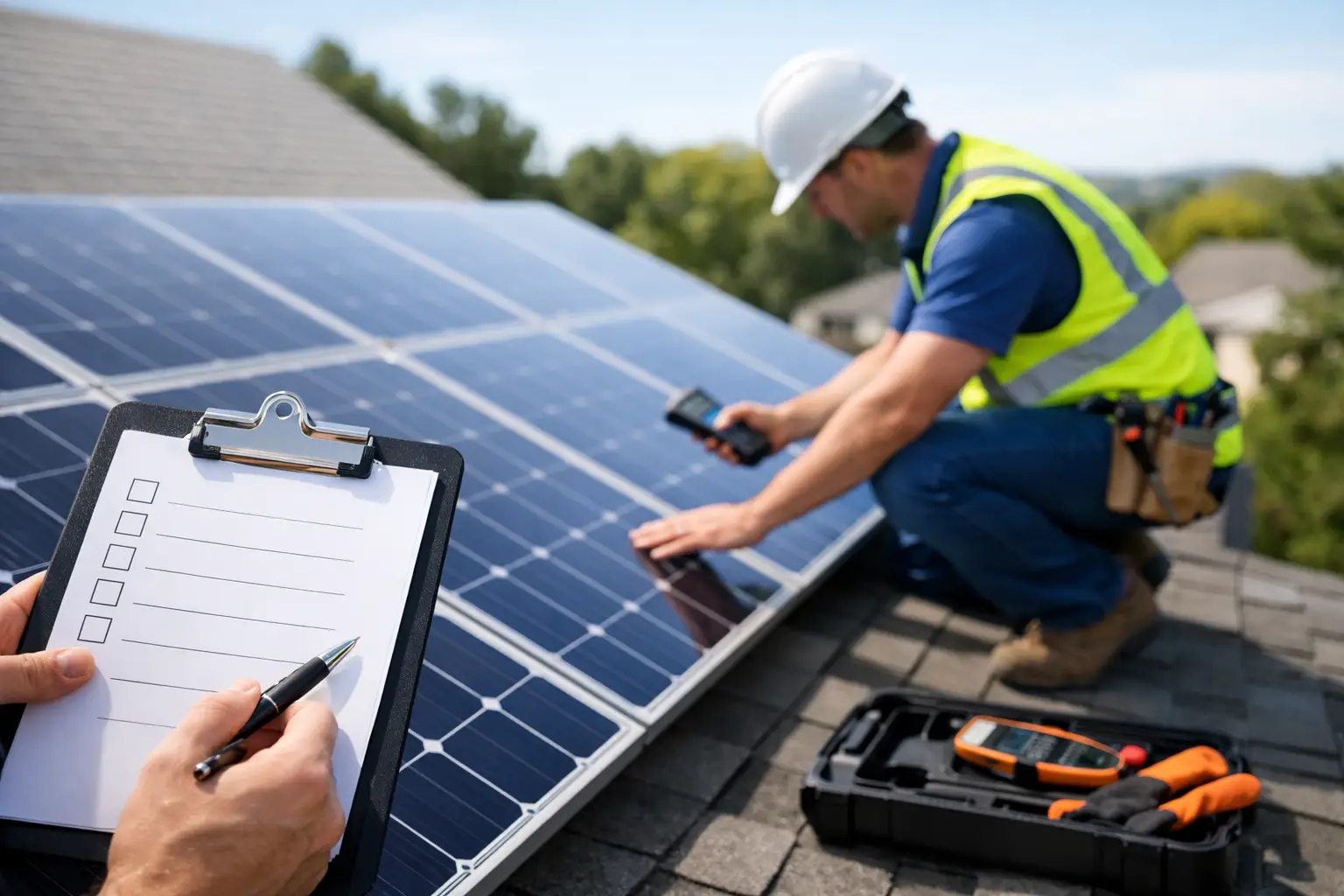
A qualified engineer can carry out electrical checks, inspect panel mounting and roof penetrations, assess cabling, test safety devices and investigate faults using the right equipment. They can also check that your inverter configuration, export settings and battery operation are working as intended.
Call for professional help promptly if you notice a burning smell, scorch marks, damaged cables, water entering electrical equipment, repeatedly tripping breakers or a persistent inverter error. Do not touch damaged components or try to diagnose live equipment yourself. If there is an immediate electrical danger, isolate only if it is safe and you know how to do so, then seek urgent advice.
Keep Your Solar Paperwork Together
Store your installation documents, commissioning certificate, MCS paperwork, warranties, serial numbers, inverter instructions and maintenance records in one place. Digital copies are useful, but keep them clearly labelled so they can be found if you sell the property or need an engineer to attend.
It is also worth recording any changes made after installation, such as a new battery, EV charger, consumer unit upgrade or roof work. Solar, storage and household electrics increasingly work as one system, so accurate records help future work go more smoothly.
For most households, the best solar maintenance routine is simple: monitor output, look for visible changes, keep equipment accessible and bring in a qualified engineer when the signs do not add up. A well-maintained system should not demand constant attention – just the occasional sensible check that keeps it generating safely for years to come.