A consumer unit is easy to ignore until a circuit starts tripping, a new appliance needs power, or an electrician points out that the board is no longer suitable. Yet choosing to upgrade an old consumer unit can be one of the most worthwhile electrical improvements you make – particularly if you are adding solar panels, battery storage, an EV charger or carrying out a major renovation.
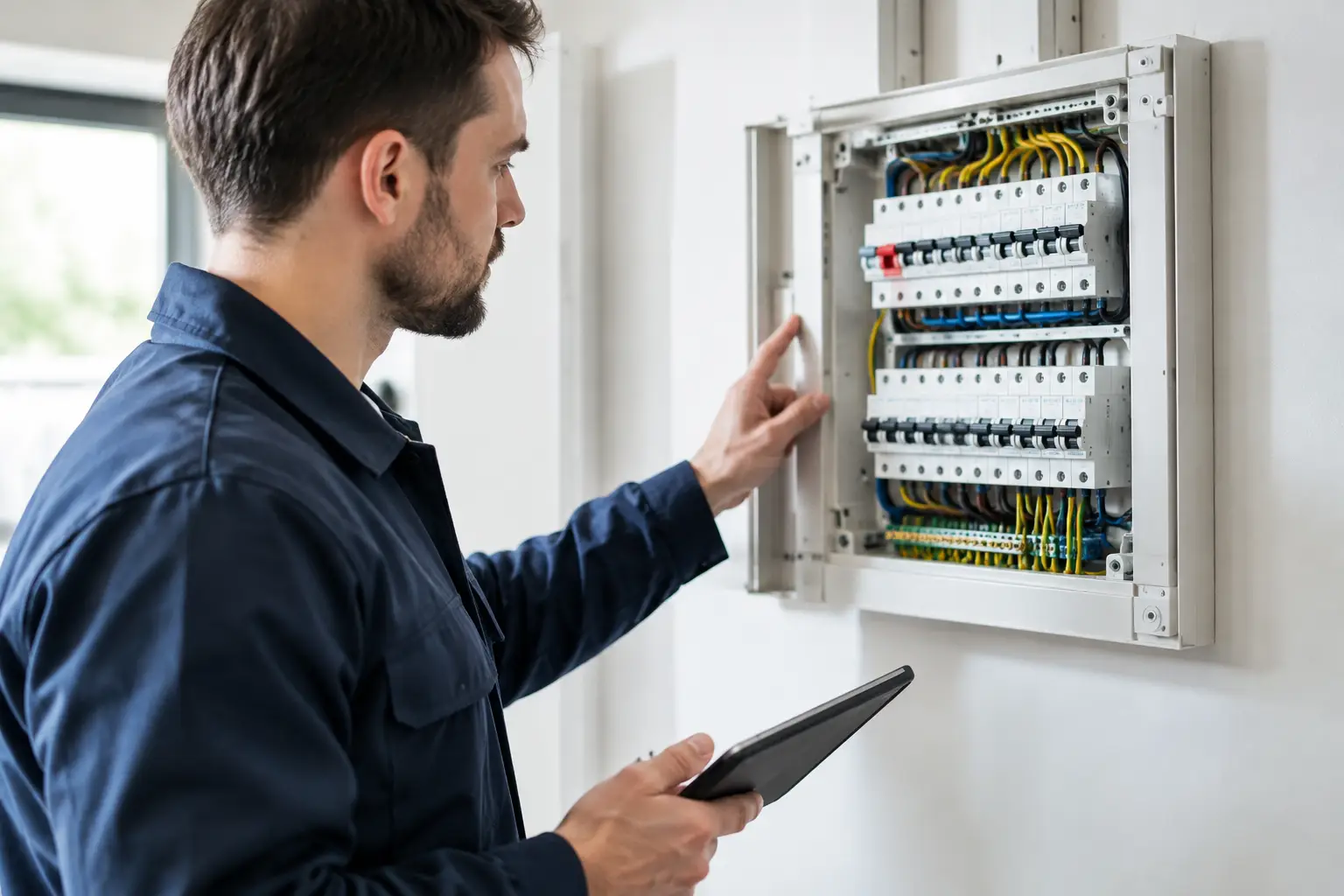
Often called a fuse board, the consumer unit is the point that distributes electricity safely around your property. Modern units offer far better protection than older rewireable fuse boards and early circuit-breaker boards. The right time to replace one is not dictated by its age alone, but by its condition, safety features and whether it can support the way you now use electricity.
Signs it may be time to upgrade an old consumer unit
A board with old-style wire fuses is the clearest sign that a replacement should be considered. These boards can still appear in perfectly well-kept homes across the North East, but they do not provide the same level of protection as a modern installation. A blown fuse must be replaced manually and may not disconnect a faulty circuit as quickly or as reliably as modern protective devices.
An older consumer unit fitted with circuit breakers is not automatically unsafe. However, it may lack residual current device, or RCD, protection. An RCD is designed to disconnect the supply rapidly where it detects current flowing in an unintended path, helping to reduce the risk of serious electric shock and certain fire risks.
Other warning signs deserve a proper inspection rather than a quick fix. These include recurring tripping, scorch marks, buzzing, heat around the board, loose or damaged covers, signs of water ingress, or circuits that have been altered repeatedly over the years. If lights dim when a larger appliance starts, sockets feel warm, or a circuit trips without an obvious cause, do not simply keep resetting it. Ask a competent electrician to investigate.
A lack of spare capacity also matters. Many older homes were not designed for induction hobs, home offices, heat pumps, electric showers, EV charging and solar battery systems operating alongside everyday loads. Adding more and more circuits to an already crowded board is rarely the best long-term answer.
What a modern consumer unit gives you
A replacement is not just a tidier box with newer switches. It is an opportunity to review the installation as a whole and provide protection appropriate to the property and its use.
Modern consumer units commonly use RCBOs, which combine overcurrent and residual-current protection on individual circuits. In practical terms, this can mean a fault on one circuit is less likely to cut power to the whole house. If a fault develops on an outdoor socket, for example, your lighting, fridge and other circuits can remain on while the issue is diagnosed.
Surge protection devices may also be recommended following an assessment. These help protect sensitive electronics from transient overvoltages caused by events such as switching within the electricity network or nearby lightning activity. With more homes relying on smart controls, broadband equipment, appliances and energy technology, this is worth discussing at survey stage.
Depending on the design and risk assessment, an electrician may also consider arc fault detection devices. These are intended to identify certain dangerous arcing faults that ordinary protective devices may not detect. They are not required in every property, so the decision should be based on the installation, the occupants and the potential risk rather than a one-size-fits-all sales pitch.
A new unit should be properly labelled, tested and certified. It should also have suitable provision for future circuits where sensible. Leaving a little room now can avoid unnecessary disruption if you later add an EV charger, garden office, solar battery or electric heating circuit.
It is not always the consumer unit alone
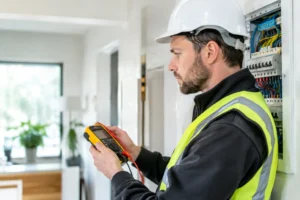
The consumer unit is only one part of your electrical installation. Before replacement, an electrician needs to check the earthing arrangement, main protective bonding, incoming supply, meter tails and condition of the existing circuits. A brand-new board cannot make deteriorated cabling, damaged accessories or poor previous alterations safe.
This is why a thorough survey matters. The electrician may recommend remedial work before or alongside the board replacement, especially where testing identifies faults on existing circuits. That can feel inconvenient, but it is better to know the true condition of the installation before investing in new protection.
Planning a consumer unit upgrade around solar, batteries and EVs
For households looking at lower bills and greater energy independence, the consumer unit is an essential part of the conversation. Solar PV, battery storage and EV charging all need to be designed around the property’s electrical supply, existing loads and future plans.
Solar generation needs dedicated protection and isolation equipment, with the exact arrangement depending on the system design. Battery storage can add further requirements, particularly if you want backup power during a power cut. Not every battery installation provides whole-home backup, and not every existing board can be adapted to do so without additional equipment or changes to selected circuits.
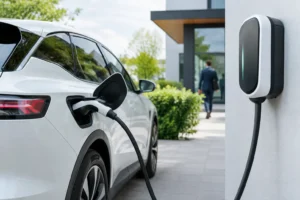
EV chargers also need careful load assessment. A suitable charger may need its own circuit, and some installations require notification to the electricity network operator. Where the incoming supply has limited capacity, load management or an upgrade to the supply arrangement may be needed. Good design prevents you from paying for technology that cannot perform as expected in daily use.
If you know solar, a battery or a charger is on the horizon, mention it before the consumer unit is specified. Designing the work together is usually cleaner and more cost-effective than replacing a board now, then reworking it six months later.
What the installation process should look like
Replacing a consumer unit involves isolating the electrical supply and transferring circuits to the new board. For most straightforward domestic properties, the work is often completed within a day, although testing, fault-finding or additional remedial work can extend the programme.
There will be a planned power outage while the changeover takes place. It is worth preparing in advance by charging phones, shutting down computers correctly and making arrangements for anything that relies on electricity, such as medical equipment, alarm systems or electric heating controls. Your electrician should explain the expected disruption before work starts.
Once installed, every circuit should be tested and clearly identified. You should receive the appropriate electrical installation certificate and test results. Consumer unit replacement work in a dwelling is generally notifiable under Building Regulations, so it should be completed by a suitably registered electrician who can arrange the required notification and certification.
Cost, value and the decisions that affect both
The cost to replace a consumer unit varies because no two installations are identical. The number of circuits, condition of existing wiring, type of protective devices, need for surge protection, accessibility, earthing upgrades and any faults found during testing all affect the final figure.
Be cautious of a price that treats every property as identical. A very low quote may not allow for meaningful testing, certification or the remedial work needed to leave the installation safe. Equally, the most expensive option is not automatically right. The aim is a compliant, well-designed board that protects your household and supports the electrical demands you genuinely have.
For landlords, a consumer unit upgrade may arise after observations on an Electrical Installation Condition Report, or EICR. For homeowners, it is often most sensible to combine it with a rewire, kitchen renovation, loft conversion or renewable energy project. Doing related work in the right order can reduce disruption and prevent duplicate labour.
Choosing the right electrician
This is not a job for DIY work or a rushed like-for-like swap. Ask whether the electrician will inspect and test the existing installation, explain any limitations, provide certification and discuss your future plans. NICEIC registration is a useful reassurance that the contractor is assessed for the type of work they undertake.
At SWH Electrical Solutions, we take the wider view: how your home is used now, what the installation needs to be safe, and what you may want to add next. That approach is especially useful when electrical work sits alongside solar, battery storage, EV charging or heating upgrades.
A consumer unit rarely makes headlines in a home improvement project, but it quietly does the work that lets everything else run safely. If yours is showing its age or holding back your plans, a professional survey will give you clear answers and a sensible route forward.