If you have had one quote for £5,000 and another closer to £10,000, you are not looking at a market that is making it up as it goes along. Domestic solar installation cost varies because no two properties, energy habits or system designs are quite the same. The right question is not simply “what does solar cost?” but “what am I getting for that cost, and will it work properly for my home?”
For most homeowners, a standard domestic solar system in the UK will usually sit somewhere between roughly £5,000 and £9,000, with battery storage pushing that figure higher. That is a useful starting point, but it is only a starting point. Panel quality, roof layout, inverter choice, access, scaffolding, electrical upgrades and battery size can all move the figure up or down.
What affects domestic solar installation cost?
The biggest factor is system size. A smaller 2kW to 3kW system for a modest household will cost less than a larger 4kW to 6kW system designed for a family with heavier daytime use, an electric vehicle, or plans to add battery storage. More panels mean more materials, more labour and usually more generation potential.
Roof design also matters more than many people expect. A simple roof with good access and minimal shading is quicker and easier to work on. A roof with multiple elevations, dormers, awkward access or nearby trees can increase labour time and design complexity. If scaffolding needs to be more extensive, that will show up in the quote as well.
Then there is the equipment itself. Not all solar panels are priced the same, and neither are inverters. Higher efficiency panels can be a sensible option where roof space is limited, but they come at a premium. The same applies to battery storage. A system with no battery will usually be cheaper up front, while a battery-equipped setup can improve self-consumption and resilience but increases the initial spend.
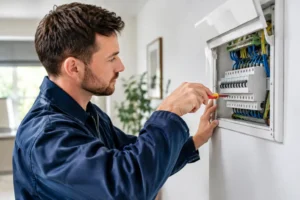
Electrical work is another hidden variable. Some homes are ready for solar with very little additional electrical work. Others may need consumer unit upgrades, cable runs, isolation points or adjustments to bring everything up to standard. This is where using an installer with strong electrical contracting experience can make a real difference, because the solar side and the wider electrical side need to work together properly.
Typical UK price ranges
As a rough guide, a straightforward domestic installation without battery storage often falls into these ranges.
A smaller system of around 2kW to 3kW may come in at about £5,000 to £6,500. A more common family-sized system around 3.5kW to 4.5kW may sit between £6,000 and £8,000. A larger system with premium components or more complex installation requirements can move beyond that.
Add a battery, and the total project cost often rises by several thousand pounds. Depending on battery capacity and brand, the combined price for solar and storage may land anywhere from around £9,000 to £15,000 or more.
These are not fixed prices, and anyone who presents them as fixed is oversimplifying the job. A detached home with a large south-facing roof in Newcastle is not the same project as a shaded semi with limited roof space and an older electrical setup.
Why the cheapest quote is not always the lowest cost
It is easy to focus on the headline number, especially when energy bills have already been painful enough. But the lowest quote is not always the best-value option. If a price looks unusually cheap, it is worth asking what has been left out.
Sometimes the difference comes down to panel efficiency, inverter quality or workmanship standards. Sometimes it is about the scope of the job. One quote might include full scaffolding, monitoring setup, certification and all electrical remedial work, while another leaves room for “extras” once the install begins.
This is where accreditation and process matter. A properly designed and installed system should be safe, compliant and built to perform over the long term. That is more valuable than shaving a few hundred pounds off the quote and discovering later that the system is underperforming, awkward to maintain or poorly integrated with the property.
Batteries, EVs and future-proofing
Battery storage changes the economics of solar. Without a battery, much of the value comes from using your own generated electricity during the day. With a battery, you can store excess energy and use it later in the evening when household demand is often higher.
Whether a battery is worth it depends on your usage pattern. If someone is at home during the day and can run appliances while the panels are generating, the case for a battery may be weaker. If the house is empty through working hours and energy use peaks after 5pm, a battery can make more sense.
The same goes for electric vehicles. If you already have an EV, or expect to get one soon, that should be part of the conversation early on. Solar, battery storage and EV charging can work brilliantly together, but only if the system is designed with that future demand in mind. Retrofitting in stages is perfectly possible, but planning ahead can avoid unnecessary costs later.
What you should expect from a proper quote
A good quote should do more than give you a final number. It should explain system size, expected generation, panel and inverter specification, battery details if included, likely payback considerations, and any assumptions made about your property.
It should also be based on a real assessment of the site. That means looking at roof orientation, shading, structural considerations, access and your actual electricity use. If a company can price your project with total confidence before properly understanding the property, that is usually a warning sign.
Homeowners should also ask who is doing the work. Some firms sell the job and subcontract key parts of it. Others manage the design, installation and electrical work in-house. There is no point in a smooth sales process if the installation itself becomes disjointed.
At SWH Electrical Solutions, that joined-up approach is a big part of the value. For homeowners in Newcastle and across the North East, having one contractor who understands both solar and the wider electrical requirements can make the process far more straightforward.
How to judge value, not just price
The best way to assess domestic solar installation cost is to compare cost against long-term performance. A well-designed system should suit your roof, match your usage and deliver reliable savings over time. It should also be installed neatly, safely and with minimal disruption.
Ask practical questions. How much of your electricity use is likely to be covered? What happens if you add a battery later? Is the equipment from established manufacturers? What warranties are provided? Are monitoring tools included so you can see how the system is performing?
It is also worth asking about maintenance expectations. Solar is generally low-maintenance, but that is not the same as no-maintenance. Knowing who to call if there is a fault, or if performance drops, matters just as much as the installation day itself.
Is domestic solar worth the cost?
For many households, yes – but not in a one-size-fits-all way. The value depends on your roof, your electricity use, your budget and how long you plan to stay in the property. A good system can reduce reliance on grid electricity, soften the impact of rising tariffs and make better use of your home as an energy asset.
That said, solar is not magic. If your roof is heavily shaded, north-facing with limited usable space, or your usage pattern means you export most of your generation without much benefit, the financial case may be weaker. A trustworthy installer should be honest about that rather than forcing the numbers.
The households that tend to see the clearest benefits are those with decent roof space, solid daytime or evening usage planning, and a long-term view. Solar rewards people who think in years rather than weeks.
The real question to ask before you buy
Instead of asking for the cheapest system, ask for the right one. The right system is not always the biggest, and it is not always the one with the flashiest kit either. It is the one that fits your property, your energy habits and your plans for the next ten or fifteen years.
That is what turns domestic solar installation cost from a worrying number into a sensible investment. When the design is right, the workmanship is solid and the advice is honest, the price starts to make much more sense. And if an installer can explain it plainly, without the hard sell and without too much industry waffle, you are probably on the right track.