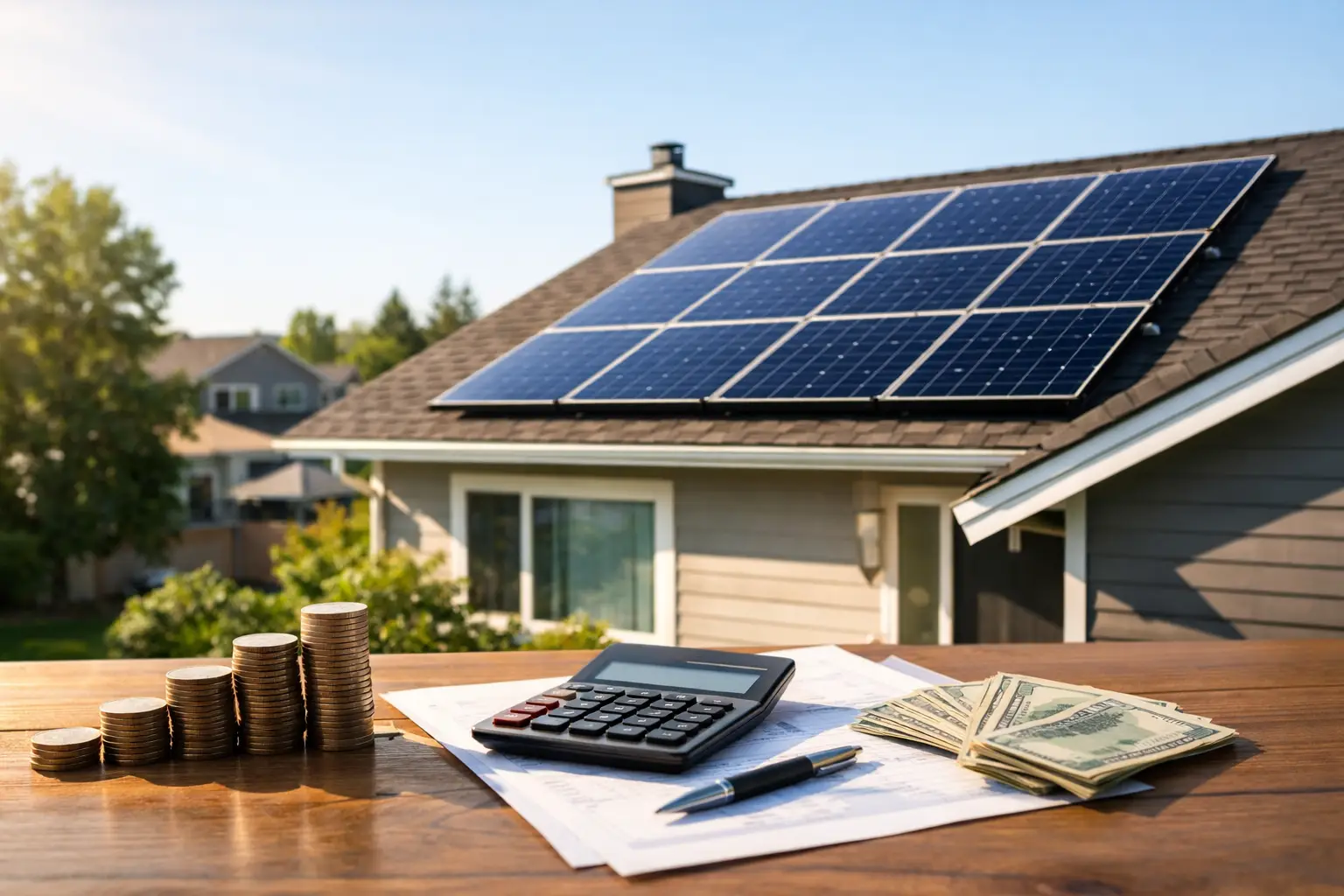
A bright morning can start paying for the kettle before you have finished making breakfast. That is the simple idea behind how solar panels reduce household bills: your home generates electricity on the roof and uses it before you need to buy the same power from the grid.
For homeowners across Newcastle and the North East, the appeal is clear. Electricity costs can feel difficult to control, while a well-designed solar system gives you a practical way to reduce the amount you import. The actual saving depends on your household, roof, energy tariff and how you use power, so it is worth looking beyond headline figures.
How solar panels reduce household bills in practice
Solar photovoltaic, or PV, panels turn daylight into electricity. They do not need blazing heat to work, which is good news for the North East. They generate in daylight, including on overcast days, although output is naturally higher when the sun is stronger.
The electricity produced by your panels is used by your home first. If the washing machine, fridge, broadband router or dishwasher is running while the system is generating, solar power can supply some or all of that demand. Every unit of solar electricity you use directly is a unit you do not have to import from your supplier.
Your inverter manages this process, converting the direct current made by the panels into the alternating current your household appliances use. A generation meter and monitoring app can then show what the system is producing, what the property is consuming and, where fitted, how much is being sent to a battery or exported.
When generation is higher than your immediate use, the surplus does not disappear. It can be exported to the grid, usually for payment through a Smart Export Guarantee tariff, or stored in a home battery for later. This is where a system moves from simply producing electricity to helping you manage when you buy it.
The biggest factor: using power at the right time
A solar installation saves most when more of the electricity it produces is used on site. This is often called self-consumption, but it simply means making the most of your own generation.
A household that is empty all day may export a larger share of its solar power. That can still provide a return through an export tariff, but exported electricity is generally worth less than avoiding the cost of imported electricity. A family working from home, for example, may naturally use more solar power during the day through laptops, cooking, laundry and general household demand.
Small changes in routine can make a meaningful difference. Running the dishwasher after breakfast, setting the washing machine on a timer, or charging an EV during a sunny afternoon can increase the amount of solar electricity used at home. You do not need to plan every cup of tea around the weather, but smart use of flexible appliances helps.
Some appliances can be automated to respond to excess generation. An EV charge point, an immersion controller for a hot water cylinder, or compatible smart controls can use surplus power when it is available. The right option depends on the property and your existing heating and electrical set-up.
A battery changes when you use solar energy
Battery storage does not make your panels produce more electricity. What it can do is hold surplus generation from the middle of the day and release it in the evening, when many homes use the most power.
For a household where everyone is out during daylight hours, a battery can improve the proportion of solar energy used in the property. It can also be useful with certain time-of-use tariffs, charging from lower-cost grid electricity at selected times and reducing reliance on higher-priced periods. This needs careful set-up and an honest view of your tariff, daily usage and likely battery cycling.
Batteries are not automatically the right answer for every home. They add to the upfront investment and have a finite capacity. If your daytime electricity use is already high, or your budget is focused on the panels themselves, a solar-only system may be the sensible first step. A good design should show the likely benefit rather than treating storage as an automatic add-on.
What determines your likely savings?
Two neighbouring homes can have very different results from similar-looking solar arrays. Roof orientation and shading matter, but they are only part of the picture. The amount of electricity you use, the times you use it and the tariff you are on all affect the financial outcome.
A south-facing roof is often well suited to solar generation, but east- and west-facing roofs can work extremely well too. An east-west arrangement may produce power across more of the morning and afternoon, which can suit households with steady daytime demand. A detailed survey should assess roof space, pitch, shading from chimneys or trees, and the condition of the roof before any design is finalised.
System size also matters. Installing the largest possible array is not always the best value if it produces far more electricity than you can use or store. Equally, a system that is too small may miss a valuable opportunity to reduce imports. The aim is to match generation to the property, your budget and future plans.
Those plans are worth discussing early. If you expect to buy an electric vehicle, install a heat pump, convert the loft, or move to more home working, your electricity demand may change. Designing with future demand in mind can be more cost-effective than having to revisit the electrical work later.
Solar savings through the seasons
Solar panels generate most electricity in the longer, brighter days of spring and summer. During these months, homes can often cover a significant share of daytime demand, particularly when appliances are timed well and a battery is available.
Winter output is lower because days are shorter and the sun is lower in the sky. Your system will still generate on many winter days, but it should not be sold as a complete replacement for grid electricity. Heating, lighting and evening usage can also be higher at exactly the time solar production is reduced.
That seasonal pattern is normal. The value of a solar system should be judged across a full year, not on the best July afternoon or the darkest week in January. Realistic annual estimates and clear monitoring data are far more useful than over-promising.
Export payments and the role of a smart meter
If you export unused electricity, a Smart Export Guarantee tariff can provide payment for each unit sent to the grid. Rates and terms differ between suppliers, so it is sensible to compare them rather than assume every tariff pays the same.
For most export arrangements, you will need a suitable smart meter and an eligible installation. Using an MCS-certified installer is often important for accessing Smart Export Guarantee payments, subject to your energy supplier’s requirements. Your installer should explain the commissioning paperwork and what you need to do after installation, rather than leaving you with a folder of documents and a mystery.
Export income is useful, but it should not be the sole reason for choosing a solar system. The strongest household savings usually come from reducing costly grid imports and using the electricity your roof has produced.
Getting the design right from the start
A solar quote should be based on more than the number of panels that fit on a roof. It should consider your annual electricity use, your typical daytime consumption, the roof survey, your consumer unit and the route for cabling. If you are considering a battery, EV charger or future electrical upgrades, those should form part of the conversation too.
It is also worth asking how the system will be monitored, what warranties apply and who will support you if a fault develops. Solar is a long-term investment, so good workmanship, compliant electrical installation and clear handover matter just as much as the equipment selected.
At SWH Electrical Solutions, that practical approach means looking at the full property rather than treating solar as a standalone product. An in-house team can coordinate the solar installation with battery storage, EV charging and wider electrical work, keeping the process straightforward from survey to commissioning.
The best next step is a proper assessment of your roof and usage. With realistic figures and a design built around how your household actually lives, solar can become a reliable way to take more control of your electricity bills for years to come.