A failed kettle in a staff kitchen, a damaged extension lead on site, or a faulty heater in a rented flat can create a serious risk long before anyone notices a label is out of date. The short answer to is PAT testing a legal requirement is no: UK law does not say every portable appliance must receive a PAT test each year. It does, however, require electrical equipment to be maintained in a safe condition.
That difference matters. It means homeowners, landlords and business owners should not treat PAT testing as a box-ticking exercise – but nor should they ignore it because there is no single annual legal deadline. The right approach is proportionate testing and inspection based on how, where and by whom appliances are used.
What PAT testing actually covers
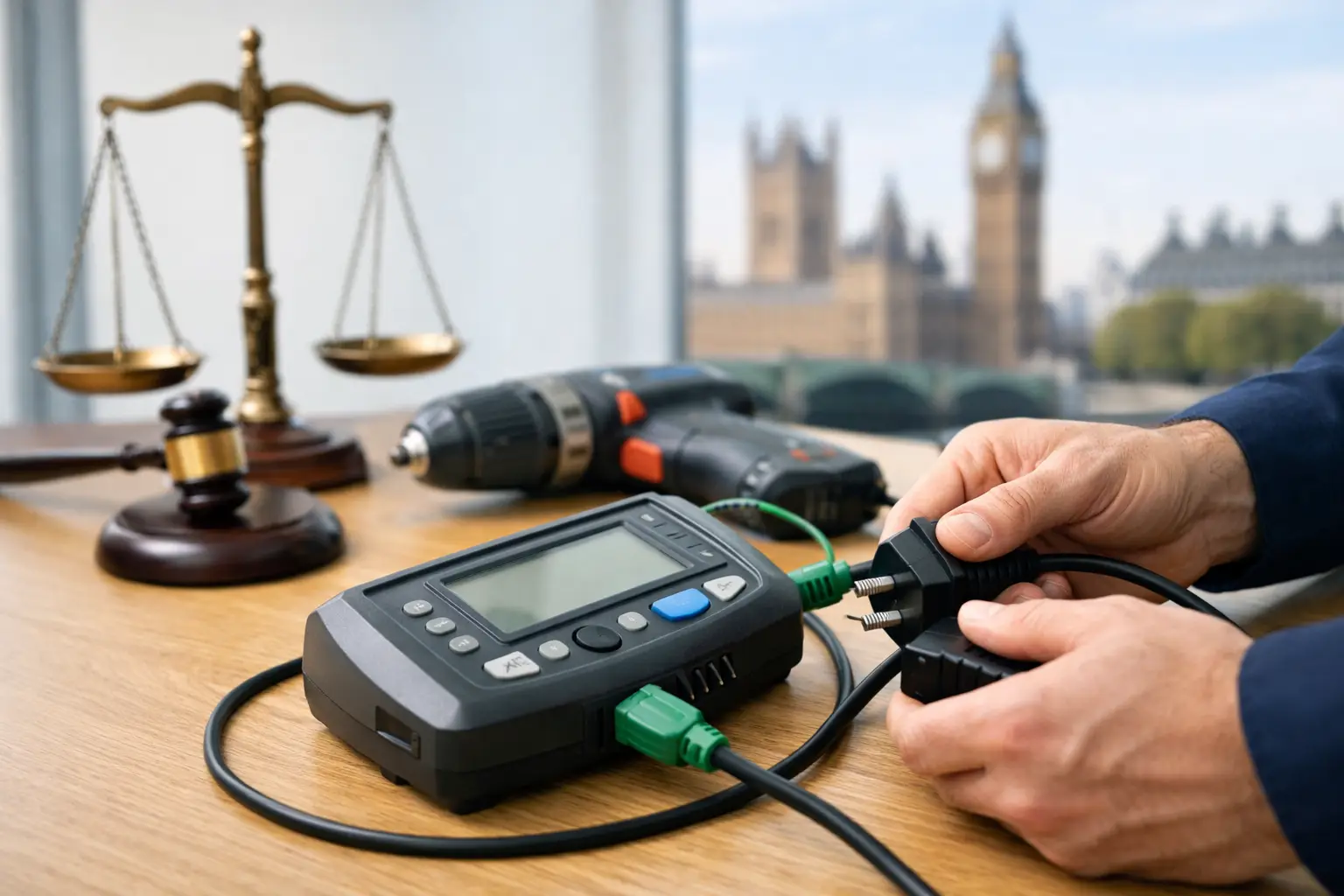
PAT stands for Portable Appliance Testing. Despite the name, a proper PAT programme is more than plugging an appliance into a tester and printing a pass sticker. It usually combines a visual inspection with electrical tests where appropriate.
The visual element can identify plenty of real-world problems: cracked plugs, frayed flexes, loose cable grips, scorch marks, damaged extension leads and unsuitable adaptors. Electrical testing can then check features such as earth continuity and insulation resistance, depending on the appliance type.
Portable equipment is broadly anything that can be moved while connected to the electricity supply, or easily moved from one place to another. That can include computers, kettles, power tools, phone chargers, floor cleaners, monitors, portable heaters, extension leads and equipment brought in by staff.
Not every item needs the same test. A metal-bodied Class I appliance has an earth connection and generally needs different checks from a double-insulated Class II appliance. Fixed wiring, meanwhile, is not covered by PAT testing. That requires inspection and testing through an Electrical Installation Condition Report, commonly known as an EICR.
Is PAT testing a legal requirement for businesses?
PAT testing itself is not a specific legal requirement. There is no law stating that all workplace appliances must have a PAT label, and no blanket rule requiring annual tests.
What the law does require is safe electrical equipment. The Electricity at Work Regulations 1989 state that electrical systems must be maintained so far as reasonably practicable to prevent danger. Employers also have wider health and safety duties to protect employees and others who may be affected by their work, such as visitors, contractors and customers.
For a business, PAT testing is one recognised way to help demonstrate that portable equipment is being maintained safely. It can support a wider electrical safety regime that includes staff reporting faults, routine user checks, equipment registers, safe purchasing and timely replacement of damaged items.
The key phrase is ‘reasonably practicable’. A low-risk office with newer double-insulated IT equipment used by the same people each day may not need the same frequency of formal testing as a busy workshop, construction site, school kitchen or hospitality venue. Equipment used outdoors, moved regularly, exposed to moisture or handled by the public naturally carries a higher risk.
An insurer, client contract, industry policy or site rules may still ask for evidence of PAT testing at a particular interval. That is a contractual or commercial requirement rather than a universal legal one, but it still needs to be taken seriously.
Why an annual PAT test is not always the answer
Annual PAT testing is common because it is easy to understand and schedule. In some higher-risk settings, it may be sensible. But applying the same interval to every appliance can waste money in one setting while failing to focus attention on higher-risk equipment in another.
A risk-based programme considers the type of appliance, its construction, its environment, how frequently it is moved, how likely it is to suffer damage and who uses it. A drill hired out and used on building sites deserves closer attention than a desktop monitor that has not moved in three years.
Formal testing does not replace everyday care, either. Staff should know to stop using equipment with damaged cables, loose plugs, overheating or unusual smells. A simple visual check before use is often the quickest way to prevent an incident.
PAT testing requirements for landlords and rented homes
Landlords are also not subject to a general law requiring PAT tests on every appliance they provide. However, they do have clear responsibilities to ensure electrical installations and supplied electrical equipment are safe.
In England, the Electrical Safety Standards in the Private Rented Sector Regulations require landlords to have the fixed electrical installation inspected and tested at least every five years by a qualified person. This is an EICR requirement, not a PAT testing requirement.
If a landlord supplies appliances such as cookers, washing machines, fridges, lamps or portable heaters, those items must be safe. PAT testing can provide useful evidence of inspection and maintenance, particularly in houses in multiple occupation, student properties, holiday lets or properties with a high turnover of tenants. But it is only one part of meeting that duty.
The condition of the appliance, instructions for safe use, prompt repairs and sensible replacement decisions all count. An old appliance that repeatedly fails visual checks may be better replaced than repeatedly tested. Equally, a recently purchased, undamaged item in a low-risk setting may only need a documented visual inspection at the appropriate time.
Homeowners who are not landlords are not legally required to arrange PAT testing in their own home. Even so, if you run a business from home, employ people there, rent part of the property, or use specialist electrical equipment, your responsibilities can change. When in doubt, take advice based on the way the property is actually used.
Choosing sensible PAT testing intervals
There is no one-size-fits-all timetable, so testing intervals should be based on a clear risk assessment. Start by separating equipment used in clean, low-risk areas from equipment used in harsher environments.
Office computers, monitors and low-use kitchen appliances may need less frequent formal testing if they are well maintained and subject to regular visual checks. Items used in warehouses, schools, care settings, workshops, commercial kitchens and construction environments will often need more regular inspection because they are moved, shared or exposed to wear.
Extension leads and multiway adaptors deserve particular attention. They are routinely dragged, overloaded, trapped under furniture or used outside their intended environment. Portable heaters should also be controlled carefully, as they place a high load on sockets and can create fire risks if used near combustible materials or with unsuitable extension leads.
Keep a straightforward record showing the appliance, its location or user, inspection date, test result, any faults found and action taken. A pass label is helpful for day-to-day identification, but the record is more valuable when demonstrating that you have an organised maintenance process.
Who can carry out PAT testing?
The person carrying out inspection and testing must be competent for the task. Competence means having suitable knowledge, practical training and access to the right equipment, as well as understanding when an item should be removed from service.
For very basic checks, trained users may be able to spot obvious damage. Formal inspection and electrical testing should be completed by someone who understands appliance classes, test limitations and the relevant safety standards. Simply owning a tester is not the same as knowing how to interpret the result.
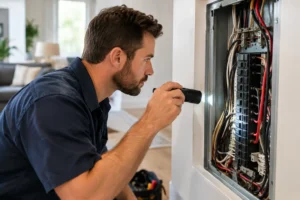
For commercial premises, a qualified electrical contractor can assess the environment, create a sensible testing schedule and identify whether wider issues need attention. A PAT test may reveal damaged equipment, but it will not diagnose a deteriorating fixed installation, overloaded circuits or unsuitable alterations. Those concerns may call for an EICR or further electrical works.
PAT testing and EICRs are not interchangeable
One of the most common compliance mistakes is assuming an EICR covers every electrical item in a building. It does not. An EICR assesses the fixed installation: consumer units, circuits, sockets, wiring and fixed accessories.
PAT testing concerns connected appliances and leads. A property can have a satisfactory EICR while a portable appliance has a damaged flex, and a perfectly tested appliance can still be plugged into an unsafe circuit. Most landlords and facilities managers need to consider both areas, but at intervals that reflect their separate risks and legal duties.
For clients across Newcastle and the North East, SWH Electrical Solutions can help put a practical plan in place rather than selling an unnecessary blanket programme. The aim is clear records, safe equipment and testing that matches the property or workplace.
A PAT sticker should never be the only thing standing between people and an electrical risk. Look at how equipment is used, act quickly when damage is found, and use competent inspection and testing to show that electrical safety is being properly managed.