A boiler failure in a rented home is rarely convenient. It can leave tenants without heating or hot water, create a maintenance issue that needs prompt attention, and put landlords under pressure to make the right decision quickly. A planned rental boiler replacement gives you far more control over cost, disruption and the standard of the finished installation.
Replacing an ageing boiler before it becomes an emergency is not about fitting the most expensive model available. It is about choosing a reliable, correctly sized system, arranging the work around your tenants, and ensuring the installation meets the required safety standards. Done properly, it protects the property, supports tenant satisfaction and reduces the chance of an avoidable call-out on a cold North East morning.
When should a rental boiler be replaced?
There is no fixed age at which every boiler needs replacing. A well-maintained boiler may provide dependable service for 10 to 15 years, while another can become uneconomical much sooner because of repeated faults, poor installation or unavailable parts.
The key question is whether repair remains sensible. A one-off repair to a relatively modern boiler can be good value. But if the same appliance has become unreliable, requires expensive components or is no longer heating the property efficiently, replacement is often the more practical long-term choice.
Common warning signs include frequent loss of pressure, inconsistent hot water, unusual noises, visible corrosion, rising repair bills and parts that are difficult to source. If tenants are repeatedly reporting cold radiators or a boiler that locks out, do not assume a quick reset will solve the underlying problem.
For landlords, timing matters as much as condition. Replacing a boiler during a void period is usually the least disruptive option. There is time to assess the full heating system, carry out any pipework improvements, flush the system where needed and complete commissioning without disrupting a household. That said, a tenant should never be left waiting if the existing boiler is unsafe or beyond viable repair.
Planning a rental boiler replacement around tenants
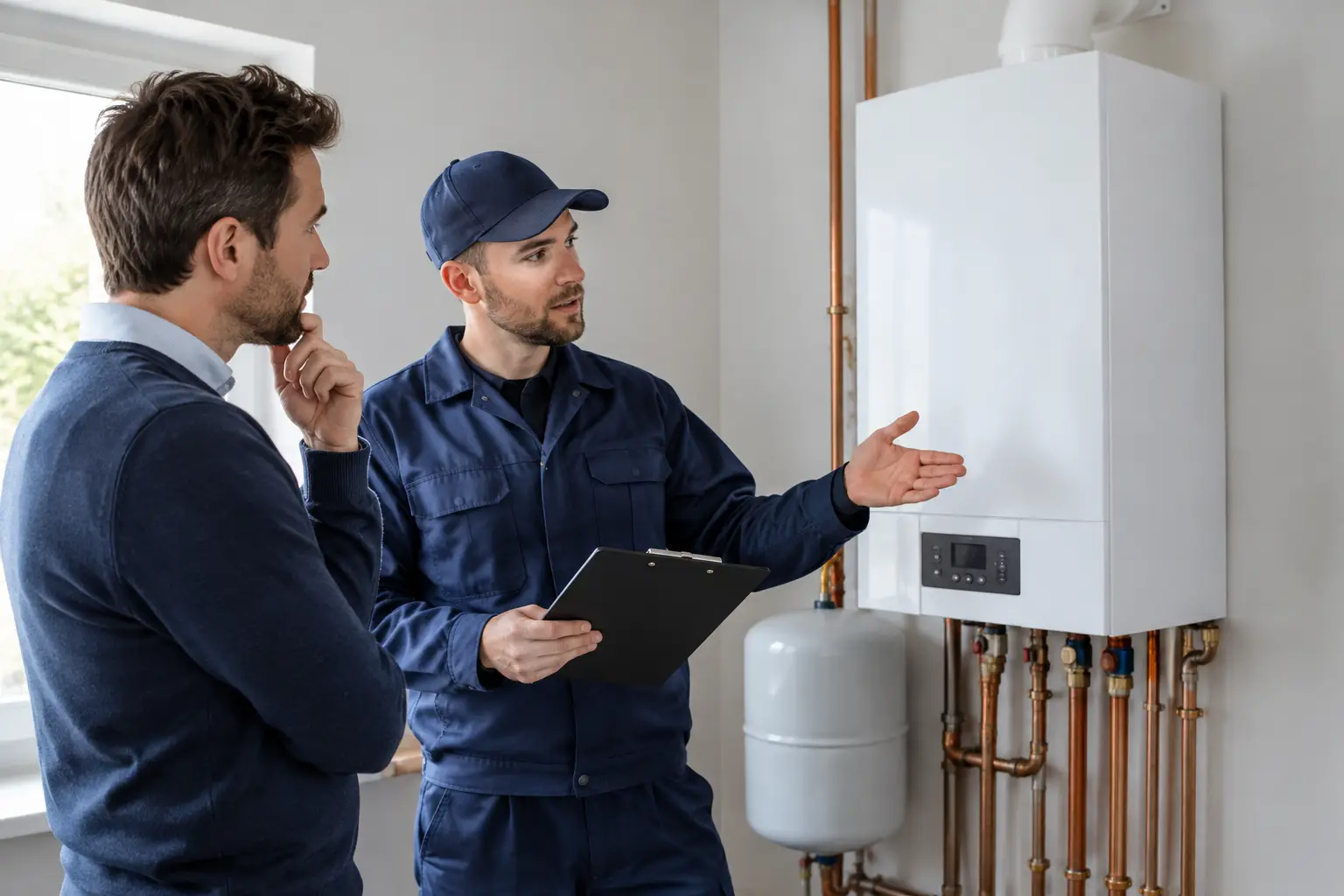
Heating and hot water are essentials, so good communication should start before an engineer arrives. Give tenants reasonable notice of the appointment, explain how long water and heating may be off, and let them know whether access is needed to bedrooms, airing cupboards, loft spaces or external areas.
Most straightforward like-for-like replacements can be completed in a day. A move to a new boiler location, a conversion from a conventional system to a combi boiler, or additional work to improve the flue, controls or pipework can take longer. The best approach is to set realistic expectations from the survey rather than promise a one-day job before the system has been assessed.
Tenant circumstances also deserve consideration. A household with young children, an elderly resident or someone working from home may need a more carefully planned appointment. Clear communication is not just good service. It helps prevent missed visits, protects the condition of the property and makes a necessary maintenance job feel properly managed.
Choosing the right boiler for the property
A rental property needs a boiler that suits its layout and demand, not a specification chosen solely on upfront price. Oversizing can lead to unnecessary cost and inefficient operation. Undersizing can leave tenants with poor hot water performance and rooms that take too long to warm up.
For a smaller flat or a house with one bathroom, a combi boiler is often a sensible option. It provides hot water on demand and removes the need for a separate cylinder, which can free up cupboard space. However, it may not be ideal for a larger home where several people are likely to use showers or taps at the same time.
A system boiler with a hot water cylinder can be better suited to bigger properties, homes with multiple bathrooms or properties where hot water demand is high. It takes up more space, but it can deliver stronger performance when more than one outlet is in use. The right answer depends on occupancy, existing pipework, water pressure, insulation and the way the property is used.
Controls should be part of the decision, not an afterthought. A programmable thermostat, thermostatic radiator valves and properly configured heating zones can help tenants use the system more effectively. Smart controls may be worthwhile in some properties, but only if they are straightforward to use and appropriate for the tenancy arrangement. A complicated system that no one understands will not deliver the expected savings.
Compliance, safety and the paperwork landlords need
Gas work in rental properties must be carried out by a Gas Safe registered engineer. This is not an area for shortcuts or informal arrangements. A correctly installed boiler must be tested, commissioned and registered in line with the manufacturer’s requirements, with the relevant documents supplied to the landlord.
Landlords must also ensure an annual gas safety check is completed for relevant gas appliances and flues. The resulting Landlord Gas Safety Record, often called a CP12 certificate, must be provided to existing tenants within 28 days of the check and to new tenants before they move in. Keep clear records of servicing, repairs, safety checks and the boiler warranty, as these can be vital if an issue arises later.
A replacement is also a good opportunity to look beyond the boiler itself. The engineer should assess the flue route, ventilation where applicable, condensate discharge, system pressure and the condition of the heating circuit. If the system water is dirty or the radiators are not heating evenly, cleaning and protection measures may be needed to help the new boiler perform as intended.
Balancing cost against long-term reliability
The cheapest quotation is not always the lowest-cost option over the life of the boiler. A low initial figure can exclude important work such as flushing, chemical inhibitor, magnetic filtration, thermostat upgrades, flue alterations or making good after the installation. Ask what is included, what could be charged as an extra and how the existing system has been assessed.
For a landlord, reliability usually carries more value than a small saving at installation. A dependable boiler with a suitable warranty can reduce tenant disruption, emergency repair costs and management time. It is worth checking what the warranty covers, whether annual servicing is required to maintain it, and who will deal with faults if they occur.
Energy efficiency should also be viewed realistically. A modern condensing boiler can be more efficient than an older unit, particularly where controls and system condition are improved at the same time. Actual savings will still depend on the property’s insulation, draughts, tenant heating habits and hot water use. Boiler replacement is part of a wider plan for a warmer, more economical home, not a substitute for basic fabric improvements.
Avoiding the common mistakes
The most expensive boiler decisions are often rushed ones. Waiting until a complete failure during winter can limit your options and increase pressure on both you and your tenants. Building a replacement plan into your maintenance schedule gives you time to compare suitable systems and arrange work at a sensible point in the tenancy.
It is also a mistake to replace a boiler without addressing recurring system issues. Sludge, failing radiators, poorly balanced heating and unsuitable controls can undermine a new installation. Equally, changing to a combi boiler simply to remove a cylinder can be the wrong move if the property has several bathrooms and a busy household.
Finally, do not overlook aftercare. Tenants should be shown the basic controls, how to repressurise the system if appropriate, and who to contact if there is a fault. They should not be expected to diagnose a boiler problem, but a short handover can prevent unnecessary call-outs and give them confidence in their new heating system.
A managed approach for North East landlords
For rental properties in Newcastle and the surrounding North East, SWH Electrical Solutions can manage boiler installation through its Gas Safe registered heating team, alongside wider electrical and property compliance work where required. That joined-up approach can be particularly useful during refurbishments, changeovers and development projects where several trades need to work to one clear plan.
A good rental boiler replacement should leave more than a new appliance on the wall. It should leave the property safer, the heating easier to manage and your tenants reassured that their home will stay comfortable when they need it most.