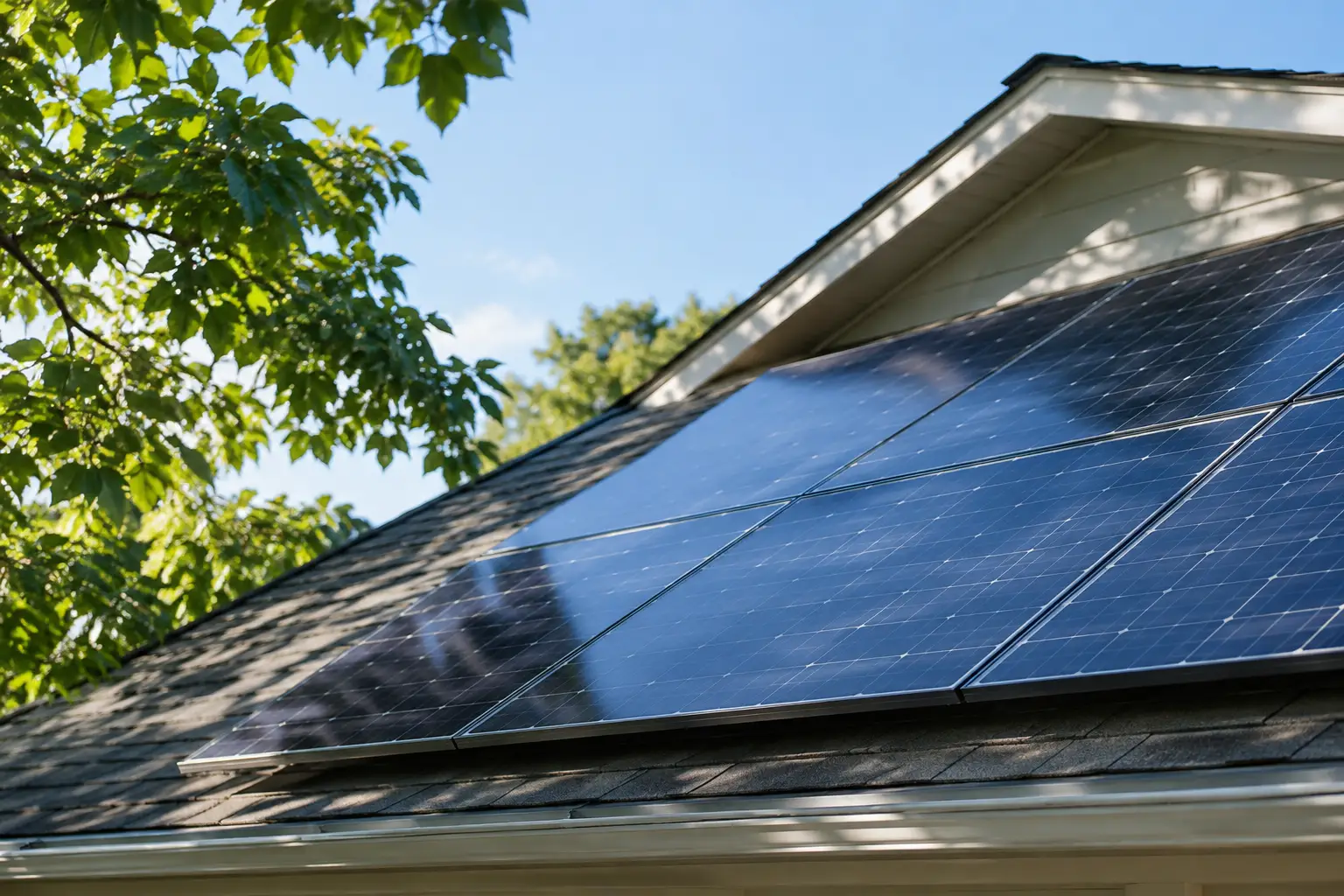
A chimney that catches the morning sun, a neighbour’s tree at lunchtime, or a dormer that shades one corner of the roof can change the economics of a solar system. The best solar panels for shade are not simply the panels with the highest efficiency rating. They are part of a properly designed system that limits the effect of partial shading and makes the most of the roof you actually have.
For homes and businesses across the North East, this is a practical issue rather than a theoretical one. Our mix of weather, mature trees, terraces and varied rooflines means few properties have an entirely clear, south-facing expanse. Shade does not rule solar out, but it does mean that survey, design and equipment choice matter more.
Why shade affects solar generation
Solar panels are made up of connected solar cells. When part of a panel is shaded, that shaded section produces less electricity and can restrict the output of other cells connected with it. On a traditional string inverter system, the effect can extend beyond one panel because several panels work together as a string.
The result is not always dramatic. A small, moving shadow from a television aerial will have a different impact from a chimney that covers the same lower section of panels for three hours every winter morning. Equally, a roof that is clear between March and October may be heavily affected once trees are in full leaf, or when the sun sits lower in the sky.
This is why a quoted annual generation figure without a proper shade assessment should be treated carefully. The right design starts by identifying where shade falls, when it occurs and whether it can reasonably be reduced.
Best solar panels for shade: the features that matter
There is no completely shade-proof solar panel. Marketing claims can make the choice sound simpler than it is. In reality, the strongest outcome usually comes from combining quality panels with the right inverter technology and a sensible roof layout.
High-efficiency panels make better use of limited space
High-efficiency panels are useful where a roof has limited clear space. They generate more power per square metre in strong conditions, allowing a useful system size even if areas around chimneys, skylights or roof edges need to be avoided.
Efficiency alone does not make a panel perform better under a shadow. However, it can help compensate for the fact that a shaded roof often cannot accommodate as many panels as an open one. For smaller domestic roofs, this can be the deciding factor between a system that meets a meaningful share of daytime demand and one that does not.
Half-cut cell designs can reduce the impact of partial shade
Many modern panels use half-cut cells. Put simply, the cells are split into smaller electrical sections, which can help a panel continue producing from its unshaded areas when another area is affected.
This is beneficial for common partial-shade patterns, such as a shadow across the bottom or side of a panel. It is not a magic fix: deep shade across a substantial portion of the panel will still reduce output. But compared with older panel designs, half-cut cell technology is generally a sensible feature to look for.
Bypass diodes help panels work around shaded sections
Quality panels incorporate bypass diodes, which allow current to route around groups of cells that are not producing well. This limits the bottleneck effect caused by shade and also helps protect the panel from excessive heat build-up in badly shaded cells.
The number and configuration of these diodes varies by panel. It is a useful part of the technical picture, but not a specification most homeowners need to choose in isolation. A competent installer should consider panel construction alongside the pattern of shade on site.
The inverter choice can matter more than the panel
On roofs with uneven or intermittent shade, panel-level power electronics are often where the biggest gains are made. Rather than allowing one shaded panel to hold back a whole string, each panel can operate more independently.
Power optimisers are fitted to individual panels and work with a compatible central inverter. They are particularly useful where shade moves across different panels through the day, or where panels face more than one direction. They also provide panel-level monitoring, so it is easier to spot if one panel is underperforming.
Microinverters take this approach further by giving each panel its own small inverter. This can be an excellent fit for complex roofs, extensions, garages and installations that may be expanded later. The trade-off is normally a higher upfront cost and more equipment on the roof. Whether that premium pays back depends on the amount of shade and the layout, not simply on the technology being newer.
A conventional string inverter remains a good, cost-effective choice for a largely unshaded roof where all panels share the same orientation and pitch. It should not be dismissed automatically. The key is matching the system to the property rather than selling one solution for every job.
Start with the shade, not the product brochure
A thorough solar survey should look at more than compass direction. Chimneys, soil stacks, satellite dishes, neighbouring buildings, roof valleys and nearby trees all need to be considered. Seasonal change matters too. A bare deciduous tree in February can create a very different shade pattern in June.
Where possible, an installer can use shade-modelling software alongside an on-site assessment to estimate annual losses. This produces a more realistic generation forecast and supports better decisions about panel positions, string design and whether optimisers or microinverters are worthwhile.
Sometimes the answer is straightforward: leave a consistently shaded section blank and concentrate panels on the clearer roof area. Cramming panels into every available gap can look impressive on a drawing while delivering a poorer return in practice.
Tree work may be another option, but it should be approached sensibly. Trees may be protected, belong to a neighbour, or provide privacy and shelter that matter more to the household than a modest generation gain. A good solar design works around the property as it is, unless changes are genuinely practical and appropriate.
Does a battery help with a shaded solar system?
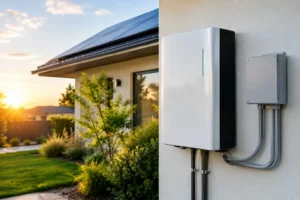
A battery cannot create electricity that shade has prevented the panels from generating. What it can do is increase the value of the electricity your system does produce by storing surplus power for the evening, overnight use, or periods of higher household demand.
This can work particularly well where a shaded system has a lower but still useful generation profile. Rather than exporting small amounts during the day, you may be able to use more of that solar power later for cooking, lighting, appliances or an EV charge point. Battery sizing should reflect actual generation, electricity use and tariff arrangements. Oversizing a battery against a modest solar array can leave expensive capacity sitting unused.
For commercial premises, batteries can also support on-site use during operating hours and help manage demand patterns. The business case needs to be modelled around the building’s load profile, not just the advertised battery capacity.
Questions to ask before choosing a system
Before accepting a proposal for a shaded roof, ask how shade has been assessed and whether the forecast accounts for it. Ask which panels are expected to be affected, whether panel-level optimisation has been recommended, and why that choice suits the layout.
It is also worth asking what monitoring will be provided after commissioning. Good monitoring gives you visibility of generation and, with optimisers or microinverters, may show individual panel performance. That makes it easier to identify faults, unexpected shading growth or a panel that needs attention.
Finally, compare expected annual generation and likely self-consumption, rather than focusing solely on panel wattage. A larger nominal system is not always the better system if part of it is regularly compromised by shade.
A practical route to better returns
The best solar panels for shade are the ones selected as part of an honest, site-specific design. For some properties that means high-efficiency, half-cut panels with a conventional inverter. For others, the additional investment in optimisers or microinverters is justified by the roof’s shape and shade pattern.
At SWH Electrical Solutions, we approach this from the survey stage, looking at the building, your electricity use and the scope for battery storage or future additions such as EV charging. As an MCS-backed installation should, the focus is on a system that is safe, accurately specified and built to perform over the long term.
If shade is part of your property, do not assume solar is off the table. A clear assessment will tell you where the opportunity is, where the compromises sit, and whether the numbers make good sense for your home or business.