A battery should make your solar system more useful after sunset, not create another worry in the property. Good solar battery safety starts well before the unit is switched on: with a suitable design, the right location and an installer who understands both battery systems and the electrical installation around them.
For homeowners, businesses and developers across the North East, battery storage can reduce reliance on grid electricity and make better use of solar generation. The technology is reliable when specified and installed correctly, but it is not a fit-and-forget purchase. Like any high-capacity electrical equipment, it needs professional planning and sensible day-to-day care.
Why solar battery safety needs proper planning
Most modern solar batteries use lithium-ion chemistry. These batteries are compact, efficient and designed with several layers of protection, including internal monitoring and controls that manage charging, temperature and output. That does not remove the need for care. Damage, poor installation, unsuitable surroundings or unauthorised alterations can increase the risk of overheating, electric shock or fire.
The battery itself is only one part of the system. Safety also depends on the inverter, isolators, cable routes, consumer unit capacity, earthing arrangements and the way the solar, battery and grid connections interact. A battery added to an older property may require upgrades or additional protection to bring the whole installation up to the required standard.
This is why price alone is a poor way to compare quotes. A cheaper proposal may not allow enough time for a full survey, correct cable containment, electrical upgrades or proper commissioning. Those details are where long-term reliability is won.
Choosing the right place for a solar battery
Location is one of the most practical solar battery safety decisions. The ideal space is dry, secure, accessible for maintenance and within the manufacturer’s permitted temperature range. A battery that repeatedly gets too hot or too cold may reduce its performance and lifespan, even if it does not immediately show a fault.
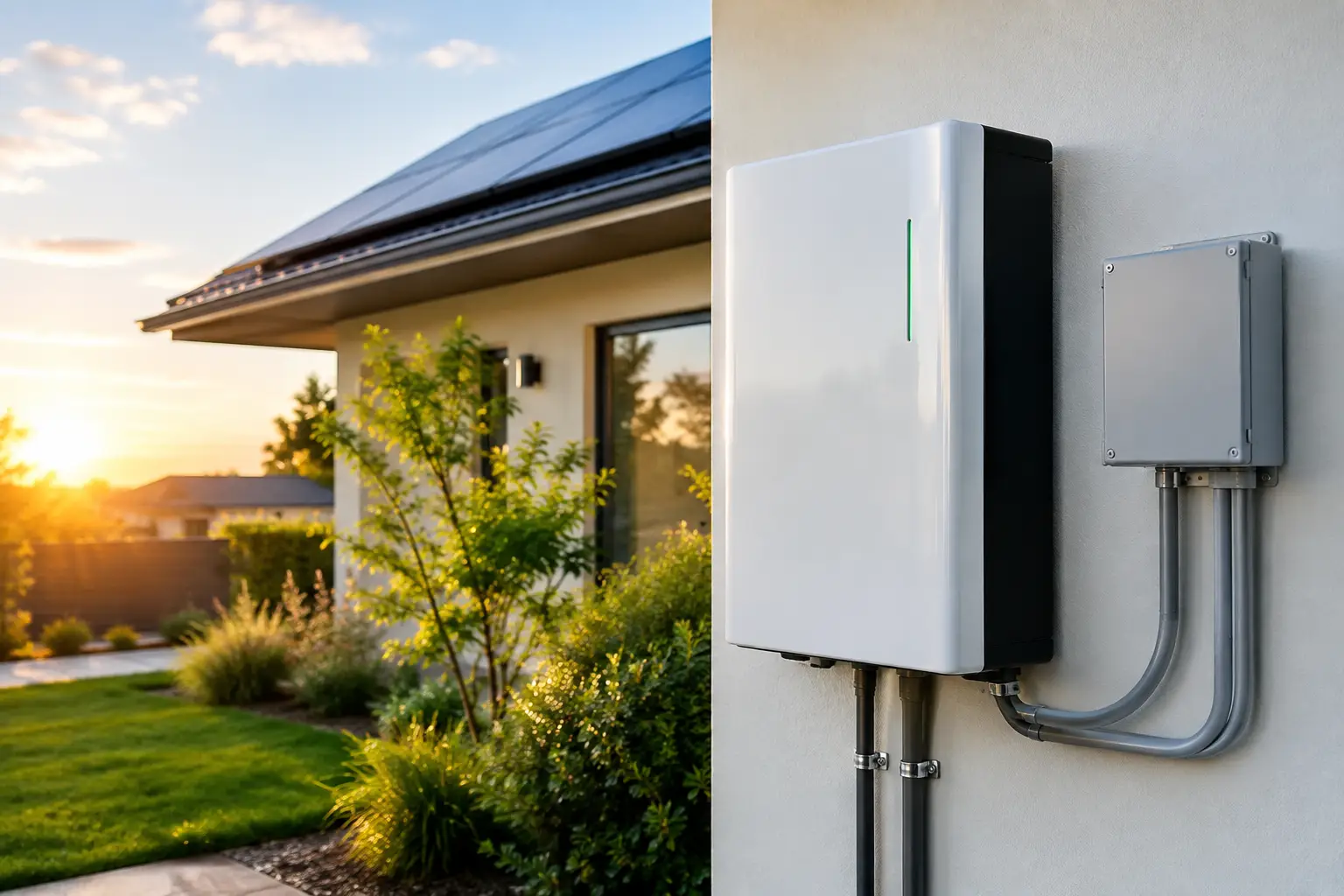
Garages, utility rooms and dedicated plant areas can work well when they offer sufficient space and ventilation. External installations can also be suitable where the equipment is rated for the conditions and protected from direct weather exposure, accidental impact and tampering. The correct option depends on the property layout, the battery model and the manufacturer’s instructions.
Avoid treating a battery cupboard as general storage. Do not stack paint, cardboard, cleaning products, petrol-powered equipment or household clutter around it. Leave the required clearance clear so heat can dissipate and an engineer can inspect the unit safely. It is also sensible to keep batteries away from sleeping areas where possible and not place them in a location that could obstruct a main escape route.
For commercial premises, the conversation is wider. A battery location must work with the building’s fire strategy, access arrangements, working environment and existing electrical infrastructure. Warehouses, offices, workshops and multi-unit developments all present different considerations. A site survey should identify these early rather than force a compromise during installation.
Installation is not a DIY electrical job
A solar battery connects to high-voltage DC equipment and the property’s AC electrical supply. It must be installed, protected, labelled, tested and commissioned by competent professionals. Even a system that appears straightforward can have complex operating modes, particularly where it provides backup power during a power cut or operates alongside an EV charger, heat pump or electric heating.
A professional installation should begin with an assessment of your energy use and existing electrical system. This helps determine the appropriate battery capacity and output, but it also reveals whether the consumer unit, main supply or earthing arrangement needs attention. Oversizing or undersizing a system is not only disappointing financially; it can lead to unnecessary strain on equipment or prevent the battery from delivering the result you expected.
During commissioning, the installer should confirm that safety settings, shutdown functions and monitoring are working as intended. You should receive clear handover information explaining how to use the app, what normal operation looks like, where the isolation points are and who to contact if a fault appears. Keep this information with your electrical certificates rather than relying on memory six months later.
At SWH Electrical Solutions, battery work is approached as part of the wider electrical installation, not as a boxed product fixed to a wall. That matters when a property needs solar, battery storage, EV charging and electrical upgrades to work safely together.
Everyday checks that make a difference
You do not need to inspect the inside of a battery or interfere with its wiring. In fact, you should not remove covers, reset internal components or attempt repairs yourself. But a quick visual check from time to time is useful, particularly after building work, severe weather or an electrical fault elsewhere in the property.
Look for physical damage to the casing, loose fixings, water ingress, unusual heat, a burning smell, discolouration or warning messages in the monitoring app. A small amount of fan noise or warmth may be normal for some systems, especially when charging or discharging heavily. A sudden change from the usual pattern is worth reporting to your installer.
Keep the surrounding area clear and make sure children cannot use the battery enclosure or nearby isolation equipment as a shelf, toy or storage point. If the battery is outdoors, check that landscaping, bins and garden equipment have not reduced access or caused damage to the enclosure.
Software updates are another area where owners can help. Manufacturers may issue updates that improve performance, compatibility or fault handling. Follow the installer’s guidance and use only the approved monitoring platform. Do not connect unapproved equipment or change advanced settings simply because an online forum suggests it.
What to do if you suspect a problem
Most battery alerts are not emergencies. A communication error, reduced output or temporary pause may be visible in an app while the system protects itself. Start by checking the message, noting the time and contacting the installer or manufacturer support route provided at handover. Do not repeatedly switch isolators on and off in an attempt to clear the warning.
Treat signs of overheating, smoke, fire, hissing, swelling, strong chemical odours or visible liquid as urgent. Keep people away from the area, leave the property or affected part of the premises if there is any immediate risk, and call 999. Do not touch a damaged battery or try to move it. Once emergency services have confirmed the area is safe, contact your installer and insurer.
If a battery has been affected by floodwater, impact damage or a fire elsewhere in the building, arrange an inspection before putting it back into service. The casing may look intact while internal components have been compromised.
Maintenance and changes to the property
Battery systems need less routine maintenance than many household systems, but they still benefit from periodic professional attention. An electrician can inspect the installation, check connections and protective devices, review error logs where appropriate, and make sure changes elsewhere have not affected safe operation.
This becomes particularly relevant when you add an EV charger, heat pump, extension, new consumer unit or more solar panels. Each change can alter the property’s load profile and electrical design. Tell the contractor about the existing battery at the quotation stage so the work can be planned properly.
Landlords and facilities managers should also include battery storage in their electrical asset records and maintenance planning. Clear labelling, accessible documentation and known points of contact make a real difference when a tenant, caretaker or emergency contractor needs to respond quickly.
A safer battery is a better investment
The best battery installation is the one you barely have to think about: it charges when solar generation is available, supports the property when electricity prices are higher, and remains properly protected in the background. That outcome comes from careful design, accredited installation and a willingness to call a professional when something does not look right.
If you are considering battery storage, start with a proper survey of the building rather than choosing capacity from a headline figure. A well-planned system gives you confidence as well as lower reliance on the grid, which is exactly what the investment should deliver.