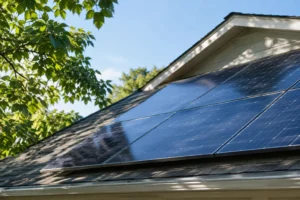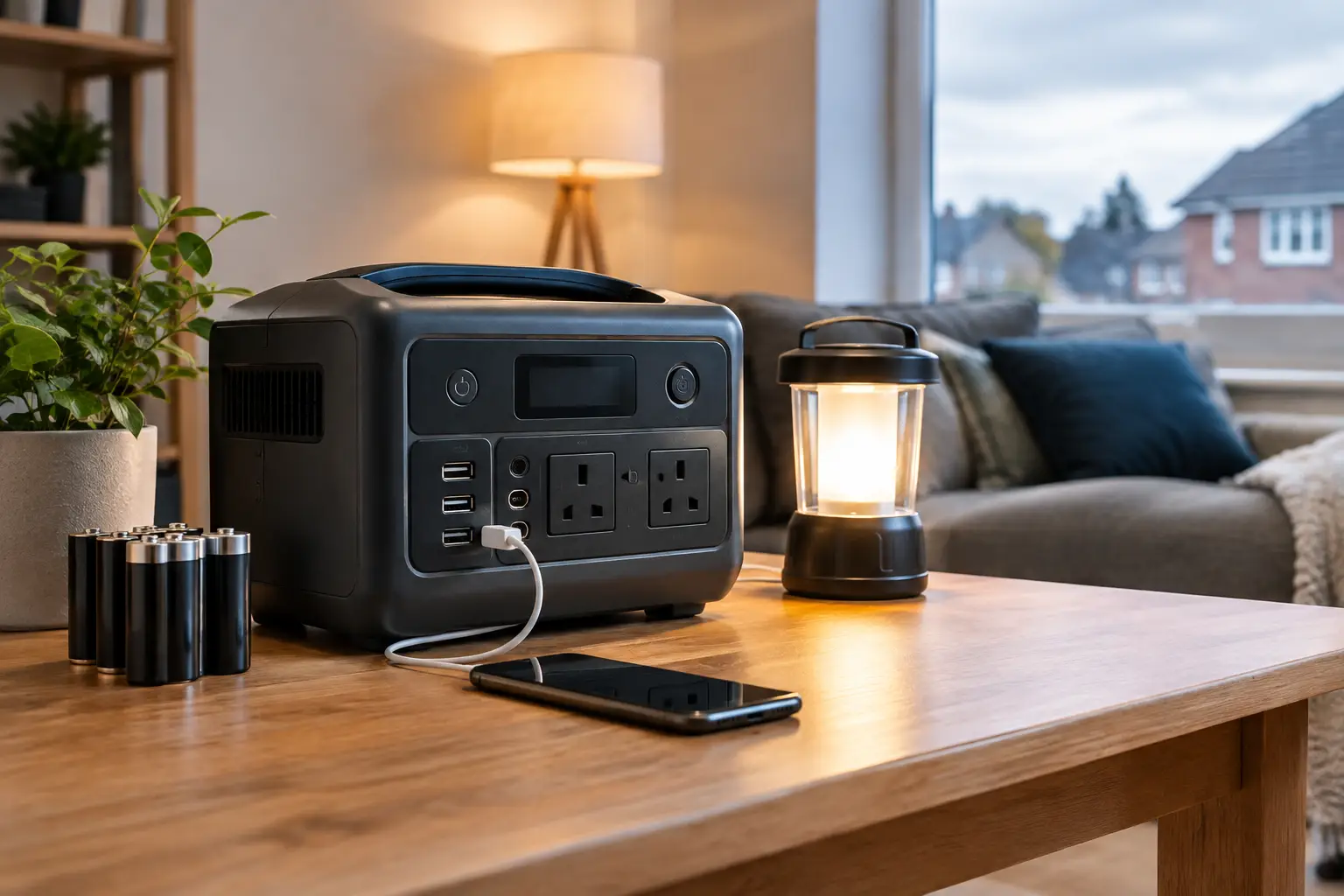
A power cut quickly shows the difference between a battery that lowers bills and a battery that can actually support your home. The best batteries for outages do both, but only when the system has been designed with backup operation in mind. A standard solar battery may store cheap overnight electricity or surplus solar, yet still switch off the moment the grid fails.
For homeowners across Newcastle and the North East, the right answer is rarely the battery with the biggest headline capacity. It is the one that can run the appliances you genuinely need, for as long as you need them, with safe changeover equipment and a properly planned installation.
What makes a battery useful during a power cut?
Grid-tied solar panels must normally shut down during an outage. This protects engineers working on the electricity network from power being fed back into cables they may believe are dead. The same principle applies to many battery systems.
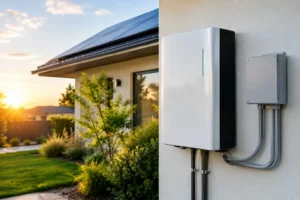
To keep selected circuits live, the installation needs backup functionality. Depending on the product, that could mean a backup gateway, an automatic transfer arrangement or a dedicated essential-loads consumer unit. When the grid goes down, the battery isolates your property from the network and creates its own stable supply for the agreed circuits.
This detail matters. A battery advertised with 10kWh of storage is not automatically a whole-home backup system. Without the right equipment and commissioning, it may still be excellent for energy savings but provide no electricity during an outage.
Power output is just as important as capacity. Capacity, measured in kilowatt-hours (kWh), tells you how much energy is stored. Output, measured in kilowatts (kW), tells you how many appliances the battery can run at once. A large battery with limited output may not cope with a kettle, microwave and electric shower all starting together.
Best batteries for outages: what to look for
The best choice depends on the property, its existing solar equipment and the level of backup you expect. Rather than choosing by brand alone, assess these practical factors.
Backup power and essential circuits
Most homes are better served by backing up essential circuits than by trying to power every circuit in the house. This commonly includes lighting, the broadband router, fridge-freezer, sockets in key rooms, selected heating controls and perhaps a garage door or sump pump.
High-demand loads need careful thought. Electric showers, immersion heaters, electric hobs, ovens and rapid EV charging can drain a battery very quickly and may exceed its backup output. Whole-home backup can be possible, but it requires a detailed load assessment and often a larger, more costly system. There is no point paying for whole-home capability if the battery will trip whenever normal household demand rises.
Usable capacity, not just the headline figure
A battery with around 10kWh of usable capacity can provide meaningful protection for essential loads, but runtime varies widely. If your backed-up circuits average 500W, 10kWh could theoretically last about 20 hours. In real use, battery losses, changing demand and reserve settings reduce that figure.
A fridge-freezer and router consume modest amounts over time. Boiling a kettle, using a hairdryer or running a washing machine changes the picture immediately. The sensible approach is to identify the loads you cannot reasonably go without, then size the battery around those needs.
For a household that experiences occasional short cuts, one battery may be enough. For rural properties, homes with medical equipment, or customers seeking stronger resilience, a modular system that can be expanded is often a better long-term decision.
Solar charging while the grid is down
Solar can extend backup time significantly, but it is not automatic on every system. Ask whether the battery and inverter can continue using solar generation in island mode, meaning while isolated from the grid.
A well-designed solar-and-battery system may recharge during daylight and supply essential loads overnight, provided generation is sufficient. In winter, however, solar output can be low just when storm-related outages are more likely. Battery capacity remains the foundation of resilience; solar is an extremely useful top-up, not a guarantee of unlimited power.
Single-phase or three-phase supply
Most UK homes have a single-phase electricity supply, while larger houses and many commercial premises may have three-phase supply. The battery, inverter and backup equipment must suit the property’s electrical arrangement.
For three-phase sites, it is particularly important to clarify what happens during an outage. Some systems back up one phase only, while others can support all phases when configured correctly. Businesses should also consider critical equipment such as servers, security systems, refrigeration, shutters and emergency lighting before selecting a solution.
Battery types that suit different outage needs
There is no single winner for every property, but several system approaches are worth considering.
Tesla Powerwall is a familiar option for homeowners who want a high-capacity battery with a polished app and strong backup capability when paired with the appropriate gateway equipment. It can suit households looking for whole-home or near whole-home resilience, subject to a proper assessment of demand and supply arrangements.
Modular battery systems are often attractive when flexibility matters. They allow capacity to be built up over time, which can work well for a home starting with essential-load backup and later adding an EV, heat pump or more solar panels. The trade-off is that individual components, controls and compatibility need to be planned carefully from the start.
All-in-one battery and inverter units can provide a tidy option for new installations or significant upgrades. They may be especially practical where the property needs both a new solar inverter and storage. Existing solar owners should check whether a DC-coupled replacement makes sense, or whether an AC-coupled battery would work better alongside their current inverter.
For commercial properties, battery selection is usually driven by critical loads, operating hours and continuity plans rather than a domestic-style capacity target. A smaller system may protect IT and security equipment through short interruptions, while a larger installation could support selected operational loads and reduce peak electricity costs. The design brief should be clear before any product is chosen.
How long will a home battery last in an outage?
It depends on the battery’s usable capacity and what you ask it to run. A 13.5kWh battery supporting basic lighting, refrigeration, broadband and a few sockets might last through an evening and well into the next day. The same battery could be heavily depleted in a few hours if it is feeding cooking appliances, heating elements or frequent high-power use.
The best systems allow homeowners to set a backup reserve. For example, you might usually use the battery to reduce energy bills but retain 20% or 30% for an unexpected outage. If reliability is the priority during stormy weather, a higher reserve can be worthwhile. If day-to-day savings matter more, the reserve can be reduced.
This is one of the useful benefits of battery monitoring. You can see how your home actually uses electricity and adjust settings with a clear understanding of the trade-off.
Installation details that should not be overlooked
A battery is not a plug-in appliance. It is a significant electrical installation that must be safely integrated with your consumer unit, generation equipment, earthing arrangement and electricity supply. The installer should assess cable routes, battery location, ventilation requirements, fire considerations, access and any necessary distribution network notifications.
Location deserves more attention than it often gets. A garage, utility room or suitable external position may work well, but the equipment must remain accessible for maintenance and protected from conditions that could affect performance. Battery chemistry and manufacturer instructions influence the final choice.
You should also ask exactly what happens when the power fails. Will the changeover be automatic? Which circuits stay live? Can solar recharge the battery during the cut? Does the system support manual operation if communications are unavailable? Clear answers before installation prevent disappointment later.
Accredited workmanship is essential. MCS, NICEIC and TrustMark-backed standards provide reassurance that design, installation and certification are being handled properly. For a system involving solar, storage and backup, using a contractor with both renewable and electrical expertise keeps responsibility clear from survey through commissioning.
Is a battery worth it purely for outage protection?
For some households, yes. A battery can keep communications, refrigeration, lighting and selected heating controls operating when the grid is unavailable. That peace of mind can be particularly valuable for people working from home, families with young children, households with care needs, or properties prone to supply interruptions.
For others, the financial case rests more on solar self-consumption, time-of-use tariffs and avoiding expensive peak-rate electricity. Backup capability then becomes an added benefit rather than the sole reason to invest. Being honest about this distinction leads to a better system and a more realistic budget.
The right battery is the one that fits your normal electricity use but has a clear plan for the day the lights go out. A site survey can turn that plan into a practical design, with the right circuits protected and no unpleasant surprises when you need the system most.