A power cut at 6pm in January quickly shows the difference between having electricity and having a plan. In the solar battery vs generator decision, the best choice is not always the cheapest unit on day one. It is the system that can safely support the loads you need, suits how often you lose power, and makes sense for your property over the years ahead.
For many North East households and businesses, a battery is the more practical long-term answer. A generator still has a useful place, particularly where outages may last for days or where large, temporary electrical loads are involved. The right option depends on your priorities, your existing electrical installation and the way you use energy.
Solar battery vs generator: the key difference
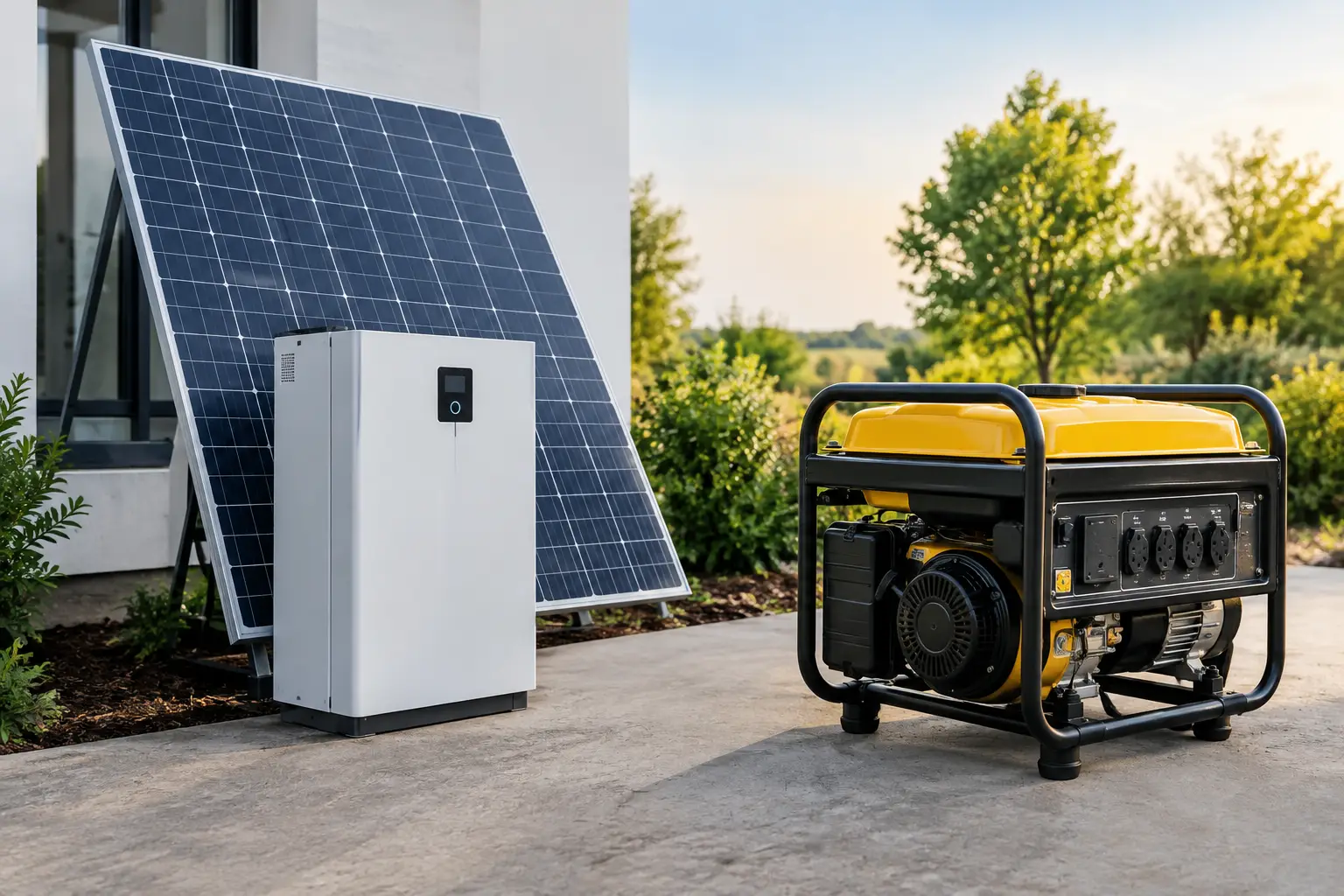
A solar battery stores electricity for later use. It can charge from solar panels during the day, and in some setups from the grid at cheaper off-peak times. You then use that stored energy in the evening, when electricity prices are higher, or during a power cut if the system has been designed with backup capability.
A generator makes electricity by burning fuel, usually petrol, diesel or LPG. It starts when required, either manually or automatically with the right changeover equipment, and keeps running while it has fuel. Rather than storing solar energy, it produces power on demand.
That difference shapes almost every other consideration. A battery is quiet, low-maintenance and useful every day for reducing imported grid electricity. A generator can run for much longer when fuel is available, but it needs regular testing, fuel management, ventilation and ongoing servicing.
What happens during a power cut?
This is the point that is often misunderstood. Not every solar panel system will keep your home powered when the grid fails. Standard grid-connected solar switches off during an outage to protect engineers working on the network. Adding a battery does not automatically change that.
For backup power, the battery system needs appropriate islanding or backup functionality, along with the necessary protection and controls. Depending on the design, it may supply selected circuits only, such as lighting, broadband, refrigeration, sockets and a boiler, or it may support a larger portion of the property.
A generator can also provide backup power, but it must not simply be plugged into a socket or connected informally to a consumer unit. That creates serious safety risks, including back-feeding electricity into the network. A properly installed generator arrangement uses a suitable changeover switch or automatic transfer system to keep generator and grid supplies safely separated.
For either option, a professional survey should start with the question: what must stay on? Keeping a fridge, Wi-Fi router, lights and heating controls running needs far less power than supporting an electric shower, induction hob, immersion heater or EV charger.
Cost: upfront price versus everyday value
A generator can appear less expensive at first, especially a portable petrol model. Yet the purchase price is only part of the picture. Fuel, servicing, oil changes, replacement parts and secure storage all add to its lifetime cost. When it runs, it also produces emissions and noise.
A solar battery usually has a higher initial cost, particularly when backup protection and electrical alterations are included. However, it can work every day, not just during emergencies. By storing surplus solar generation or charging during lower-cost periods, it can reduce the amount of electricity you buy at peak rates.
The financial case for a battery is strongest where there is regular solar generation, significant evening consumption, time-of-use tariffs, or a desire to protect against rising energy costs. It is less straightforward for a property with low electricity use, little roof space for solar, or an expectation of long outages that would drain the battery quickly.
Battery capacity matters too. A 10kWh battery does not mean every appliance can run for 10 hours. Runtime depends on the actual load. A modest 500W essential load could theoretically use 5kWh in 10 hours, while a 3kW load would use the same energy in well under two hours. Usable capacity, reserve settings and battery efficiency all affect the real result.
Reliability and runtime
A well-designed battery system is automatic. It can respond to a grid failure rapidly, often with little interruption to selected circuits. There is no need to go outside in poor weather, start an engine or handle fuel. For short cuts and overnight resilience, that convenience is hard to beat.
Its limitation is stored energy. Several cloudy winter days reduce solar charging, while household demand is often higher due to lighting, cooking and heating circulation. If the battery reaches its minimum reserve during a prolonged outage, it cannot recharge from the grid until power returns. Some systems can be paired with a generator, but that adds cost and design complexity.
A generator’s strength is endurance. With sufficient fuel and careful operation, it can continue supplying power for far longer than a domestic battery. This can be valuable for rural properties, sites with a history of extended outages, or commercial premises where refrigeration, pumps or critical equipment cannot be without power for long.
That resilience relies on preparation. Fuel supplies must be kept safely, checked for age and replenished. A generator that has sat unused for two years is not a dependable contingency plan. It needs periodic test runs and servicing in line with the manufacturer’s requirements.
Noise, maintenance and day-to-day living
Batteries are the clear winner for quiet operation. There may be a gentle fan sound at times, but no engine noise, exhaust fumes or late-night disruption for neighbours. They are particularly well suited to terraced homes, built-up areas and businesses where a running generator would be impractical.
Generators need a safe outdoor location with adequate ventilation, weather protection and sensible positioning away from windows, doors and neighbouring boundaries. Carbon monoxide is a serious risk, so they must never be operated inside a garage, shed, cellar or any enclosed area. Noise restrictions and local considerations can also affect whether a generator is realistic.
Maintenance is lighter for a battery, although it is not zero. The installation should be checked as part of ongoing electrical care, and software or monitoring may help identify performance issues. Generators require more hands-on attention, including engine servicing and checks of fuel, batteries and starting systems.
Choosing the right option for your property
A solar battery is usually the better fit if you want to make more use of your solar generation, reduce routine electricity costs, and have quiet backup for essential circuits. It is an investment in both everyday energy management and short-term resilience.
A generator may be the better fit if you need long-duration backup, have higher loads that a domestic battery would struggle to support, or operate somewhere remote where grid outages can be lengthy. It can also be a sensible temporary solution during construction or where a permanent solar and battery installation is not yet viable.
For some commercial clients, the answer is not strictly one or the other. A battery can smooth daily consumption and provide immediate backup, while a generator provides extended cover for critical operations. The system must be correctly sized and commissioned, particularly where three-phase supplies, emergency lighting, fire systems or sensitive equipment are involved.
Start with a proper load assessment
Before choosing equipment, list the circuits and appliances that genuinely need to operate during an outage. Include their running power, but also consider starting currents from motors in fridges, pumps and other equipment. Then decide how long you need them to run and whether solar generation is likely to be available when you need it.
A qualified installer can assess your consumer unit, incoming supply, solar arrangement and proposed backup circuits before recommending a safe design. At SWH Electrical Solutions, that practical approach means looking beyond a headline battery size or generator rating and designing around how your property actually works.
The most helpful question is not “which is best?” but “what do I need to keep running, for how long, and what value will the system provide when there is no power cut at all?” Answer that honestly and the right solution becomes much clearer.