A battery can make solar panels work harder for your household. Instead of sending surplus daytime generation to the grid, you can store it for the evening when cooking, laundry and screen time push demand up. A well-planned home battery installation guide starts there, but it should also account for your property, electricity use, tariff and expectations around backup power.
Battery storage is not a one-size-fits-all purchase. The right system is the one that fits how your home uses energy, integrates safely with your existing electrical installation and continues to perform well for years.
Start with what you want the battery to do
Most homeowners want to reduce the electricity they buy from the grid. A battery stores low-cost or self-generated electricity and releases it when grid electricity costs more. For homes with solar, this usually means saving excess generation for later. For homes without solar, it can mean charging during off-peak tariff periods and using that power at peak times.
That distinction matters when choosing equipment. A battery designed around solar self-consumption may suit a household that generates plenty of power between spring and autumn. A tariff-led setup can still be worthwhile, but savings depend more heavily on the gap between cheap and expensive electricity rates, your daily consumption and the battery’s usable capacity.
Backup power is a separate requirement. Not every battery keeps your home running during a power cut. Many systems shut down with the grid unless they are installed with compatible backup hardware and an agreed backup circuit. If keeping essentials such as lighting, broadband, refrigeration and selected sockets live is a priority, raise it at survey stage. Backing up every circuit, particularly an electric shower, cooker or heat pump, can require a larger and more costly design.
Size the battery around real household demand
Battery capacity is measured in kilowatt-hours (kWh). It tells you how much energy the battery can store. Power output, measured in kilowatts (kW), tells you how much electricity it can supply at one time. Both figures matter.
A large-capacity battery with a modest output may cover a long evening of background use but struggle to support several high-demand appliances operating together. Conversely, a high-output battery with limited capacity may handle a short peak well but run out sooner than expected.
The most reliable way to size a system is to review actual electricity use. Smart meter data, electricity bills and solar monitoring can show your typical daytime import, evening demand and seasonal generation. A household that uses 8kWh after solar production falls away may be well served by a different system to a home charging an EV overnight or running a heat pump through winter.
It is tempting to choose the biggest battery the budget allows. Sometimes that makes sense, especially where future EV charging, electrified heating or an extension will raise demand. Often, though, unused capacity adds cost without delivering proportionate savings. A good design considers usable capacity, charge and discharge limits, round-trip efficiency, warranty terms and whether the system can be expanded later.
Solar compatibility: AC-coupled or DC-coupled?
If you already have solar panels, your installer will assess the inverter and the age of the system. An AC-coupled battery is commonly used for retrofit projects because it operates alongside the existing solar inverter. It can be a practical route where the current solar system is performing well and does not need replacing.
A DC-coupled arrangement shares a hybrid inverter between the panels and battery. It can be efficient and neat when solar and storage are installed together, or when an older inverter is due for replacement. Neither option is automatically better. The right choice depends on equipment compatibility, available space, budget and the long-term plan for the property.
Choose the location before choosing the finish
Home batteries are often installed in a garage, utility room, loft space or on a suitable external wall, subject to the manufacturer’s instructions and a proper site assessment. Location is about far more than keeping the unit out of sight.
The battery needs a stable mounting surface, clear service access, appropriate ventilation where specified and protection from damaging temperature extremes. It should not obstruct an escape route, and it must be positioned in line with the manufacturer’s safety guidance. External installations also need suitable weather protection and consideration for security.
Your installer will also look at cable routes, the consumer unit, solar inverter, smart meter arrangement and internet connectivity where app monitoring is required. A quick survey can uncover issues that are not obvious from a product brochure, such as limited wall space, an outdated consumer unit or a route that would create unnecessary disruption indoors.
This is where using a contractor with both renewable and electrical experience pays off. Battery storage is not simply a box added to a wall. It becomes part of your home’s electrical system, and the installation must be designed accordingly.
What happens during a home battery installation?
After the survey and design are agreed, the installer will confirm the proposed equipment, battery location, expected operating mode and any work needed to the existing electrical installation. They should also discuss whether the system will export to the grid, provide backup power or charge from an off-peak tariff.
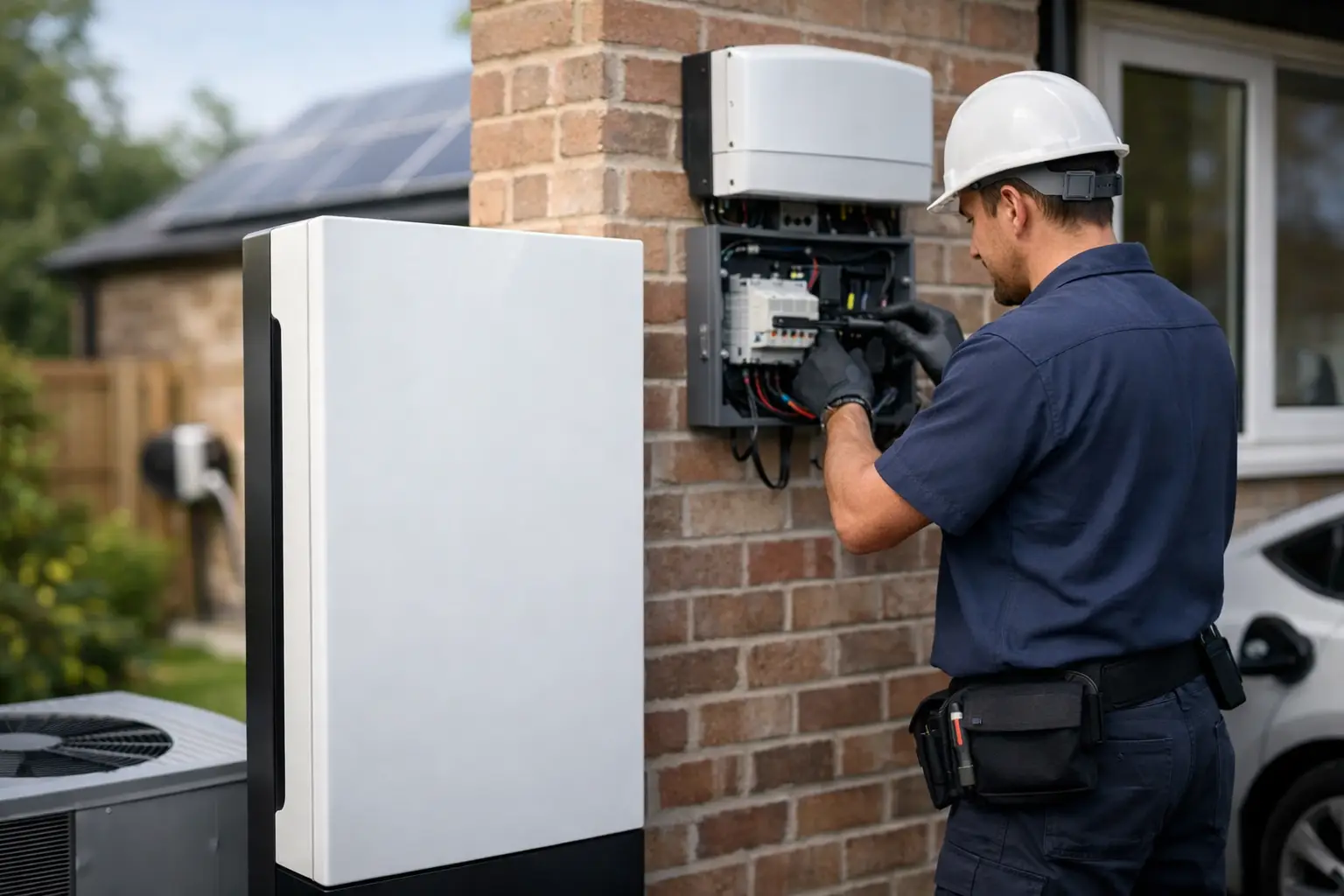
On installation day, the team mounts the battery and associated equipment, installs the required protective devices and cabling, and connects the system to the consumer unit and solar equipment where applicable. The work should comply with current electrical requirements, including BS 7671, as well as the battery and inverter manufacturer’s instructions.
Grid-connected battery systems also need the appropriate Distribution Network Operator process. Depending on the system and its export capability, this may involve notification or approval under the relevant G98 or G99 connection process. A competent installer will manage the technical information and make sure the system is not commissioned outside the agreed network requirements.
Commissioning is the point at which the installation becomes useful rather than merely fitted. The installer should test the system, configure its operating settings, connect monitoring where included and explain how the battery behaves. You should receive the relevant electrical certification, product warranty information and operating guidance before the job is signed off.
Set the controls to match your tariff and routine
A battery’s performance is shaped by its settings. For a solar-led household, the usual priority is to charge from excess solar generation and discharge during the evening. For an economy tariff, it may be sensible to schedule grid charging during low-cost hours, while retaining a portion of capacity for solar or backup needs.
The best setup changes through the year. Summer solar surplus can fill a battery regularly, while winter may rely more on tariff charging. If you have an EV charger, heat pump or electric immersion heater, those loads should be considered as part of one energy plan rather than controlled in isolation.
App monitoring is useful, but it should not become another household chore. Check it occasionally to understand generation, grid import and battery cycling, then let the system do its job. If performance looks unusual, such as the battery not charging from solar or repeatedly exporting when it should be storing energy, contact the installer rather than altering advanced settings at random.
Safety, warranties and maintenance
Modern home battery systems are designed with multiple protective measures, but quality of installation remains essential. Use appropriately qualified installers, ensure the equipment is registered and commissioned correctly, and keep the supplied documents somewhere safe. If your home has an older fuse board, signs of damaged wiring or plans for wider electrical work, deal with those factors as part of the project rather than treating the battery as a standalone upgrade.
Maintenance requirements are generally light. Keep access clear, avoid storing items against the battery and arrange professional checks if the manufacturer recommends them or an alert appears. Firmware updates may be delivered through the monitoring platform, while any physical electrical work should always be left to a competent electrician.
Warranties vary by manufacturer. Look beyond the headline number of years and ask about the guaranteed retained capacity, permitted throughput, exclusions, labour cover and what happens if monitoring connectivity is lost. The cheapest quote can be poor value if it leaves unanswered questions about support, certification or future expansion.
Plan for the home you will have in five years
A battery installation should support your next decisions as well as today’s bill. Think about planned solar panels, an EV, electric heating, a loft conversion or a future extension. Designing cable routes, consumer-unit capacity and battery expansion options properly now can avoid repeat disruption later.
For homeowners across Newcastle and the North East, SWH Electrical Solutions can assess solar, storage and the wider electrical installation together, providing a clear design rather than a generic recommendation. The aim is simple: a battery that suits your routine, is installed to recognised standards and gives you more control over where your energy comes from each day.
The best time to ask detailed questions is before equipment is ordered. A straightforward survey and an honest conversation about your usage will usually deliver more value than chasing the largest battery on the market.