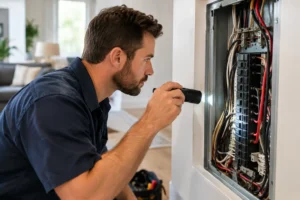
A flickering light, a warm socket or a consumer unit that trips now and again can be easy to put off – until it disrupts a tenant, a workday or a building project. This guide to electrical compliance testing explains what should be checked, who is responsible and how to act on the findings before a small issue becomes an expensive or unsafe one.
Electrical compliance is not about ticking a box for a certificate. It is about confirming that an installation and the equipment connected to it are safe for continued use, suitable for their environment and supported by clear records. For homeowners, landlords, business owners and developers across the North East, it is a practical part of looking after a property properly.
What electrical compliance testing covers
Electrical compliance testing can refer to several services, each with a different purpose. The two most commonly requested are an Electrical Installation Condition Report, known as an EICR, and Portable Appliance Testing, or PAT testing.
An EICR examines the fixed electrical installation. That includes consumer units, circuits, wiring, sockets, switches, lighting and protective devices. The electrician inspects the installation and carries out dead and live testing where appropriate to identify deterioration, damage, overloading, inadequate earthing or work that no longer meets the required safety standard.
PAT testing focuses on portable and movable electrical equipment, such as kettles, monitors, extension leads, power tools and kitchen appliances. It normally involves a visual inspection followed by electrical tests where required. A sticker on an appliance is useful for identification, but the test record is what provides meaningful evidence of what was checked and when.
Other compliance work may include emergency lighting testing, fire alarm checks, EV charge point inspection and testing, or inspection of electrical work after an alteration. The right combination depends on the property, how it is used and the equipment within it.
Who needs an EICR and how often?
The answer depends on the type of property and your responsibility for it. In rented homes in England, landlords must have the electrical installation inspected and tested at least every five years by a qualified and competent person. They must also provide the report to tenants and, where required, the local authority. A change of tenancy does not automatically mean a new EICR is required if a valid report is already in place, but it is often a sensible time to review the installation.
For commercial premises, there is no one-size-fits-all legal interval. The condition of the building, the nature of the business, the level of public access and the environment all matter. An office with modern wiring and light use presents a different risk to a workshop, restaurant, rental property or industrial unit. Many businesses work to a five-year cycle, while higher-risk or more demanding environments may need more frequent inspection.
Homeowners are not generally subject to the same mandatory timetable as landlords, but an EICR is strongly recommended at regular intervals, particularly when buying an older property, planning a rewire, adding solar panels or battery storage, installing an EV charger, or noticing recurring electrical faults. A report gives you a clear baseline rather than relying on guesswork.
New builds, extensions and alterations
New electrical work should be designed, installed and tested in line with the current requirements of BS 7671, commonly known as the IET Wiring Regulations. Depending on the work, you should receive an Electrical Installation Certificate or a Minor Electrical Installation Works Certificate on completion.
For domestic work that falls under Building Regulations Part P, you may also need evidence that the relevant notification process has been completed. Keep these documents with your property records. They are valuable when selling, letting, maintaining or extending the building later on.
Understanding EICR observations and codes
An EICR does not simply say pass or fail. It records observations using classification codes, then gives an overall outcome based on whether the installation is satisfactory for continued use.
A C1 observation means danger is present and urgent action is required. A C2 identifies a potentially dangerous condition that needs remedial work without delay. FI means further investigation is needed because the electrician cannot confirm safety without additional work or access. Any C1, C2 or FI observation will normally result in an unsatisfactory report.
C3 means improvement is recommended. It does not make the report unsatisfactory, but it should not be dismissed automatically. For example, a C3 may highlight an installation that was acceptable when fitted but would benefit from an upgrade to current standards. Whether to proceed can depend on budget, future refurbishment plans and how the property is used.
The best reports explain the issue in plain language, identify its location and set out the recommended remedial work. If you receive an unsatisfactory outcome, ask for a clear quotation and prioritisation plan. Not every improvement needs doing on the same day, but C1 and C2 items require prompt attention.
PAT testing: sensible risk management, not just stickers
PAT testing is often misunderstood as an annual legal requirement for every appliance. The law requires electrical equipment to be maintained so that it is safe, but it does not prescribe a fixed annual PAT test for every workplace and property. The appropriate inspection and testing frequency should be based on risk.
A low-use double-insulated appliance in a tidy office may need a different schedule from a heavily used extension lead on a construction site. Equipment used outdoors, in communal areas, kitchens, workshops or rented accommodation can be exposed to more wear and may justify more frequent checks.
A sensible PAT testing programme starts with an equipment register and a visual inspection. Damaged plugs, frayed leads, cracked casings and overloaded adaptors are common problems that visual checks can reveal. Formal electrical tests add another layer of assurance, particularly where equipment is regularly moved or used by multiple people.
Businesses should make sure staff know how to report damaged equipment and remove unsafe items from use. Testing works best alongside good day-to-day habits, not as a once-a-year exercise filed away and forgotten.
Preparing for electrical compliance testing
A little preparation helps an inspection run smoothly and reduces disruption. Make sure the electrician can access consumer units, meters, sockets and relevant equipment. Let occupants or staff know that some circuits may need to be isolated briefly while tests are carried out.
For an EICR, gather previous certificates, plans of recent electrical alterations and details of any ongoing issues, such as nuisance tripping or circuits that stop working intermittently. For PAT testing, provide a list of equipment where possible and ensure items are available rather than locked in cupboards, vehicles or individual desks.
It is also worth being honest about changes to the property. A garage converted into an office, a loft extension, added electric heating, a new shower or a solar and battery installation can alter the demand placed on an existing installation. These details help the electrician assess the system in context.
Choosing the right electrician
Compliance testing is only as useful as the person carrying it out and the quality of the report they provide. Look for an experienced electrical contractor with appropriate qualifications, suitable test equipment and recognised registration, such as NICEIC approval where applicable.
Price matters, but an unusually cheap EICR can be a false economy if the inspection is rushed, observations are vague or the report does not give you enough information to make decisions. A thorough inspection takes time, especially in larger homes, commercial sites or properties with inaccessible areas.
For work that spans electrical compliance, solar, EV charging and wider building services, having one accountable contractor can also make life easier. SWH Electrical Solutions can coordinate electrical inspection, remedial work and future upgrades with a clear view of the whole installation, rather than treating each job in isolation.
Keep certificates useful, not buried
Store EICRs, installation certificates, PAT records and remedial-work paperwork somewhere secure and easy to find. Landlords should keep dates and report-sharing duties under review. Businesses should maintain records that show equipment has been inspected, defects have been addressed and testing intervals have been considered sensibly.
Most importantly, do not wait for the next scheduled test if something changes. A burning smell, repeated tripping, damaged accessories, water ingress or an electric shock from equipment needs immediate attention. Good compliance is not paperwork for paperwork’s sake – it is the quiet confidence that the electrical systems people rely on every day are being looked after properly.