A high electricity bill is rarely caused by one dramatic fault. More often, it is the combined cost of old lighting, poorly timed heating, inefficient equipment and energy being used when a building is empty. The top commercial energy saving upgrades address those everyday losses first, then help your premises generate and manage more of its own power.
For North East businesses, the best route is not simply buying the newest technology. It is understanding how your site operates, when it uses energy and which improvements will produce a worthwhile return without disrupting the working day. A busy warehouse, a school, a retail unit and an office will not have the same priorities.
Start with the building’s actual energy use
Before specifying equipment, establish a clear baseline. Review at least 12 months of electricity and gas bills, half-hourly data where available, operating hours and any planned changes to the building. A site survey should also consider the condition and capacity of the existing electrical installation.
This work often reveals straightforward issues: lights left on overnight, electric heaters filling gaps in an underperforming heating system, or a large maximum demand charge driven by a short period of peak use. It also prevents a common mistake – sizing solar or battery storage around a theoretical figure rather than the way the premises really consumes power.
An energy plan should rank measures by likely saving, capital cost, payback period, maintenance needs and practical disruption. Some upgrades are quick wins. Others make more sense when a roof is due for repair, a lease is being renewed or a refurbishment is already planned.
Top commercial energy saving upgrades to consider
LED lighting and intelligent controls
Lighting is often the most accessible starting point, particularly in warehouses, workshops, car parks, communal areas and older offices still using fluorescent fittings. Modern LED lighting uses substantially less electricity and generally has a longer service life, reducing relamping and maintenance work as well as consumption.
The fitting itself is only part of the job. Occupancy sensors, daylight dimming and zoned controls can stop lights running at full output in empty aisles, meeting rooms or naturally bright spaces. In a warehouse, a sensible lighting design needs to consider mounting height, glare, shadows and safe visibility around racking and machinery – not just the number of fittings on a quotation.
There is a trade-off. Overly aggressive sensors can be frustrating in low-traffic areas, while poorly positioned fittings can make a workplace feel dim despite technically adequate light levels. A proper survey and commissioning process matter.
Commercial solar PV
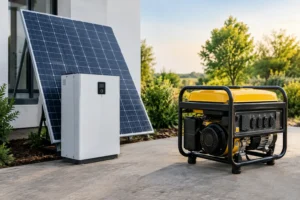
For businesses with suitable roof space and meaningful daytime electricity use, commercial solar can be one of the strongest long-term improvements. It generates electricity at the point of use, helping to reduce the amount bought from the grid during daylight hours. It can also demonstrate a practical commitment to lower-carbon operations for customers, tenants and staff.
The right system depends on roof orientation, shading, structural suitability, available distribution capacity and the site’s daytime load profile. A business that uses most of its electricity from 8am to 6pm may see a different benefit from solar than a site operating mainly through the night.
Roof condition deserves attention early. Installing panels on a roof that needs significant work in a few years can create avoidable cost and disruption later. For new builds and planned refurbishments, solar is usually easier to incorporate into the programme than retrofitting it after completion.
Battery storage for better use of solar and grid power
Battery storage can retain surplus solar generation for use later in the day, reducing export where on-site consumption is possible. It may also help some businesses manage periods of high demand, depending on their tariff, load profile and the controls installed.
It is not an automatic add-on to every solar project. Batteries add upfront cost, and their value depends heavily on when power is generated, when it is used and how electricity is priced. A business that consumes all of its solar output as it is produced may benefit more from additional PV capacity than storage. Conversely, a site with late-afternoon demand or a need for greater operational resilience may find storage a sensible part of the design.
The system should be designed around clear objectives: greater solar self-consumption, peak-demand management, backup for selected circuits or a combination of these. Those objectives affect battery size, connection arrangements and control settings.
Heating, cooling and building controls
Heating and cooling can account for a significant share of commercial energy spend, especially where plant is ageing, controls are basic or rooms are conditioned outside occupied hours. Upgrading boilers, heat pumps, air conditioning equipment or ventilation systems can make a considerable difference, but controls frequently provide the quickest gains.
Time schedules, thermostatic zoning, optimum start settings and weather compensation can make sure the building is comfortable when people arrive without heating or cooling it unnecessarily overnight. Different areas should be controlled according to how they are actually used. A meeting room, reception area, workshop and stock room rarely require the same temperature or hours.
A replacement decision should be made carefully. Heat pumps can be an excellent option for suitable buildings, particularly where fabric improvements and lower flow temperatures are achievable. However, poor insulation, unsuitable emitters or insufficient electrical capacity can affect performance and installation cost. A measured survey is more useful than a one-size-fits-all recommendation.
Fabric improvements that reduce demand first
Energy generated on site is valuable, but avoiding waste is better still. Insulation, draught-proofing, roof repairs, upgraded glazing and properly sealed loading doors can reduce heat loss and improve comfort. This is particularly relevant for older commercial units with cold spots, condensation issues or heating systems that appear to run constantly in winter.
Fabric work is often best coordinated with planned maintenance or refurbishment. It may not offer the instant visibility of solar panels or new lighting, but it can reduce the size of heating and cooling plant needed in future. In turn, that can lower both installation and running costs.
Energy monitoring and sub-metering
If a business cannot see where its energy is going, it is difficult to manage. Smart monitoring and sub-metering separate major loads such as lighting, HVAC, machinery, kitchens, tenant supplies or EV charging. The resulting data can identify abnormal consumption, equipment left running and opportunities to move flexible usage away from expensive periods.
Monitoring is especially useful for multi-use premises and growing businesses. A rising bill may be caused by production growth, a fault, changes in operating hours or a new piece of equipment. Sub-metering turns that assumption into evidence.
The key is assigning responsibility for reviewing the information. Data that no one checks will not save energy. A simple monthly review of consumption, peak demand and out-of-hours use is often enough to spot a problem before it becomes a costly habit.
EV charge points with sensible load management
Workplace EV charging is increasingly expected by employees, visitors and fleets. Yet several chargers added without planning can place unnecessary strain on a site’s electrical supply. Smart load management allows available capacity to be shared across chargers and can help avoid costly upgrades where demand would otherwise exceed the supply limit.
For a fleet, charging strategy matters as much as the hardware. Vehicles parked overnight may be able to charge at lower-cost times, while daytime visitor charging can be aligned with solar generation where suitable. The electrical design should account for future expansion, rather than leaving a business to start again when demand grows.
Plan upgrades as one joined-up project
The strongest results often come from combining measures in the right order. Fabric and controls reduce demand. LED lighting lowers the base load. Solar then supplies a portion of that reduced daytime demand, while a battery can be assessed against the remaining usage pattern. EV charging and new electrical equipment can be designed around the available capacity from the outset.
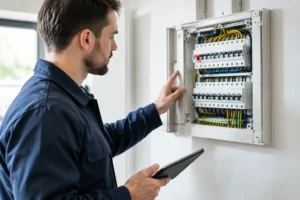
This joined-up approach is also safer from a compliance perspective. Commercial work may require consideration of distribution boards, protective devices, earthing, load calculations, testing and certification. Choosing a contractor able to handle energy technologies alongside electrical installation helps avoid gaps between design, installation and ongoing maintenance.
SWH Electrical Solutions can survey commercial premises across the North East with this wider view in mind, bringing solar, battery storage, EV charging and electrical expertise into one practical plan. The aim is not to sell every available upgrade. It is to recommend the work that suits the building, budget and way your business operates.
The most useful next step is to walk your premises with recent bills, operating hours and future plans to hand. A well-chosen first upgrade can start cutting waste now, while leaving a clear route for the larger improvements that will make sense tomorrow.