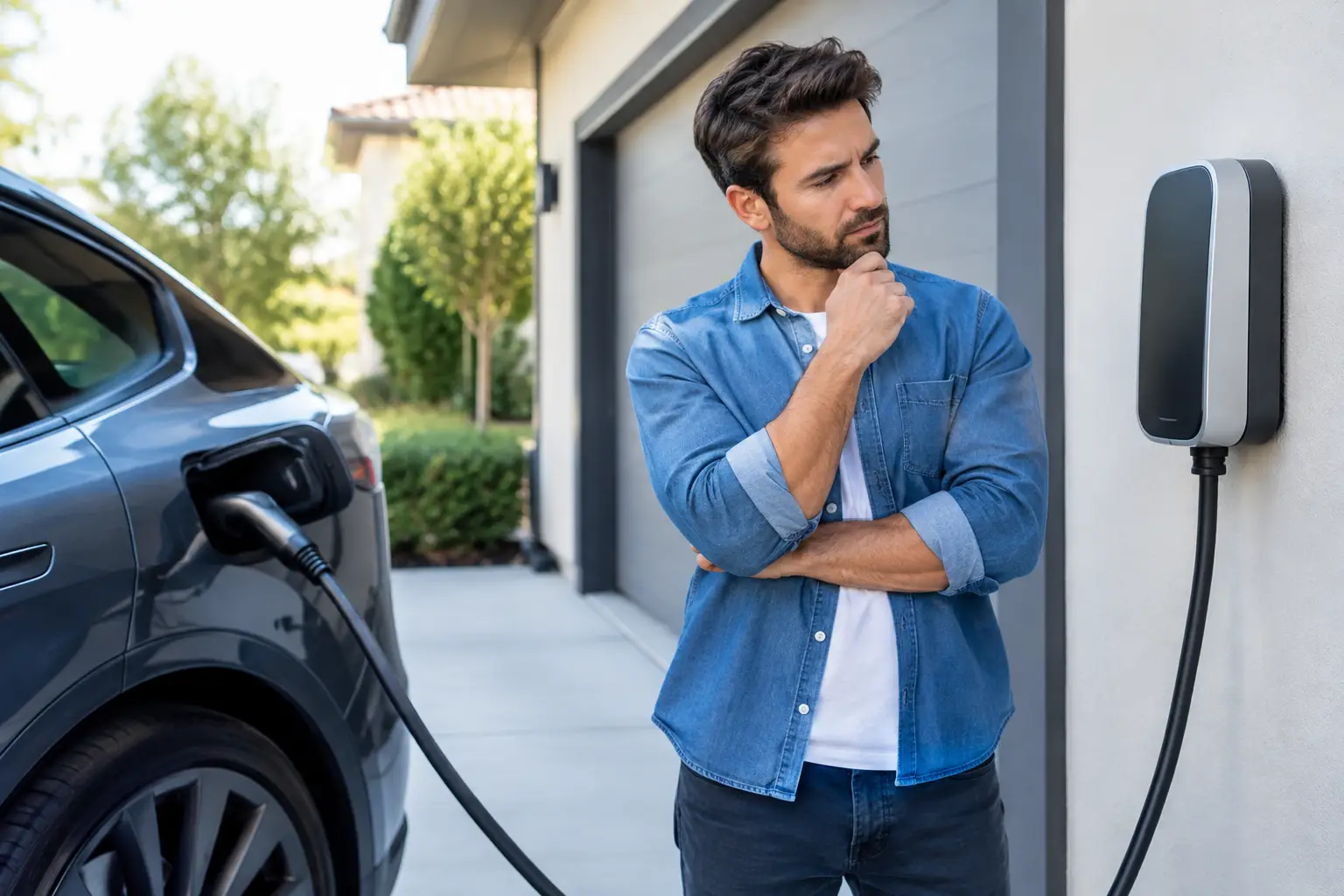
A public charger is useful when you are out and about. It is rarely the most convenient way to live with an electric vehicle. A properly specified EV charger at home or work means the vehicle can charge while it is parked, usually at a lower electricity rate and without a detour on the way home.
The catch is that charge points are not one-size-fits-all. The right unit depends on your vehicle, parking arrangement, existing electrical supply and how you use energy across the property. Choosing on headline charging speed alone can lead to unnecessary cost or a setup that does not quite suit day-to-day life.
Start with how and where you park
An EV charger is most useful when the cable can reach the vehicle safely and easily every day. For most homeowners, that means a driveway, garage or allocated bay with a straightforward route from the consumer unit. A charger can often be fitted on an external wall, a garage wall or a pedestal, but cable routes, groundworks and the position of the parking space all affect the installation.
Think about the practical details before choosing a location. Will a cable create a trip hazard across a path? Can the connector be stored neatly? Is the parking position likely to change when another vehicle is added? A charger placed neatly beside today’s car may become awkward if the household changes vehicles or reworks the driveway next year.
For flats, shared driveways and leasehold properties, permissions and ownership boundaries need sorting out early. The electrical work may be perfectly achievable, but approval from a freeholder, managing agent or landowner can take longer than the installation itself.
EV charger speed: what the numbers really mean
For many UK homes, a 7kW charge point is the practical choice. It is substantially faster than a standard three-pin plug and can usually replenish a typical electric car overnight. A 3.6kW unit may still work well where driving mileage is modest or the electrical supply makes a higher rate less suitable.
A 22kW charger is often mentioned as the faster option, but it is not automatically better. It generally needs a three-phase supply, and the car itself must be able to accept that charging rate. Many electric vehicles cannot. Installing a higher-rated unit for a vehicle that only accepts 7kW AC charging will not make it charge at 22kW.
Charging times also depend on the battery size, its current state of charge, the vehicle’s onboard charger and colder weather. Rather than asking only, “How fast can this charger go?”, it is more useful to ask, “How many miles do we normally need to add between parking up and leaving again?” For a household covering ordinary commuting and local journeys, overnight charging is often more than enough.
Your incoming supply matters
An installer should assess the condition and capacity of the existing electrical installation before recommending a charge point. An EV charger is a significant additional load, particularly in homes with electric showers, induction hobs, heat pumps or other high-demand equipment.
Load management is often the sensible answer. A charge point with dynamic load balancing monitors demand in the property and adjusts vehicle charging so it does not overload the supply. This can avoid the need for costly supply upgrades while allowing the car to charge whenever there is available capacity.
The installation should also include the correct protective devices and be designed for the earthing arrangement at the property. These details are not glamorous, but they are where safe, compliant work is won or lost. A competent electrician will survey the installation rather than quoting from a photo of the driveway alone.
Smart charging can make running costs lower
Most people do not need their car to start charging at the exact moment they plug in. Smart charging lets you choose when charging takes place, helping you make use of off-peak electricity tariffs or periods when the property has spare generation.
The quality of the app and controls matters here. Look for a charger that lets you set schedules simply, view charging history and override the schedule when you need to leave unexpectedly. Features are only helpful if they are reliable and easy to use when you are standing in the rain after work.
For workplaces, smart controls can be even more valuable. They can manage several chargers against one electrical supply, allocate usage between drivers and provide useful information for facilities teams. The best approach depends on whether charging is a staff benefit, a visitor service, part of a fleet operation or a mix of all three.
Pairing an EV charger with solar and battery storage
An electric vehicle can use a meaningful amount of electricity, so it makes sense to consider the charge point alongside solar panels and battery storage. Solar generation can help power driving, especially for cars parked at home during the day. A compatible smart charger may be able to favour surplus solar generation rather than exporting it to the grid.
There is a trade-off. Solar output is highest in daylight hours, while many drivers return home in the evening and benefit most from overnight off-peak tariffs. On some days, charging from a low-cost tariff may be better value than waiting for limited solar surplus. In winter, solar generation is naturally lower, so an energy plan needs to work across the whole year rather than only on bright summer days.
A battery can add flexibility, but it should not be selected solely to charge a car. The system needs to be sized around the household’s wider energy use, tariff and charging habits. A good design looks at the complete picture: solar production, home consumption, battery capacity and vehicle demand.
Tethered or untethered: a small choice that affects daily use
A tethered EV charger has a cable permanently attached. It is convenient because you simply park, uncoil the lead and plug in. For households with one vehicle type and a regular parking routine, it is often the easiest option.
An untethered charger has a socket instead, so you use the cable supplied with the vehicle. It can look tidier when not in use and may suit a property where different vehicles will charge. The downside is having to retrieve and store the cable each time. Neither option is universally right – it comes down to convenience, appearance and who will use the point.
Cable length deserves thought too. A lead that just reaches the charging port can become frustrating if the car is parked slightly differently. At the same time, a very long cable needs sensible storage. Your installer can help position the unit around the charging port location on your present vehicle while allowing for future flexibility.
What a professional installation should include
A properly managed EV charger installation begins with a survey. This establishes the cable route, charger position, consumer unit capacity, earthing arrangement and any work needed to make the area safe and tidy. It should also consider whether the local electricity network operator needs to be notified or involved.
On installation day, the electrician will fit the charge point, run and protect the cabling, complete the relevant electrical work and test the system before commissioning it. You should be shown how to connect the vehicle, use the controls and deal with simple issues such as scheduled charging not starting when expected.
Documentation matters. Keep the electrical installation certificate, charger details and any warranty information somewhere accessible. If you sell the property, these records give the next owner confidence that the work was completed properly. They are also useful if a fault ever needs investigating.
For North East homeowners, businesses and developers, SWH Electrical Solutions can assess the full electrical picture rather than treating the charge point as an isolated job. That is particularly useful where EV charging is being planned alongside solar, battery storage, a rewire or a new build connection.
Plan for the next vehicle, not just this one
Electric cars, household demand and property layouts change. A sensible EV charger installation leaves room for future needs where practical, whether that means choosing a flexible smart unit, allowing capacity for a second point or installing cable containment during wider building work.
You do not need to over-specify everything for a future that may never arrive. You do need a safe, well-designed installation that suits the way you park, drive and use electricity now. A straightforward survey is the best place to start – and it can save a lot of second-guessing once the car is on the drive.