A solar PV system is designed to work quietly in the background, turning daylight into useful electricity for decades. That does not mean it should be forgotten about. Sensible solar maintenance helps protect the generation you paid for, identifies developing electrical faults early and gives you confidence that your home or business is getting the best from its system.
For most owners, the good news is that maintenance is straightforward. Solar panels have no moving parts, and the North East’s regular rainfall often removes everyday dust. The job is less about constantly cleaning panels and more about checking performance, inspecting the electrical components and knowing when a change needs professional attention.
Why solar maintenance is worth planning
A drop in generation is not always a fault. Output changes with the seasons, cloud cover, daylight hours and temperature. A south-facing system in July will naturally produce very differently from the same system in December. However, a sustained or unexplained fall compared with the same period last year deserves investigation.
Regular checks can reveal issues that are easier and less expensive to address early. These may include loose connections, damaged cabling, water ingress around equipment, a failed inverter fan or a fault showing on the monitoring portal. On commercial systems, maintenance also supports business continuity and makes it easier to plan work around operating hours.
There is a safety case too. Solar PV is an electrical installation, with DC cabling from the panels and AC connections into the property. Even when a system is not generating at full capacity, parts of it may remain live. Roof work and electrical testing should therefore be left to a competent solar electrician, not treated as a DIY weekend job.
What to check between professional visits
Homeowners do not need specialist equipment to keep an eye on a solar system. A quick monthly look at the inverter or monitoring app is often enough to spot a change before it becomes a bigger problem. Check that the system is reporting normally, that there are no warning lights or error codes, and that generation is broadly in line with the time of year.
It is also worth looking from ground level at the panels after high winds or severe weather. You are not trying to inspect every fixing from the garden. Instead, look for obvious damage, lifting, unusual shading from new tree growth, or a build-up of leaves and debris at the lower edge of the array.
Inside, make sure the inverter has clear airflow and is not surrounded by stored belongings. It can become warm during operation, so it needs ventilation. Keep an eye out for persistent buzzing, burning smells, discolouration or repeated tripping at the consumer unit. If any of these occur, switch off only if it is safe to do so and arrange an inspection promptly.
If your system includes battery storage, check its app or display as well. A battery’s charging pattern will vary depending on solar generation, household demand and any tariff settings, but alerts, connection errors or an unexpected inability to charge are worth reporting. Battery systems should only be worked on by trained installers.
Do solar panels need cleaning?
Not as often as many people think. Rain generally does a reasonable job in the UK, particularly where panels are installed at a suitable angle. Routine cleaning can make sense where panels are affected by bird droppings, nearby construction dust, agricultural activity, heavy pollen, coastal salt or local pollution. In these settings, soiling may block enough light to have a measurable impact on output.
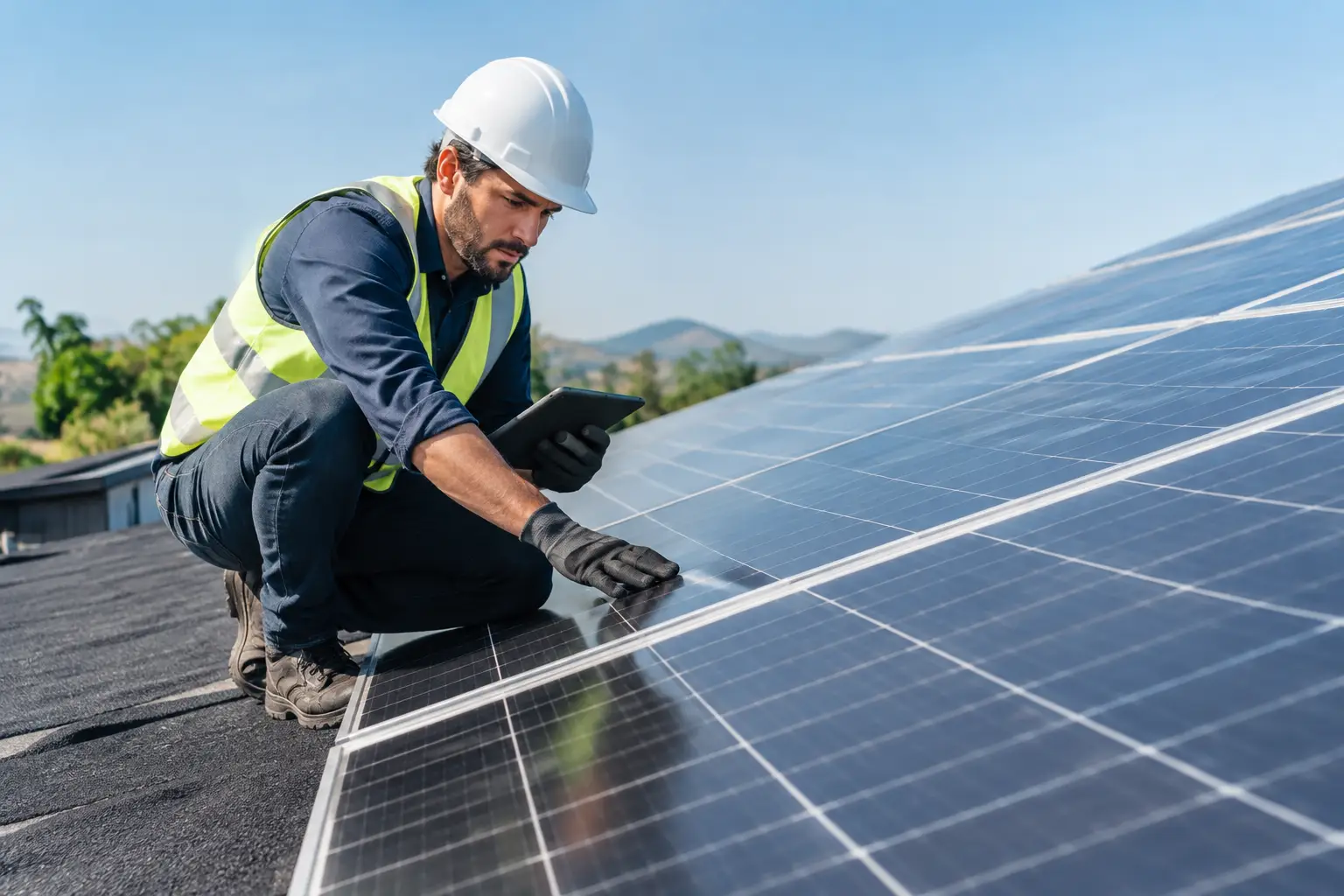
The important point is to clean only where there is a clear reason. Climbing onto a roof carries obvious risk, and the wrong brushes, chemicals or high-pressure equipment can scratch glass, disturb seals or damage the panel frame. A streak-free finish is not the goal. Safe cleaning that avoids damage and restores lost generation is.
Before arranging cleaning, compare your current output with previous periods and check whether a new shadow has appeared. A chimney, satellite dish, scaffold, neighbouring extension or overgrown tree can have a greater effect than a layer of ordinary grime. Cleaning will not solve a shading problem.
Professional solar maintenance: what an inspection involves
The right interval depends on the system, its location, manufacturer requirements and how closely it is monitored. Many domestic owners choose a professional check every one to two years. Commercial systems may need more frequent planned maintenance, especially on larger roofs or sites where access, safety procedures and generation targets are more complex.
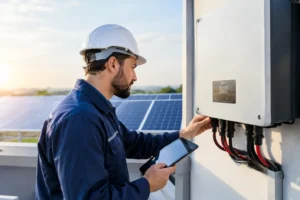
A proper visit should go beyond wiping the panels. A qualified engineer can assess the condition and security of the array, mounting system and roof penetrations where accessible. They can inspect visible DC cabling, isolators, labels, earthing and the inverter installation, as well as checking for signs of deterioration or water ingress.
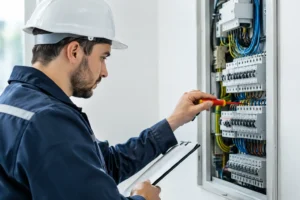
Electrical testing may be needed to verify that the system is operating safely and as expected. The exact scope varies, but it can include checking DC and AC values, protective devices, insulation resistance and earth continuity. The engineer should also review inverter fault history and monitoring data, which can reveal intermittent issues that are not obvious during a single daytime visit.
For a battery-equipped system, maintenance should consider the battery, associated protection devices and the settings that control charging and export. For EV chargers and other electrical work at the same property, it can be practical to coordinate inspections so that the wider installation is considered together.
Common issues that should not be ignored
Some solar faults are obvious, while others are quietly reducing output. Contact a solar professional if your inverter displays a recurring error code, the monitoring system stops updating, generation is significantly lower than expected for the season, or the system switches itself off repeatedly.
Physical damage after a storm should also be checked. Cracked panels, loose fixings, exposed cables or damaged conduit are not jobs to postpone. Similarly, water around an inverter or isolator, corrosion at electrical equipment, or an electrical burning smell needs urgent attention.
Pigeons can create problems beneath roof-mounted arrays, particularly where there is no suitable protection around the panel perimeter. Nesting material can obstruct drainage, create noise and mess, and in some cases contribute to cable damage. Bird proofing is not needed on every installation, but it is worth discussing if activity is persistent.
Older systems can present another decision. An inverter may be nearing the end of its expected service life while the panels remain in good condition. Replacing the inverter can restore reliable operation and may improve monitoring options, but compatibility with the original array and current regulations must be assessed first. It is not a case of choosing any unit that fits the wall.
Keeping records protects your investment
Keep your commissioning paperwork, warranties, electrical certificates, handover documents and any maintenance reports together. If you sell the property, these records help demonstrate that the system has been properly installed and cared for. They are also useful when diagnosing a fault, making a warranty claim or arranging changes such as battery storage.
For businesses and developers, clear maintenance records support asset management and can make compliance conversations much simpler. They show what was inspected, what was found and what work was completed, rather than relying on assumptions years later.
At SWH Electrical Solutions, our approach is practical: inspect the system properly, explain any findings in plain English and recommend work only where it is needed. A well-maintained solar system should feel dependable, not demanding. A quick look at your monitoring each month and a planned professional inspection can keep it producing safely for the long haul.