A bright afternoon can produce more electricity than your home is using at that moment. Without storage, that spare power is usually exported to the grid. So, can solar panels charge batteries? Yes. With the right battery storage system and controls, your solar generation can be stored for use later in the day, overnight, or when electricity from the grid costs more.
For many North East households, that is the real appeal of solar and battery storage. Panels generate electricity when daylight is available, while most homes use a large share of their energy in the morning and evening. A battery helps bridge that gap. It does not make a property completely independent of the grid in every season, but it can make much better use of the electricity your roof produces.
How solar panels charge batteries
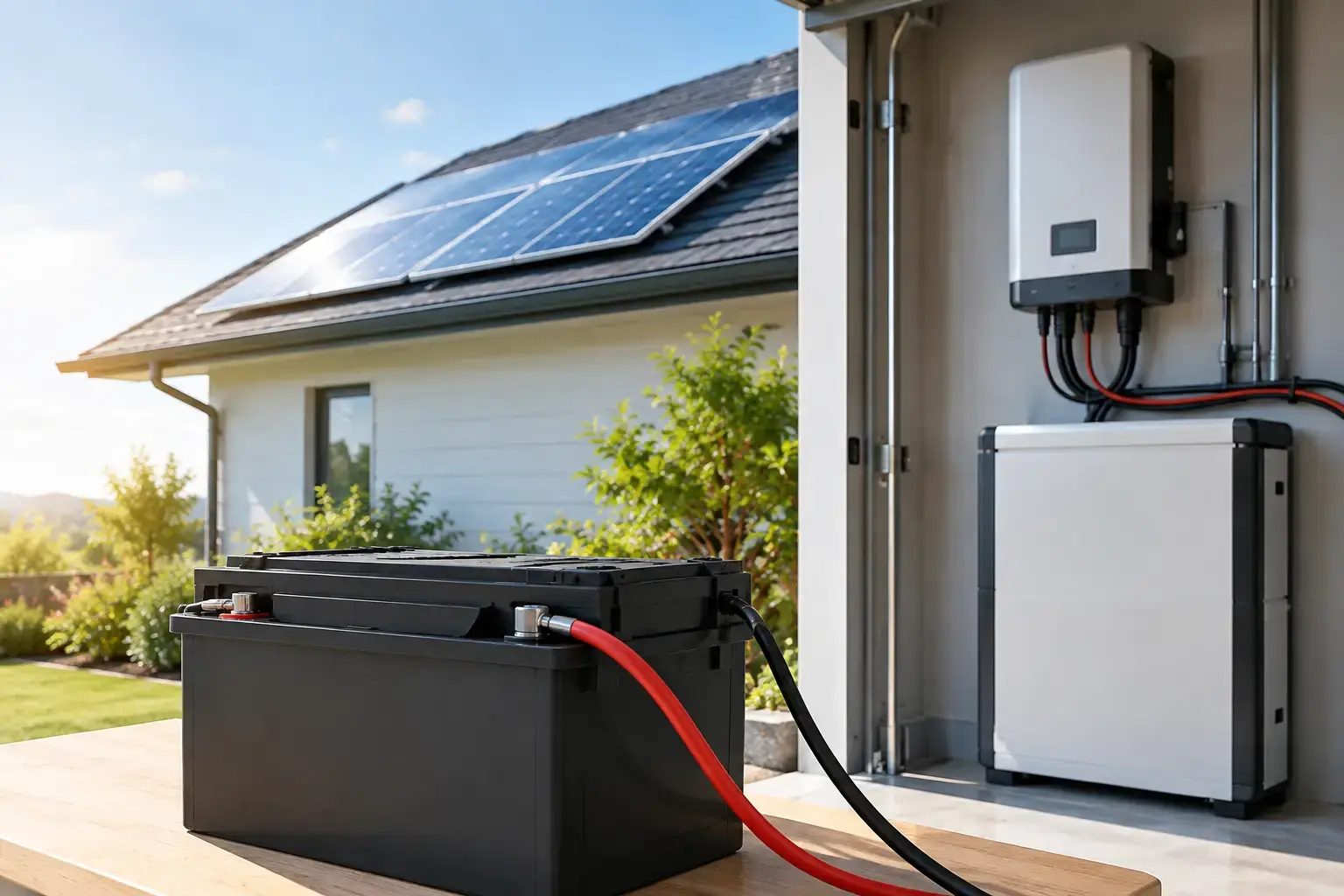
Solar panels generate direct current (DC) electricity. Your home runs on alternating current (AC), so an inverter is needed to convert the power into a form your property can use. Where a battery sits in that setup depends on the system design, but the principle is straightforward: solar electricity serves demand in the property first, then any suitable surplus can charge the battery.
Once the battery is charged, further surplus may be exported to the grid. When solar production falls below what your home needs, the battery can discharge to support the house before you import electricity from the grid. This happens automatically, managed by monitoring equipment and the battery inverter.
A battery is not charged directly by a panel in the casual sense of connecting one to the other. It needs correctly specified equipment, safe isolation, protection devices and professional commissioning. That is particularly important when adding storage to an existing solar array, where the new system must work properly with the original inverter, consumer unit and export arrangement.
What happens on a typical day?
On a clear morning, solar generation begins gradually. It may first cover background use such as your fridge, broadband router and appliances on standby. As production increases, it can cover more of your daytime demand. If there is spare generation, the battery starts charging.
By late afternoon, generation drops just as many households begin cooking, running washing machines, charging devices and putting the heating controls to work. A charged battery can supply some or all of that demand, depending on its capacity and power rating. Later, once the battery reaches its minimum reserve level, the home imports electricity from the grid as normal.
The pattern changes with the seasons. In summer, a well-sized system may regularly charge a battery from solar alone. In winter, shorter days and lower sun angles mean there may be less surplus available. The battery still has a role, especially if it can charge from cheaper off-peak electricity, but expectations need to be realistic. Solar and storage reduce grid reliance; they do not guarantee free electricity all year round.
Can solar panels charge batteries in cloudy weather?
Yes, although more slowly. Solar panels generate electricity from daylight, not only direct sunshine. Cloud cover reduces output, sometimes significantly, but it does not stop generation altogether.
Whether there is enough spare electricity to charge the battery depends on what the property is consuming at the time. On an overcast day, panels may cover part of the home’s live demand but have little left over for storage. That is not a fault with the system. It is simply the balance between generation, consumption and battery capacity.
Roof direction, shading, panel size and local weather all affect output. A south-facing roof often gives strong midday generation, while east and west-facing arrays can produce across a broader part of the day. Neither arrangement is automatically right or wrong. The best design depends on the roof, your household’s usage pattern and the aim of the installation.
The equipment that makes battery charging work
A reliable solar battery system is more than panels and a box on the wall. It needs compatible components, correctly designed cabling and controls that respond properly to the home’s energy use.
There are two common approaches. An AC-coupled battery is installed alongside an existing solar system and has its own battery inverter. This can be a practical route for homeowners adding storage after their panels have already been fitted. A DC-coupled system shares a hybrid inverter with the panels and battery, which can reduce conversion losses and is often considered during a new solar installation.
The best option depends on your current equipment and plans for the property. For example, a household considering an EV charger, electric heating, a heat pump or future solar expansion may benefit from a design that leaves room for higher demand. A property with older electrical equipment may also need upgrades before a battery can be installed safely.
Battery capacity is measured in kilowatt-hours (kWh), which tells you how much electricity it can store. Power is measured in kilowatts (kW), which indicates how much it can deliver at once. Both matter. A large-capacity battery with a modest power output may not cover several high-demand appliances running together. Equally, a high-power battery with limited capacity may discharge quickly during a long evening.
How much battery storage does a home need?
There is no one-size-fits-all answer. Choosing the biggest battery available is not always the most cost-effective decision, particularly if it will rarely fill outside the summer months. The right size comes from understanding how and when your home uses electricity.
A proper survey should consider annual consumption, daytime occupancy, solar array size, evening demand and any upcoming changes. If you work from home, run appliances during the day and already use much of your generation, a smaller battery may be enough. If the property is empty until late afternoon and consumption rises sharply in the evening, storage can have a greater role.
Four practical questions help shape the decision:
- How much electricity does the property use across a typical year?
- When does the household use the most energy?
- How much solar generation is likely to be surplus?
- Are you planning to add an EV, electric heating or other major loads?
Your electricity tariff matters too. Some time-of-use tariffs offer cheaper overnight electricity. A compatible battery may charge during those lower-cost periods and discharge when rates are higher. This can improve the value of storage in winter, when solar charging alone is less consistent. It also means the system should be configured carefully, so you are not unnecessarily importing expensive electricity while solar power is available.
Backup power is not automatic
One common misunderstanding is that every battery keeps the lights on during a power cut. Many standard systems shut down when the grid fails as a safety measure, even if the battery has stored energy.
Backup capability is possible with selected equipment and additional design work, but it must be specified from the start. Some systems can support essential circuits only, such as lighting, refrigeration and broadband. Others can provide a more comprehensive backup supply, subject to the battery output, home demand and installation arrangement.
For households where resilience matters – perhaps because of home working, medical equipment or a rural supply – this is worth discussing during the survey. Backup adds cost and complexity, so it should be designed around the circuits you genuinely need rather than treated as a standard feature.
Is a battery worth adding to solar panels?
Battery storage can be worthwhile when it helps you use more of your own generation, reduce imports at higher-priced times and gain better control over how electricity is used. The financial result will vary with your usage, tariff, system size and export payments. A battery should be assessed as part of the whole energy picture, not sold on a promise that it pays for itself overnight.
For commercial properties, the same principle applies but the load profile is often more significant. A business using most of its power during working hours may gain more from a larger solar array than from substantial storage. A site with evening loads, peak-demand issues or flexible tariff opportunities may see a stronger case for batteries. Monitoring data is useful before making that call.
At SWH Electrical Solutions, solar and battery projects are approached as electrical installations first and renewable energy systems second: safe, properly specified and suited to the building. The aim is not to fill a roof or fit the largest battery. It is to create a system that works reliably with the way the property is actually used.
If your panels are already exporting power on sunny days, battery storage could give that generation a second job after sunset. A straightforward site survey and review of your electricity use can show whether the figures stack up for your home, business or development.