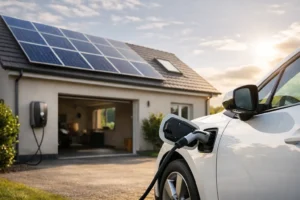
A charge point is not simply another socket on the outside wall. It becomes part of how your property uses electricity – often overnight, sometimes alongside a heat pump, electric shower, solar panels or battery. If you are working out how to plan an EV charger installation, getting the electrical design right before choosing a unit will make charging safer, more convenient and better value over the years ahead.
For a homeowner, that may mean avoiding a costly alteration later. For a business or developer, it can mean providing enough charging capacity without overloading a site supply or installing more infrastructure than is needed on day one. The best plan starts with the building and the way people will actually use it.
Start with the vehicle and daily driving pattern
The headline charging speed is rarely the most useful starting point. Ask how many miles the vehicle covers on a typical day, when it returns to the property and how long it can be parked there. A car that is at home from early evening until morning has plenty of time to recharge with a standard domestic charge point, even after a busy commute.
Most home installations use a 7kW single-phase charge point. This is a practical option for many UK homes because it can replenish a typical EV overnight. A 3.6kW unit may suit lower mileage driving or properties with tighter electrical capacity. Faster charging is not automatically better if the car is parked for 10 or 12 hours and the supply cannot support it comfortably.
For workplaces, consider dwell time rather than copying motorway rapid-charging expectations. Staff vehicles may sit in the car park for a full working day, while customer parking may be brief and unpredictable. Those two situations call for different charging speeds, access arrangements and payment settings.
How to plan an EV charger around your electrical supply
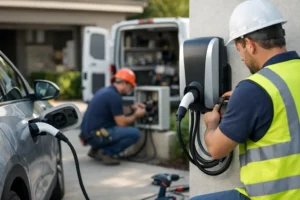
An electrical survey is the point where a sensible plan becomes a safe one. Your installer needs to assess the incoming supply, consumer unit, earthing arrangement, spare ways, cable route and the existing electrical loads within the property.
A typical house may already be running an electric cooker, shower, heat pump, immersion heater and other high-demand appliances. Adding EV charging without considering those loads can lead to unnecessary pressure on the supply. In some cases, the answer is a consumer unit upgrade, an additional distribution board or a conversation with the local electricity network operator about the incoming supply.
Load balancing is often the practical middle ground. A compatible smart charge point can monitor the property’s demand and reduce or pause charging when other electrical loads are high. Once demand drops, it resumes charging. This helps protect the main fuse while allowing the car to make use of available capacity overnight.
Commercial sites need the same thinking on a larger scale. Installing 10 charge points does not always mean the site needs enough capacity for all 10 to run at full power simultaneously. Dynamic load management can share the available power between vehicles, making a phased installation more affordable and reducing the likelihood of major supply works.
Choose a location that works in real life
The neatest position is not always the most convenient one. Stand where the vehicle will normally be parked and think about the cable in use, not just the charge point on the wall. The charging lead should reach the vehicle’s inlet without being stretched across a pavement, entrance or shared access route.
At home, a unit close to the driveway or garage is usually the obvious choice. It should be mounted at a sensible height, protected from accidental knocks and positioned where the cable can be stored tidily. If you have more than one parking space, decide whether the preferred bay could change in future. A slightly longer cable route now may offer much more flexibility later.
For flats, communal parking and workplaces, access is more complicated. Landlord approval, lease terms, wayleaves, allocated bays and cable containment may all need to be resolved before work begins. Planning these details early prevents a perfectly capable electrical design becoming impractical because the charger cannot be used by the intended driver.
Developers should allow for cable routes and capacity even where every plot will not receive a charge point immediately. Ducting, containment and a well-planned distribution layout are usually far less disruptive to provide during construction than after residents move in.
Select the charge point features you will genuinely use
A tethered unit has a charging cable permanently attached. It is quick and straightforward for regular home charging, although the cable remains visible when not in use. An untethered unit has a socket instead, so the driver uses their own lead. It can look tidier and may suit shared or commercial settings where different connector leads are required.
Smart functionality is worth considering because it gives you more control than a basic on-off charger. Depending on the unit and electricity tariff, you may be able to schedule charging for cheaper overnight periods, view energy use and control the charger through an app. Smart charging can also support load balancing where the property’s supply demands it.
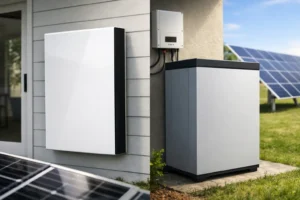
If you have solar panels, do not assume every charger will automatically charge only from surplus generation. Some systems can be configured to prioritise surplus solar, but the result depends on the charger, monitoring equipment, battery storage and the vehicle’s charging requirements. On a cloudy day or during winter, grid electricity will still be needed if the car requires charge. The useful question is how solar, battery and EV charging should work together for your household, rather than chasing a feature label.
For businesses, add user access and reporting to the decision. RFID cards, app access, energy monitoring and reimbursement settings can help separate fleet, staff and visitor charging. A simple installation may be right for a small team, while a public-facing or multi-user car park needs clearer controls.
Build the installation route into the budget
The charge point itself is only one part of the cost. The cable distance from the consumer unit, the route through walls or underground, the need for trenching, protective containment and any upgrades to the electrical installation all affect the final price.
A charger beside the consumer unit with a short, accessible route is usually straightforward. A detached garage, long drive or listed building may require more design work. It is better to receive a clear quotation based on a site survey than to make decisions on an advertised starting price that may not reflect your property.
Do not overlook future changes either. If you are replacing a car in the next few years, adding a second EV or fitting solar and battery storage, tell the installer at the outset. Allowing for these plans may involve a larger cable, spare capacity in a board or a charger that can be integrated into a wider energy system. It does not always mean buying the most expensive equipment now. It means avoiding choices that restrict sensible upgrades later.
Use a qualified installer and expect proper certification
EV charge points must be installed as part of a safe electrical system, not treated as a DIY accessory. The installer should assess the work properly, select suitable protective devices, test the completed installation and provide the required certification and notification where applicable.
Ask who will carry out the survey, whether the price includes testing and certification, and what support is available once the charger is commissioned. A good installer will explain the limits of the supply in plain language, rather than promising a charging speed that the property cannot reliably support.
For customers across Newcastle and the North East, SWH Electrical Solutions can assess EV charging alongside solar, battery storage and wider electrical work. That joined-up approach is particularly useful where a charger is one part of a larger home improvement, refurbishment or new-build project.
Commissioning is where the plan proves itself
Before the installer leaves, make sure you know how to start and stop a charge, schedule off-peak charging and respond if the charger pauses due to load balancing. If an app is involved, have it set up while someone is on site to answer questions. Keep the installation certificate, charger details and any warranty information somewhere accessible.
For commercial installations, nominate a person responsible for access settings, reporting and fault escalation. Charging arrangements can become confusing quickly when nobody owns the day-to-day administration.
A well-planned EV charger should feel unremarkable after installation: the car is ready when you need it, the electrical system remains within its limits, and the cable is not creating a daily nuisance. That quiet reliability is the result worth planning for.