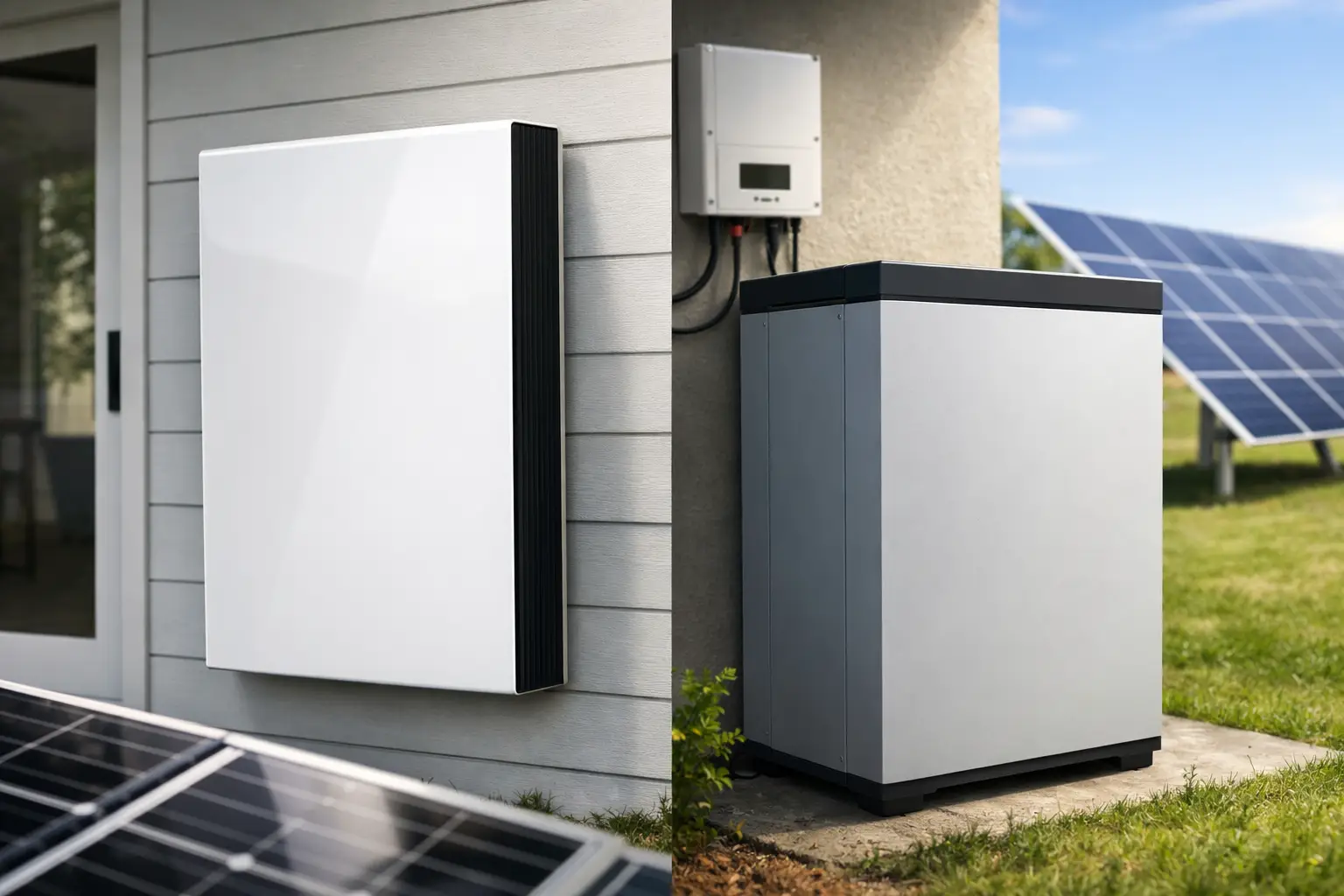
A battery is not simply a box that stores spare solar power. It affects how much of your own electricity you use, how your home responds during a power cut, and whether you can make the most of off-peak electricity tariffs. That is why the Tesla Powerwall vs solar battery question is less about choosing a famous name and more about finding the right system for your property, energy use and plans.
For many homes in the North East, the best choice will depend on what happens after the sun goes down. If your household uses most of its electricity in the evening, charges an EV overnight or wants reassurance during outages, battery design matters just as much as panel capacity.
Tesla Powerwall vs Solar Battery: the key difference
Tesla Powerwall is a specific battery product, while “solar battery” is a broad term covering many brands, capacities and system designs. Comparing the two is therefore not quite like comparing two identical products. A Powerwall may be an excellent fit for one household, while another battery may offer better value or a more suitable setup for a different home.
The current Tesla Powerwall range is known for combining a substantial usable battery capacity with high power output and an app-led experience. It is commonly considered by homeowners who want solar storage, tariff charging and, where designed into the installation, a meaningful level of backup power.
Other solar batteries can be smaller, modular or built around a particular inverter. Some are particularly well suited to adding storage to an existing solar array. Others make sense where a customer wants to start with a modest capacity and add further battery modules later. The right answer is rarely the biggest battery on the quotation.
Start with how your home uses electricity
A battery should be sized around your actual consumption, not just the size of your roof or the number of solar panels being installed. A household that is empty during the day and cooks, washes and watches television in the evening may benefit greatly from storing afternoon generation. A home occupied through the day may already use a larger share of its solar electricity as it is produced.
Look at half-hourly smart meter data where possible. This shows when electricity is imported from the grid, rather than relying on a rough annual bill total. It can also reveal high-demand periods caused by electric showers, induction hobs, heat pumps, tumble dryers or EV charging.
Capacity and power are different things. Capacity, measured in kilowatt-hours (kWh), indicates how much energy a battery can store. Power, measured in kilowatts (kW), indicates how much electricity it can supply at one time. A battery with plenty of capacity but limited output may not comfortably support several high-load appliances operating together.
That distinction is one reason Powerwall appeals to households with higher electrical demand. However, a smaller system may be more sensible for a compact home with lower overnight use. Paying for storage that regularly sits full or is seldom discharged will lengthen the payback period.
Backup power is not automatic
One of the most common misunderstandings around batteries is assuming that every system will keep the whole house running in a power cut. Standard solar installations normally switch off during a grid outage for safety. A battery only provides backup if the system has been specified, installed and commissioned with that function in mind.
With a suitable backup arrangement, a Tesla Powerwall can support selected circuits or, in some cases, a wider portion of the property. The detail matters. A home with electric heating, an EV charger and several large appliances may need sensible load management even with a powerful battery.
Other battery brands can also offer backup, but the capability varies between products and inverters. Some provide only a dedicated emergency socket. Some back up a small number of essential circuits, such as lighting, broadband, refrigeration and a few sockets. Others can be designed for more comprehensive resilience.
Before choosing a system, decide what “backup” means to you. Keeping the Wi-Fi and fridge on for a few hours is a very different brief from maintaining key household circuits through a longer disruption. A proper survey should identify the practical options rather than promising more than the system can safely deliver.
Solar generation, tariffs and EV charging
Solar storage is often described as a way to avoid buying electricity in the evening. That remains a major benefit, but off-peak tariffs add another layer to the decision. A battery can charge from the grid when rates are lower and discharge when electricity costs more, subject to the tariff terms, controls and your household’s usage pattern.
For an EV-owning household, the question becomes more interesting. In some cases, it may be cheaper to charge the car directly during an overnight off-peak window and reserve stored battery energy for the home. In others, solar generation can make a useful contribution to daytime vehicle charging. The best setup coordinates the battery, solar inverter, EV charger and tariff instead of treating each as a separate purchase.
Tesla’s app and energy ecosystem are a strong draw for customers who prefer detailed monitoring and straightforward control from one place. That said, many alternative solar battery systems also provide clear monitoring, tariff scheduling and intelligent charging. The quality of design and commissioning matters at least as much as the app on your phone.
Installation considerations for UK properties
Whether you choose Powerwall or another solar battery, the installation needs to work with your existing electrical system. Older consumer units, restricted cable routes, limited wall space and the position of the incoming supply can all affect the design.
There may also be Distribution Network Operator requirements. Battery systems that can export power to the grid usually need the appropriate notification or approval process, commonly referred to as G98 or G99 depending on the system and connection. This is not paperwork to leave until the end. It should form part of the design from the outset.
For solar installations, MCS certification is also relevant where you want to access the Smart Export Guarantee through an eligible supplier. Your installer should be clear about what is included: system design, electrical works, DNO application, commissioning, handover and the documentation you need afterwards.
A tidy, compliant installation is about more than appearances. Correct isolation, cable protection, earthing arrangements and labelling all matter. Batteries carry a significant amount of energy, so they should be installed in an appropriate location and in line with the manufacturer’s requirements and current electrical standards.
Cost and value: avoid a simple headline comparison
A Tesla Powerwall often sits towards the premium end of the market once equipment, controls, installation and any backup hardware are included. That can be worthwhile where its output, capacity, backup capability and user experience match the household’s goals. It may be harder to justify where the home has low consumption, no interest in backup and a small amount of surplus solar generation.
A lower-cost solar battery can offer a strong return when it is appropriately sized and paired with a compatible inverter. Modular systems can be attractive where future electricity demand is expected to rise, perhaps because an EV, heat pump or extension is planned. But expansion options should be checked carefully: not every battery can be added to indefinitely, and product compatibility can change over time.
When reviewing quotations, compare the usable capacity, continuous output, warranty terms, expected installation scope and backup arrangements. Ask whether the figure includes VAT at the applicable rate, DNO work, monitoring, new protection equipment and any consumer unit upgrades. A cheaper quote can look less attractive once those essentials are added.
Which option is right for you?
Choose a Tesla Powerwall if you want a high-capacity, high-output battery with strong app control and you place real value on a properly designed backup solution. It can be particularly compelling for larger households, homes with significant evening demand and customers building a broader electric home setup around solar and EV charging.
Choose another solar battery if a modular design, a lower initial outlay, compatibility with existing equipment or a more modest storage target better suits your home. There is no prize for buying a premium battery that is oversized for your usage.
The most useful next step is a site survey based on real consumption, the condition of your electrical installation and your future plans. At SWH Electrical Solutions, the aim is to give you a system that earns its place on the wall – not one that simply looks good on a specification sheet.