A commercial solar project can reduce the amount of electricity your business needs to buy from the grid, but the panels are only one part of the decision. A sound commercial solar planning guide starts with how your premises actually use power, then works through the building, approvals, electrical infrastructure and financial case before any equipment is ordered.
For businesses across the North East, the strongest projects are rarely the ones with the biggest array. They are the ones designed around the site, its operating hours and realistic long-term needs.
Start with your electricity use, not your roof
It is tempting to begin by measuring every available square metre of roof space. In practice, your consumption data should lead the design. Solar produces most power during daylight hours, so a business that uses significant electricity through the working day can usually use more of the energy it generates directly.
Gather at least 12 months of electricity bills and, where available, half-hourly consumption data. This shows seasonal demand, peak periods and your base load: the electricity used when the business is quieter or closed. For a warehouse, office, school, workshop or retail unit, those profiles can be very different.
A site with high daytime demand may benefit from a larger solar array. A business with low daytime use and a sharp evening peak may still be a good candidate, but battery storage, export arrangements or a smaller initial system could make more financial sense. There is no value in sizing a system around an impressive headline capacity if much of its generation will be exported at a low rate.
Also look ahead. Planned EV charge points, electric heating, additional machinery, refrigeration or a building extension can all change the right system size. Conversely, a forthcoming reduction in occupancy or operating hours should be included in the forecast.
Check whether the site is genuinely suitable
A professional survey should assess more than the direction of the roof. South-facing roofs often produce the highest annual output, but east-west layouts can be very useful for businesses because they generate over a broader portion of the day. That can better match morning and afternoon demand.
Shading needs close attention. Nearby buildings, roof plant, parapets, trees and future developments can affect output at different times of year. Even partial shade can have a noticeable impact if the array design does not account for it properly.
The roof itself must be suitable too. Surveyors should consider its age, covering, condition, orientation, loading capacity and access requirements. Installing solar on a roof due for replacement in a few years can create avoidable cost and disruption later. In some cases, reroofing or targeted repairs first is the sensible route.
For older commercial buildings, asbestos management is particularly important. It should be identified and dealt with through the correct process before works are planned. Safe access, edge protection and maintenance routes also need to be designed in from the outset rather than treated as an afterthought.
Rooftop solar is not the only option. Carports can generate power while improving parking areas and supporting EV charging. Ground-mounted arrays may work where land is available, although they usually bring more planning, civils and security considerations. The best answer depends on the property, not a standard package.
Include electrical capacity and grid approval early
Solar has to work safely with your existing electrical installation. Your installer should inspect the main distribution board, incoming supply, protection arrangements, cable routes and available capacity. A modern-looking solar design is of little use if it overlooks a constrained switchboard or an ageing electrical system.
The local Distribution Network Operator, or DNO, must also be considered. Smaller systems may follow a simpler notification process, while larger or more complex installations can need approval before connection. This is commonly referred to as G98 or G99, depending on the system and connection requirements.
Do not assume that a proposed array can export its full output without restriction. The DNO may approve export capacity, request technical changes or require an export limitation scheme. These controls are normal, but they can affect system design, programme and the final business case. Raising the question early prevents a last-minute surprise after equipment has been specified.
Understand planning, landlord and insurer requirements
Some commercial rooftop solar projects can be installed under permitted development rights, but this should never be presumed. Listed buildings, conservation areas, sensitive locations, ground-mounted installations and prominent roof designs can all require a more detailed planning review. Local authority requirements can vary, particularly where a site has unusual conditions attached to past permissions.
If you lease the premises, check the lease before progressing. You may need the landlord’s written consent, and both parties should be clear on responsibility for maintenance, roof repairs, insurance and the system at the end of the tenancy. For multi-let buildings, the electricity supply arrangement may need careful thought as well.
Speak with your insurer early. They may ask for details of the installer, equipment certification, fire-safety measures and maintenance arrangements. Commercial solar should be designed with clear isolation, labelling, safe cable routes and appropriate access for emergency services and future maintenance.
Build the financial case around self-consumption
The financial return from solar is usually driven by the electricity your business uses on site. Each unit used directly can reduce purchases from your energy supplier. Exported electricity can still have value, but export rates and arrangements should be treated as a separate, realistic assumption rather than the foundation of the project.
A proposal should set out expected generation, estimated self-consumption, expected export, degradation over time and the electricity-price assumptions used in its calculations. Ask whether figures are based on your actual consumption data or a generic profile. The latter may be useful at an early stage, but it is not enough for a final investment decision.
Compare quotations on whole-life value, not simply price per panel. A lower upfront cost can conceal weaker design work, reduced monitoring, limited aftercare or unsuitable equipment. On the other hand, the most expensive proposal is not automatically the best. Look for a clear specification, realistic output assumptions, warranties, programme details and a defined commissioning process.
Tax treatment, capital allowances and available funding can influence the numbers, but these should be confirmed with your accountant or financial adviser. Rules and eligibility can change, so it is better to base the project on its operational value rather than rely on a temporary incentive.
Decide whether battery storage belongs in phase one
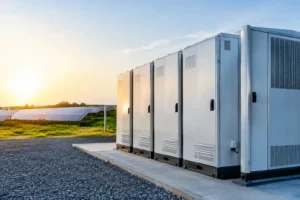
Battery storage can increase the proportion of solar electricity used on site, but it is not a default requirement for every commercial system. Its value is greatest where the business has solar surplus during the day and useful demand later on, or where it can support a wider energy-management strategy.
For some sites, batteries can help manage evening consumption, EV charging or periods of expensive imported electricity. For others, the additional capital cost may extend the payback period without delivering enough benefit. Battery sizing should be based on interval data and operating priorities, not simply matched to the size of the solar array.
It is also worth thinking about future expansion. Even if storage is not installed initially, allowing space in the design, switchgear and cable routes can make a later upgrade more straightforward.
Choose an installer that can manage the full picture
Commercial solar involves structural considerations, electrical design, grid paperwork, safe working arrangements and ongoing support. Selecting an accredited installer with relevant commercial experience helps keep those elements joined up. MCS certification, NICEIC credentials and clear insurance cover are useful indicators, but ask to see how the contractor will handle the specific constraints of your site.
At SWH Electrical Solutions, planning begins with a practical survey and an honest discussion about what will suit the property and its energy use. Where solar work is linked to electrical upgrades, EV charging or wider compliance needs, coordinating the work under one experienced team can reduce disruption and gaps between trades.
Plan for monitoring and maintenance from day one
A commercial solar system should not be fitted and forgotten. Monitoring helps you check that the array is generating as expected and can flag faults before they become prolonged losses. Someone within the business should be able to access the monitoring platform and understand the basic reports.
Maintenance requirements vary by location and roof environment. Visual inspections, electrical testing, checks on mounting systems and cleaning where genuinely needed all help protect performance and safety. A dusty industrial site or a building beneath heavy tree cover may need a different maintenance approach from a clean, open office roof.
Keep commissioning records, DNO correspondence, warranties, single-line diagrams and maintenance information in one accessible place. This will help facilities teams, insurers, future owners and anyone carrying out later electrical work.
A well-planned commercial solar project should make energy costs more predictable without creating a new operational headache. Start with your data, challenge the assumptions and give proper weight to the condition of the building. That groundwork is what turns a row of panels into a dependable long-term asset for your business.