A solar roof is rarely a neat rectangle facing due south with no shade, no dormers and no future changes planned. That is why a proper microinverter comparison guide starts with the roof itself, rather than a promise that one product is best for every property. For many north-east homes, businesses and new-build developments, microinverters can be an excellent fit. For others, a well-designed string inverter system will offer better value.
The right choice comes down to how each panel will perform, how much visibility you want over the system, and how the installation needs to work alongside battery storage, EV charging or future expansion.
What a microinverter does
A solar panel produces direct current (DC) electricity. Your property uses alternating current (AC), so that power must be converted before it can supply appliances or be exported to the grid.
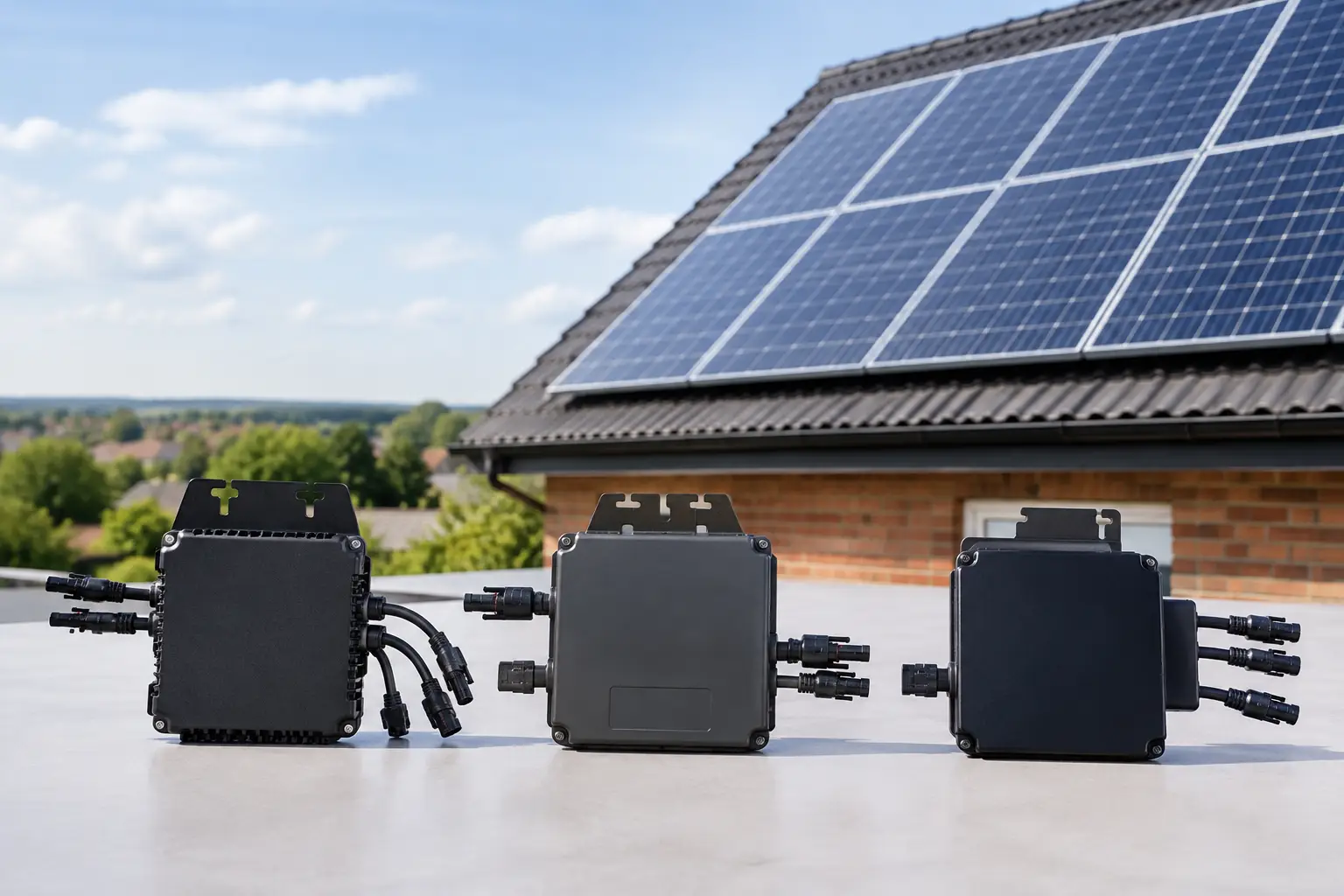
In a conventional string system, several panels are connected together and one central inverter performs the conversion. A microinverter is fitted at, or close to, each individual panel. Each panel converts its own output from DC to AC before it joins the rest of the system.
This changes how the array behaves. With a string inverter, panels in the same string can be affected by the weakest-performing panel. With microinverters, each panel operates independently. If a chimney shadows one module in the morning or leaves cover part of the roof in autumn, the other panels can continue producing according to their own conditions.
That does not mean microinverters create electricity from nowhere. Shade still reduces the output of the panel it falls on. The practical benefit is that the loss is less likely to hold back the whole array.
Microinverter comparison guide: the points that matter
It is easy to compare headline efficiency figures and miss the details that will affect a system for the next 20 years or more. A sound comparison should consider roof layout, generation, warranty support, monitoring and total installed cost.
Roof shape, orientation and shading
Microinverters are particularly worth considering when panels need to be split across different roof faces. A home with panels on east and west elevations, for example, receives sunlight at different times of day. Independent panel operation can make better use of that varied generation profile.
They are also useful where a roof has partial or moving shade from chimneys, trees, neighbouring buildings, aerials or dormers. This is common on established streets, where a satellite image does not always tell the full story. A site survey should account for shading through the year, not simply what the roof looks like at midday in summer.
For a clear, single-aspect roof with all panels in matching conditions, a string inverter can be a very sensible option. Microinverters may still work well, but the additional cost may not produce enough extra generation to justify them.
Per-panel monitoring
Most microinverter systems provide monitoring at panel level. Through an app or web portal, the owner can see how much each module is generating and identify an underperforming panel more quickly.
This is valuable for homeowners who want confidence that their investment is working as expected. It can also be useful on commercial sites, where a fault that goes unnoticed can have a more meaningful impact on returns. Monitoring should be considered a diagnostic tool, not just a colourful graph on a phone.
Ask what the monitoring platform includes as standard, whether there are ongoing subscription charges, and who can access it if support is needed. It is also worth checking how data is collected. A dependable internet connection and correctly commissioned gateway are essential if you expect to view live performance remotely.
System efficiency and output
Microinverters have their own conversion efficiency, just as string inverters do. However, the published peak figure is only one part of the picture. The more useful question is how much energy the whole system is likely to produce on your specific roof over a year.
A good design considers panel orientation, tilt, shade, inverter sizing and local weather data. It should also avoid overselling the benefit of panel-level electronics on a roof where all modules receive almost identical light.
There can be some clipping on very bright days if a panel can produce more power than its paired microinverter is rated to export at that moment. This is often designed in deliberately, because panels rarely operate at their nameplate output in UK conditions. The key is to make sure the pairing has been specified properly, rather than chosen from a generic package.
Cost and long-term value
Microinverter installations generally cost more upfront than an equivalent string inverter system. There are more components on the roof, more connections and a different commissioning process. The price difference varies with system size, roof access and the equipment selected.
The value case is strongest where independent panel performance improves annual generation, where detailed monitoring has real value, or where phased expansion is likely. If you expect to add panels later, microinverters can offer flexibility because an additional panel can often be added without redesigning an existing string. Planning permission, roof space, DNO requirements and system limits can still apply, so expansion should be discussed early.
For a straightforward installation, spending the difference on additional panel capacity, a battery, or improved insulation may deliver a better overall result. There is no prize for buying the most complicated system if it does not suit the property.
Warranty and serviceability
Microinverters often come with long product warranties, commonly 20 to 25 years, which aligns well with solar panel warranty periods. A central string inverter may have a shorter warranty, although warranty extensions are often available.
Long warranty terms are reassuring, but read beyond the headline. Check who administers the warranty in the UK, what is covered, whether labour and roof-access costs are included, and what happens if a product is discontinued. Replacing a failed microinverter can require access to the roof and removal of a panel. It is not necessarily a major job, but it is different from replacing an inverter mounted at ground level or in a loft.
Choose equipment supplied through established channels and an installer that will still be available to support the system after commissioning. Accreditation, clear handover documents and a realistic maintenance plan matter just as much as the manufacturer logo.
Microinverters, string inverters and optimisers
Microinverters are not the only answer to varied roof conditions. Power optimisers sit at panel level but work with a central inverter. They can reduce mismatch losses and provide panel-level visibility while retaining a single inverter elsewhere on the property.
A string inverter remains the simplest and often most cost-effective approach for uniform arrays. It keeps the main conversion equipment accessible, which can make inspection and replacement easier. Modern string inverters are highly capable and should not be dismissed as an older technology.
The best route depends on the job. Microinverters suit fragmented, shaded or mixed-orientation arrays particularly well. Optimisers can provide a middle ground. String inverters are often ideal for clean, uncomplicated roof designs. A credible proposal explains why a particular option has been selected and where its compromises lie.
Battery storage and backup power considerations
If battery storage is part of the plan, make sure the solar design and battery design are discussed together. Microinverter systems are AC-coupled, meaning solar power is converted to AC at the roof before it is managed by an AC battery system. This can be a flexible arrangement, particularly when adding a battery to an existing solar installation.
It may, however, involve more conversion stages than a DC-coupled battery arrangement. That can affect overall efficiency, though the practical difference must be weighed against layout flexibility, equipment compatibility and future plans.
Backup power is a separate question. Solar panels and a battery do not automatically keep a property running during a power cut. A properly designed backup arrangement needs suitable equipment, isolation and clear decisions about which circuits should remain live. This is especially relevant for homes with heat pumps, medical equipment, home working requirements or EV charging demands.
Questions to ask before approving a quote
Before choosing between microinverters and other solar designs, ask the installer to explain the expected annual generation, the impact of shade, and why the proposed equipment is appropriate for each roof face. You should also ask how monitoring works, what warranties cover in practice, and whether the design allows for a battery or extra panels later.
For commercial and development projects, request clarity on commissioning, handover information, access for maintenance and the responsibilities around grid connection. The lowest initial quote can become expensive if it leaves these details unresolved.
A reputable installer should be comfortable discussing alternatives. At SWH Electrical Solutions, the aim is to design solar around the building and the customer’s priorities, not force every roof into one equipment choice.
The most useful next step is a detailed survey. Once roof orientation, shading, consumption patterns and future electrical plans are understood, the right inverter choice becomes far clearer – and the system has a better chance of delivering the savings you expect for years to come.