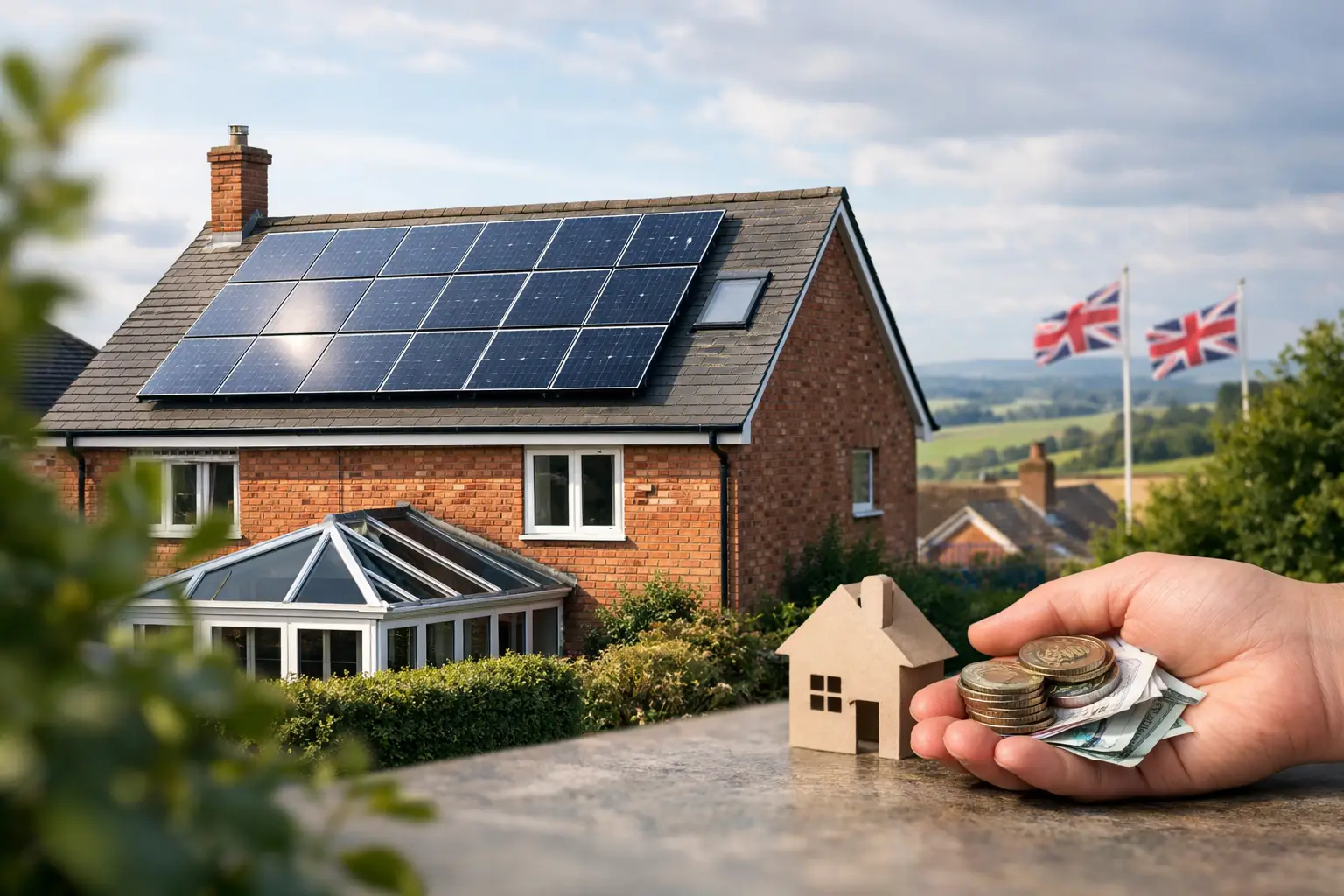
A south-facing roof, a growing electricity bill and a household that is busy during the day can make solar a very sensible investment. But are solar panels worth it for every UK homeowner? Not automatically. The real value comes down to how much electricity your system produces, how much of it you use yourself and whether the installation is designed around your home rather than a generic estimate.
For many households in the North East, solar is less about chasing a headline saving and more about taking greater control of an unpredictable household cost. A properly specified system can reduce imported electricity for decades. The numbers, however, need to stack up for your roof, energy use and plans for the property.
Are solar panels worth it when electricity prices are high?
Solar panels generate electricity during daylight hours, which means every unit used in your home is a unit you do not need to buy from the grid at the full retail rate. This is usually where the strongest financial benefit lies.
A typical domestic installation might cost roughly £5,000 to £8,000 or more, depending on system size, roof complexity, equipment and whether battery storage is included. A larger household with an electric vehicle, heat pump or high daytime use may benefit from a larger array, while a smaller household may be better served by a more modest system. Bigger is not always better if much of the generation is exported at a lower rate.
Payback periods vary widely, but many well-used domestic systems can make financial sense over roughly eight to 15 years. Panels themselves are designed to keep generating well beyond that point, although output will decline gradually over time. Treat any savings figure with caution if it has been produced without looking at your actual electricity consumption and roof details.
Your electricity tariff matters too. Export payments through the Smart Export Guarantee mean surplus power has a value, but export rates are generally lower than the price paid to import electricity. Using solar power as it is generated is therefore usually more valuable than sending it away.
The question is not just how much solar you make
The most useful question is: how much of that generation will your household use?
A home that is empty from breakfast until teatime may produce plenty of solar electricity but use little of it at the time it is available. That does not make solar a poor choice, but it changes the financial picture. Timed appliances, a hot water diverter, an EV charger or a battery can increase the amount of solar power kept and used at home.
Conversely, homes with someone working from home, young families, electric cooking, regular laundry or daytime heating and hot-water demand can often use a healthy proportion of their generation without changing their routine much. Commercial premises can also be strong candidates because electricity use often aligns with daylight working hours.
A good survey should consider half-hourly or smart-meter data where available, rather than relying solely on annual usage. It should also account for expected changes, such as buying an electric car, installing a heat pump or converting a loft. These decisions can make a system that seems oversized today a sensible long-term fit.
A simple example of self-consumption
Imagine a system produces electricity in the middle of the day. If your dishwasher, washing machine, home office equipment and immersion heater are using power then, the benefit is immediate: less grid electricity is needed. If no one is using power, the surplus is exported unless it is stored in a battery.
That is why savings are not determined by panel output alone. Two neighbours with identical roofs can see very different results because their households use electricity differently.
Is your roof suitable for solar panels?
South-facing roofs remain excellent, but east- and west-facing roofs can be highly worthwhile too. An east-west layout often generates electricity across more of the day, rather than concentrating output around midday. For households that use energy in the morning and late afternoon, that can be a practical advantage.
The main considerations are shading, roof condition, orientation, pitch and usable space. Chimneys, trees, dormers and neighbouring buildings can cast shade that reduces output, particularly if it falls across panels at key times of day. Modern panel-level optimisation can help in some shaded situations, but it is not a substitute for an honest assessment of the roof.
Roof condition deserves equal attention. If tiles, felt or structural elements are nearing the end of their life, it may be wiser to address that work before panels are fitted. Removing and reinstalling an array later adds cost and disruption. A careful installer will flag this early rather than press ahead because the roof looks good from the pavement.
Listed buildings, conservation areas and unusual roof designs may require additional checks. In many cases, domestic solar falls within permitted development rules, but exceptions apply. This is another area where proper planning before installation saves headaches later.
When a battery adds value – and when it may not
Battery storage is often presented as an essential part of solar. It can be useful, but it should not be added by default.
A battery lets you store surplus daytime generation for the evening, helping increase self-consumption. It may also allow you to charge at cheaper off-peak periods on a suitable tariff and use that energy later. This can be particularly attractive for homes with high evening demand, electric vehicles or a desire for more flexibility around energy use.
The trade-off is upfront cost. Batteries have a finite capacity and cycle life, and their financial case depends on your tariff, usage pattern and the amount of excess solar available to store. A household that uses most of its solar power as it is produced may see less benefit from a battery than one that is out all day.
Battery-ready solar can be a sensible middle ground. It allows a homeowner to install panels first, monitor real generation and consumption, then decide whether storage is justified. For some properties, adding a battery later is the more informed decision.
Four checks before deciding if solar is worth it
Before accepting a quotation, make sure the proposal answers four practical questions:
- How much electricity is the system expected to generate annually, and what assumptions sit behind that figure?
- How much of the generated electricity is likely to be used in the property rather than exported?
- Is the roof in suitable condition, with shading and access properly assessed?
- Does the design allow for future additions such as a battery, EV charger, heat pump or extra panels?
It is also worth checking what is included beyond the panels themselves. Scaffolding, roof mounting, inverter specification, electrical protection, monitoring, commissioning and notification work all matter. So do workmanship standards and aftercare. Solar is an electrical installation connected to your home, not simply a product fixed to a roof.
Are solar panels worth it if you may move house?
You do not necessarily need to stay in a property for 25 years for solar to be worthwhile. Lower running costs, improved energy performance and an installed system that is documented and well maintained can all be attractive to buyers. That said, it is difficult to put an exact resale figure on solar because local demand, property type and the wider housing market have a greater influence.
If a move is likely in the next year or two, consider whether you will have enough time to benefit directly from the installation and whether other home improvements are more urgent. If you expect to remain for several years, solar can be easier to justify as part of a wider plan to improve the home.
For developers, the calculation is different again. Solar can support modern energy-performance requirements, appeal to energy-conscious buyers and work alongside EV charging and efficient heating design. Early coordination with the electrical design is far simpler and neater than treating solar as a late addition.
What a worthwhile solar quote should feel like
A credible quote should not promise that bills will disappear or give one savings figure without context. It should explain system size, expected output, equipment choice, likely export, installation method and any limitations identified during the survey.
Accreditation matters because it provides reassurance that design, installation and commissioning are being handled to recognised standards. For homeowners seeking export payments, the certification route can also be important. Local accountability matters too: if you need advice after commissioning, you want an installer that will still answer the phone.
At SWH Electrical Solutions, the aim is to assess the whole property – roof, electrics, future energy plans and day-to-day use – before recommending a route forward. The best outcome is not the biggest system on paper. It is one that fits the building, performs safely and gives you confidence every time the energy bill arrives.
Solar is worth investigating when you have a suitable roof, meaningful electricity use and a realistic view of the investment. Start with a proper survey and your actual usage data, then let the numbers do the talking. That approach may not be as flashy as a sweeping promise, but it is far more likely to leave you pleased with the system for years to come.